
Handwritten Wills in India: Are They Legally Valid?
Understanding the Law Under the Indian Succession Act, 1925
Key Court Precedents That Shape Will Validity
By Legal Reporter
New Delhi: March 05, 2026:
The question of whether a handwritten note can be treated as a valid will often arises in Indian families, especially when a loved one passes away leaving behind informal instructions. With property disputes on the rise, courts are frequently asked to decide if such handwritten documents carry legal weight.
Also Read: Supreme Court Clarifies Guarantor Liability Under Section 133 of Contract Act
Under Indian law, wills are governed by the Indian Succession Act, 1925, which lays down strict requirements for execution and attestation. While handwritten wills—sometimes called holographic wills—are not uncommon, their validity depends on compliance with statutory rules and judicial precedents.
This article explores the legal framework, landmark judgments, and practical implications of handwritten wills in India.
[Recommended Legal Resources]
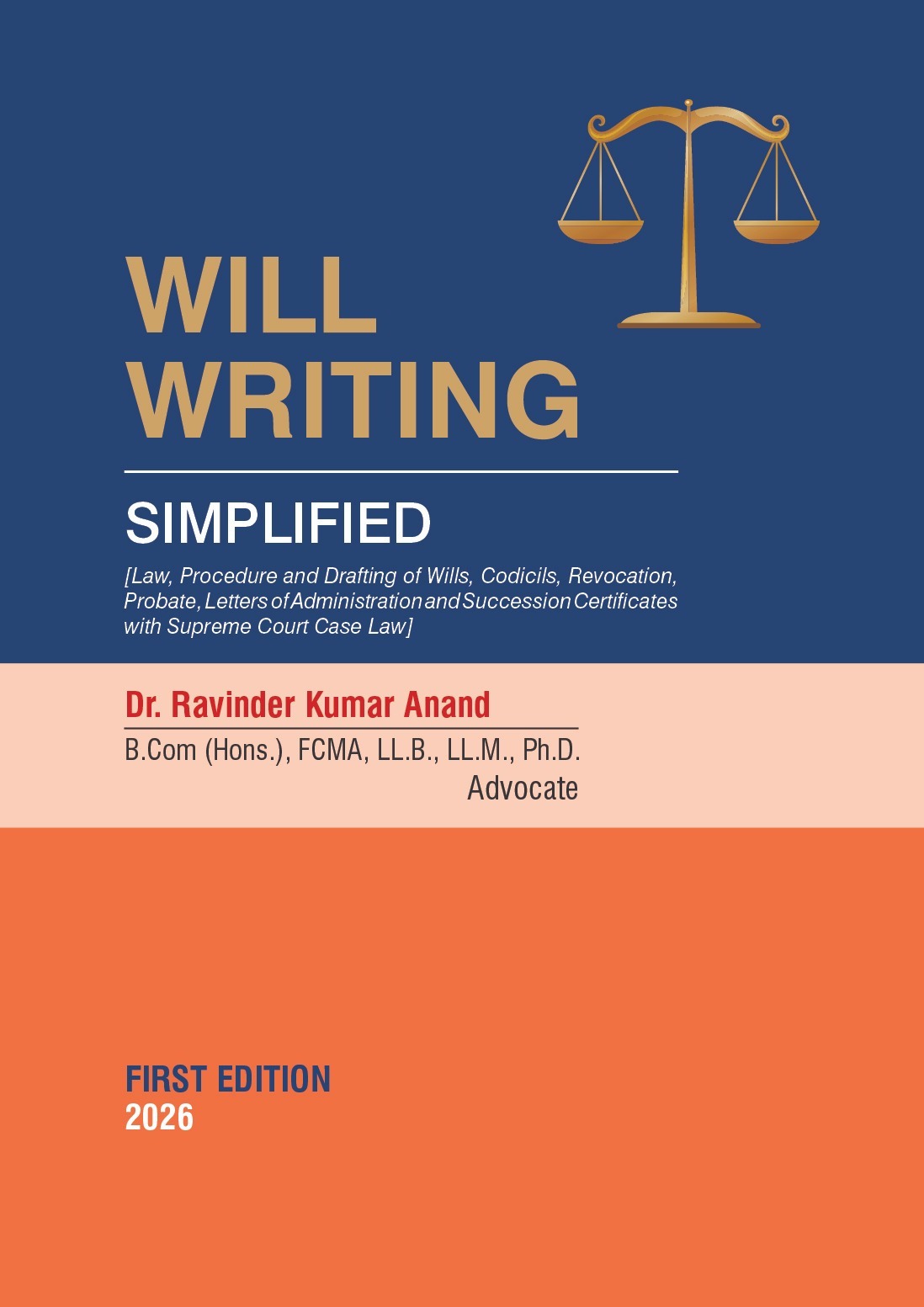
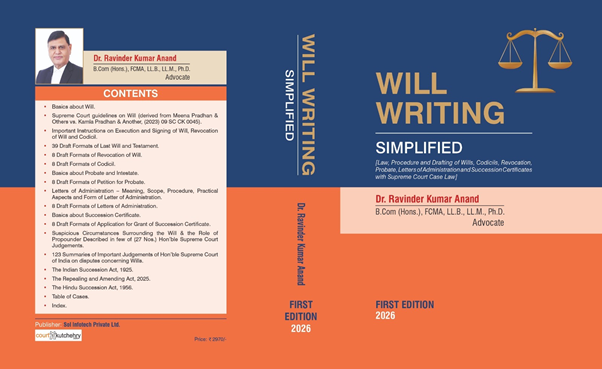
📘 Legal professionals, families, NRIs, individuals and students alike will benefit from Will Writing Simplified, which covers procedure and case law in detail.
🔹 Buy on Amazon
🔹 Buy on Flipkart
Also Read: Forming a US LLC from India: The Hidden Tax and Compliance Costs
Legal Framework: Section 63 of the Indian Succession Act, 1925
The Indian Succession Act, 1925 is the primary legislation governing wills in India. Section 63 specifies the conditions for a valid will:
- Signature of the Testator: The person making the will (testator) must sign or affix their mark.
- Attestation by Witnesses: At least two witnesses must attest the will. Each witness must see the testator sign or acknowledge the signature.
- Sound Mind and Free Will: The testator must be of sound mind and act voluntarily, without coercion or undue influence.
👉 A handwritten will is valid only if these conditions are met. If the note is unsigned or lacks witnesses, it cannot be enforced, and the estate will be distributed under intestate succession laws (where property is divided among legal heirs).
Handwritten Wills: What the Law Says
- Plain Paper Wills: Courts have clarified that wills written on plain paper are valid if signed and properly witnessed. The material of the paper is irrelevant; compliance with Section 63 is key.
- Holographic Wills: These are wills entirely written by the testator in their own handwriting. While rare in India, they are legally recognized if properly executed.
- Unsigned Notes: A handwritten note without a signature or witnesses is not a valid will. Such documents may be treated as informal expressions of intent but lack binding force.
Judicial Precedents
Also Read: CESTAT Remands Service Tax Refund Claim Over CA Certificate
Indian courts have repeatedly dealt with disputes over handwritten wills. Some notable cases include:
1. Meena Pradhan vs. Kamla Pradhan (Supreme Court)
The Supreme Court upheld a handwritten will after verifying that:
- The testator was of sound mind.
- The will was executed voluntarily.
- Witnesses confirmed proper attestation.
This case reinforced that handwritten wills are valid if statutory requirements are met.
2. H. Venkatachala Iyengar vs. B.N. Thimmajamma (1959, SC)
This landmark judgment laid down principles for proving a will:
- The burden of proof lies on the person propounding the will.
- Courts must be satisfied that the will was executed freely and voluntarily.
- Suspicious circumstances must be explained satisfactorily.
3. Jaswant Kaur vs. Amrit Kaur (1977, SC)
The Supreme Court emphasized that mere handwriting is not enough; proper attestation is mandatory.
Challenges in Handwritten Wills
While legally valid, handwritten wills often face challenges:
- Forgery Allegations: Handwriting can be disputed, requiring forensic examination.
- Lack of Witnesses: Many handwritten notes are not witnessed, making them invalid.
- Ambiguity: Informal language may lead to misinterpretation.
- Family Disputes: Relatives may contest handwritten wills more aggressively than typed, registered wills.
Practical Advice for Testators
Legal experts recommend the following to avoid disputes:
Also Read: ITAT Orders Reassessment of STCG on Property Sale
- Always sign the will clearly.
- Ensure at least two independent witnesses are present.
- Avoid vague language; specify assets and beneficiaries clearly.
- Consider registering the will with the Sub-Registrar for added authenticity.
- Keep the will safe and inform trusted family members of its existence.
Conclusion
A handwritten will can indeed be valid in India, but only if it complies with the Indian Succession Act, 1925. Courts have upheld such wills when properly executed and attested, but disputes remain common due to forgery claims and lack of witnesses.
For families, the safest approach is to draft a clear, legally sound will—whether handwritten or typed—and ensure compliance with statutory requirements.
GEO Keywords for Faster Searches
- Handwritten will validity India
- Indian Succession Act Section 63
- Holographic will India law
- Supreme Court will precedents India
- Attestation rules for wills India
- Probate handwritten will India
- Intestate succession India
- Validity of plain paper wills India
Also Read: Chhattisgarh High Court: GST Demand on Plot Allotment Cannot Be Challenged in Writ