
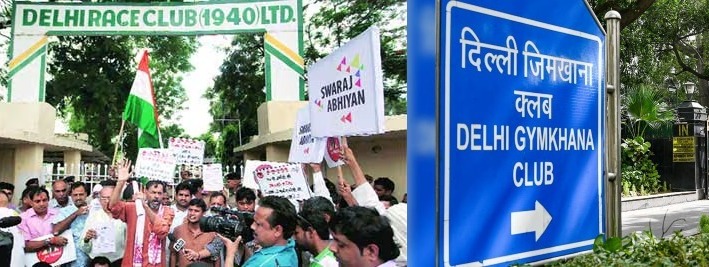
Elite Clubs Face Eviction: Delhi High Court’s Race Club Ruling Echoes Gymkhana Case
Expired Leases Put Heritage Institutions on Notice
Public Premises Act Emerges as Common Legal Thread
By Vishwas Kumar
New Delhi: May 26, 2026:
Let’s compare the Delhi Race Club eviction case with the ongoing Delhi Gymkhana Club dispute, since both involve expired leases on public land and the application of the Public Premises (Eviction of Unauthorised Occupants) Act, 1971.
The Supreme Court ruling in Ram Piari vs Bhagwant and Others is an important judgment on inheritance law, proof of wills, and succession disputes in India. The Court discussed the evidentiary principles governing testamentary documents and highlighted the need for courts to carefully evaluate suspicious circumstances, attesting witnesses, and the genuineness of execution before accepting a will as valid. This decision is frequently cited in probate proceedings, family property disputes, and litigation involving contested wills and succession rights.
Delhi Race Club Case
- Lease Background: The Race Club occupied 84 acres under a 1926 lease, which expired in 1994.
- Legal Action: The Centre initiated eviction under the Public Premises Act, 1971.
- Court Ruling: The Delhi High Court lifted the stay, holding that eviction proceedings must follow the statutory process before the Estate Officer.
- Key Principle: Expired leases = unauthorized occupation, regardless of historical or cultural significance.
Delhi Gymkhana Club Case
- Lease Background: Gymkhana Club, one of Delhi’s oldest institutions, occupies prime land under a lease that expired in 2011.
- Legal Action: The Centre moved to evict the club, citing unauthorized occupation.
- Court Proceedings: The matter has seen multiple hearings, with the government pressing for eviction and the club contesting renewal rights.
- Key Principle: Courts have leaned towards enforcing the Public Premises Act, signalling limited tolerance for expired leases.
Comparative Analysis
|
Aspect |
Delhi Race Club |
Delhi Gymkhana Club |
|
Lease Expiry |
1994 |
2011 |
|
Land Size |
84 acres |
~27 acres |
|
Legal Basis |
Public Premises Act, 1971 |
Public Premises Act, 1971 |
|
Court’s Position |
Stay lifted, eviction to proceed |
Proceedings ongoing, eviction sought |
|
Broader Implication |
Historical use doesn’t override law |
Elite institutions not immune to statutory eviction |
FAQ on Legal Points
Q1. Why are both clubs facing eviction?
Because their leases expired decades ago, making continued occupation unauthorized under the Public Premises Act.
Q2. What is the Public Premises Act’s role here?
It provides the statutory mechanism for eviction of unauthorized occupants from government land, handled by the Estate Officer.
Q3. Can historical or cultural importance protect these clubs?
No. Courts have consistently held that expired leases cannot be justified by heritage or tradition.
Q4. What remedies do clubs have?
They can respond to show-cause notices, appeal under Section 9 of the Act, and seek renewal through government negotiations — but not bypass statutory procedures.
Q5. Does this set a precedent for other institutions?
Yes. It signals that expired leases on public land will face eviction, regardless of the institution’s stature.
Conclusion
The Delhi High Court’s ruling against the Race Club, alongside the ongoing Gymkhana Club dispute, highlights a clear judicial trend: expired leases on public land will not be tolerated. The Public Premises Act, 1971 has emerged as the decisive legal instrument, ensuring that government land is reclaimed for public use. For elite institutions, this marks a turning point — heritage and tradition cannot substitute for legal tenure.