
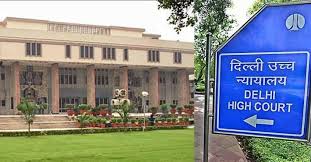
Delhi High Court Quashes Cheating Case Against Central Bank Officials
Court Says ₹58 Lakh Settlement Dispute is Civil, Not Criminal
Failed One‑Time Settlement Cannot Be Treated as Fraud
By Legal Reporter
New Delhi, March 2026:
The Delhi High Court has quashed criminal proceedings against officials of the Central Bank of India in a case involving an alleged misappropriation of ₹58 lakh during a failed One‑Time Settlement (OTS). Justice Neena Bansal Krishna ruled that the matter was purely a contractual dispute and not a criminal offence, directing the parties to pursue civil remedies instead.
Background of the Case
The complainant’s two companies had defaulted on loans from the Central Bank of India, leading the bank to declare them Non‑Performing Assets (NPAs) in 1999–2000. By 2013, the Debt Recovery Tribunal (DRT) had issued recovery certificates against the complainant for approximately ₹13 crore.
Also Read: Actor Rajinikanth’s Property Lease Exempted from Service Tax
In early 2013, bank officials proposed a One‑Time Settlement (OTS). The complainant deposited ₹58 lakh into a “No‑Lien” account as a show of good faith. The bank sanctioned a settlement of ₹6 crore, requiring the balance of ₹5.42 crore to be paid by March 31, 2013.
When the complainant failed to pay the balance, the OTS was automatically cancelled. The bank then adjusted the ₹58 lakh against the outstanding debt and later assigned the account to a private company, UVARCL. The complainant alleged conspiracy and filed a criminal complaint, leading to summons under Section 420 IPC (cheating) and Section 409 IPC (criminal breach of trust).
[Legal Resources]
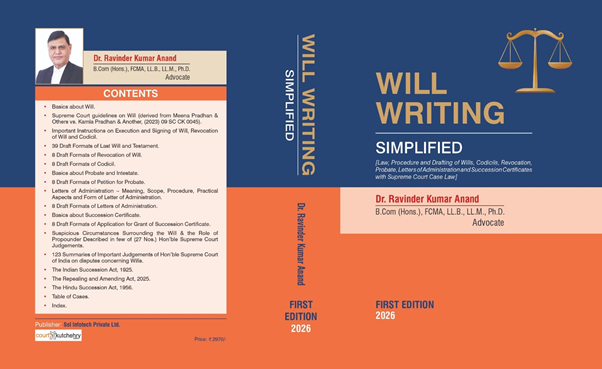
📘 Legal professionals, families and students alike will benefit from Will Writing Simplified, which covers procedure and case law in detail. AVAILABLE ON: Amazon 🔹 Flipkart
Also Read: Supreme Court Orders Employer to Deduct Salary for Wife’s Maintenance
Court’s Observations
Justice Neena Bansal Krishna noted:
- The OTS failed due to the complainant’s own default.
- The bank was within its rights to adjust the ₹58 lakh against outstanding dues.
- No fraudulent or dishonest intention was evident at the inception of the transaction, which is essential to prove cheating under Section 420 IPC.
- At best, the dispute related to adjustment or refund of money arising out of contractual terms, which is a civil matter.
The court concluded that the complaint did not disclose any criminal offence and quashed the proceedings.
Legal Framework
Section 420 IPC – Cheating
Requires proof of fraudulent or dishonest intention at the start of the transaction. Mere failure to fulfil contractual obligations does not amount to cheating.
Section 409 IPC – Criminal Breach of Trust
Applies when entrusted property is dishonestly misappropriated. In this case, the bank’s adjustment of funds was within contractual rights.
Section 482 CrPC – Inherent Powers of High Court
Allows the High Court to quash criminal proceedings when allegations do not disclose a criminal offence.
Larger Implications
- For Banks: Reinforces that failed settlements are civil disputes, not criminal offences.
- For Borrowers: Highlights the importance of adhering to OTS deadlines and terms.
- For Judiciary: Clarifies the boundary between civil and criminal law in financial disputes.
- For Business Transactions: Prevents misuse of criminal law in commercial disagreements.
Conclusion
The Delhi High Court’s ruling in Mahender Singh v. State (Govt. of NCT of Delhi) underscores that contractual disputes arising from failed settlements must be resolved through civil remedies. By quashing the criminal case, the court has reaffirmed that banking transactions, even when contentious, cannot automatically be treated as criminal offences.
Also Read: Bombay High Court Quashes GST Bank Attachment for Lack of Reasons
Keywords for Faster Search
- Delhi High Court Mahender Singh case
- Central Bank of India OTS dispute
- Section 420 IPC cheating banking case
- Section 409 IPC breach of trust loans
- One‑Time Settlement failed Delhi HC
- Civil vs criminal law in banking disputes
- Debt Recovery Tribunal OTS case Delhi
Also Read: Supreme Court: Arbitrator Can Decide Genuineness of Arbitration Agreement as Preliminary Issue