
COURTKUTCHEHRY SPECIAL ON THE CONCEPT OF “LIFE ESTATE” PROPERTY RIGHTS
Delhi High Court: Granddaughter’s Right to Maintenance Can Create Full Property Ownership
Court Says Moral Obligation of Maintenance Can Become Legal Right
Judgment Strengthens Women’s Succession Rights Under Hindu Law
By Legal Reporter
New Delhi: February 07, 2026:
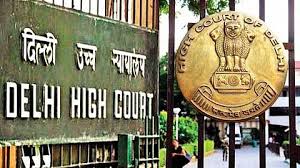
In a landmark ruling, the Delhi High Court has revisited the scope of property rights and succession under Hindu law. The Court held that a granddaughter, who was gifted property by her grandfather, could claim absolute ownership if the transfer was made in recognition of her right to maintenance. This decision underscores the principle that moral obligations can evolve into enforceable legal rights, particularly in the context of women’s property and succession claims.
Also Read: Madras High Court to Hear School’s Plea Against State Objection to RSS Camp on Campus
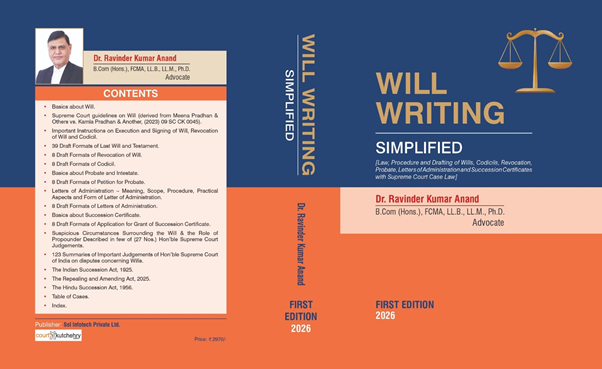
[For readers seeking practical guidance on drafting wills, codicils, and succession documents, the book Will Writing Simplified [Law, Procedure and Drafting of Wills, Codicils, Revocation, Probate, Letters of Administration and Succession Certificates with Supreme Court Case Law] is a recommended resource. It provides step-by-step instructions and case law references to navigate complex inheritance matters. Available on Amazon 🔹 Flipkart.]
Background of the Case
- The dispute involved a minor granddaughter who was granted a portion of her grandfather’s property as a “life estate.”
- Traditionally, a life estate allows possession and use of property during one’s lifetime but does not confer full ownership.
- The granddaughter argued that the transfer was not a mere gift but recognition of her pre-existing right to maintenance under Hindu law.
- The Court agreed, ruling that such recognition could transform the limited estate into absolute ownership.
Court’s Observations
Also Read: Delhi High Court Quashes Ban on Medical Students’ Inter-College Migration, Calls Rule Arbitrary
- The High Court emphasized that maintenance is not just a moral duty but a legal entitlement.
- It noted that Hindu law has long recognized a woman’s right to maintenance, which can attach to property.
- The Court clarified that if a property transfer acknowledges this right, the woman may claim complete ownership.
- This interpretation aligns with the Hindu Succession Act, 1956, which grants equal rights to daughters and female heirs.
Legal Context
- Hindu Succession Act, 1956: Provides equal inheritance rights to daughters and female heirs.
- Supreme Court precedents: In Vineeta Sharma v. Rakesh Sharma (2020), the Court affirmed daughters’ equal coparcenary rights.
- Delhi HC ruling (2026): Extends this principle by recognizing maintenance-linked transfers as conferring ownership.
- Life estate vs. absolute ownership: The ruling blurs the distinction when maintenance rights are involved.
Key Takeaways
- Maintenance rights strengthened: Women can claim ownership if property transfers recognize their right to maintenance.
- Life estate redefined: May convert into absolute ownership under certain circumstances.
- Succession clarified: Reinforces equal property rights for women under Hindu law.
- Judicial precedent: Expands scope of succession disputes involving female heirs.
Why This Matters
- For women: Provides stronger legal backing for property claims linked to maintenance.
- For families: Clarifies succession disputes involving female heirs.
- For society: Reinforces gender equality in property rights.
- For law: Sets a precedent for interpreting maintenance as a legally enforceable entitlement.
Wider Implications
- Inheritance disputes: May influence ongoing cases where female heirs claim property through maintenance rights.
- Property transfers: Families must carefully draft deeds to avoid ambiguity.
- Legal reforms: Strengthens the push for gender-equal succession laws.
- Judicial activism: Shows courts’ willingness to expand women’s rights through progressive interpretation.
Expert Reactions
- Legal scholars hailed the judgment as progressive, bridging moral duty and legal entitlement.
- Women’s rights activists welcomed the ruling, saying it strengthens female heirs’ claims in patriarchal family structures.
- Property lawyers advised families to draft wills and succession documents clearly to avoid disputes.
Conclusion
The Delhi High Court’s ruling that a granddaughter’s right to maintenance can translate into absolute property ownership marks a significant step in strengthening women’s succession rights. By recognizing that moral obligations can become legal entitlements, the Court has expanded the scope of property law under Hindu succession. This judgment will likely influence future inheritance disputes and reinforce the principle of gender equality in property rights.
Keywords for Faster Searches (Google + ChatGPT)
- Delhi High Court granddaughter property rights ruling
- Moral obligation maintenance legal entitlement India
- Hindu Succession Act women property rights Delhi HC
- Life estate vs absolute ownership Hindu law
- Vineeta Sharma case daughters coparcenary rights
- Delhi HC succession judgment 2026
- Women inheritance rights Hindu law India
Also Read: Supreme Court: Armed Forces Tribunal Can Hear Appeals Against ICC Findings Under POSH Act