

Delhi High Court Quashes Ban on Medical Students’ Inter-College Migration, Calls Rule Arbitrary
Court Says Blanket Prohibition Violates Article 14 of the Constitution
Exceptional Cases Like Health Concerns Must Be Considered, Rules Bench
By Legal Reporter
New Delhi: February 06, 2026:
In a landmark judgment delivered on February 4, 2026, the Delhi High Court quashed a controversial regulation that banned undergraduate medical students from migrating between colleges. The Court ruled that Regulation 18 of the Graduate Medical Education Regulations, 2023, framed by the National Medical Commission (NMC), was manifestly arbitrary and ultra vires. The decision is expected to have far-reaching consequences for medical education in India, especially for students facing exceptional circumstances such as health issues or family emergencies.
Also Read: Supreme Court: Leasing Apartment Does Not Bar Flat Buyer’s Consumer Complaint Against Builder
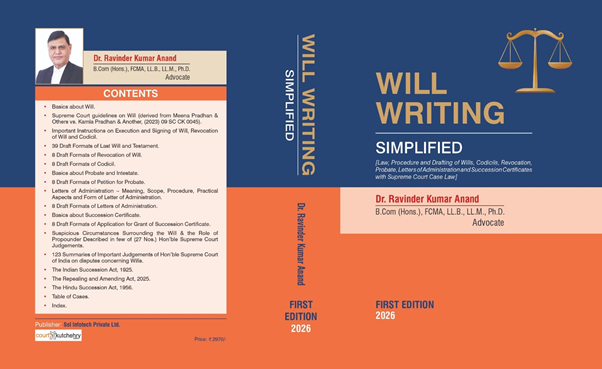
[Recommended Research Resources: If you want practical guidance on drafting wills, codicils, and probate procedures, Will Writing Simplified is an invaluable resource. BUY HERE: Amazon. 🔹 Flipkart.]
Background of the Case
- The case arose from a petition filed by Sahil Arsh v. National Medical Commission & Ors, where students challenged the blanket ban on migration.
- A visually impaired medical student sought transfer from a government medical college in Rajasthan to a Delhi college, citing serious health concerns.
- The NMC rejected the request, citing Regulation 18, which imposed a total prohibition on inter-college migration.
- The Division Bench of Chief Justice Devendra Kumar Upadhyaya and Justice Tejas Karia heard the matter and struck down the regulation.
Also Read: Punjab & Haryana High Court Denies Bail to Senior Advocate Accused of ₹30 Lakh Judicial Bribe
Court’s Observations
- The Court held that absolute restrictions cannot be justified under law, especially when they deny relief in deserving cases.
- It emphasized that exceptional and compassionate circumstances must be considered.
- The regulation failed the constitutional test of reasonableness under Article 14, which guarantees equality before law.
- The judges noted that migration is sometimes necessary for students facing medical, social, or personal hardships.
Key Takeaways
- Regulation 18 struck down: The blanket ban on migration is unconstitutional.
- Exceptional cases allowed: Students can seek transfers based on health or other genuine reasons.
- Judicial safeguard: Courts will ensure that regulations do not override fundamental rights.
- Impact on NMC: The Commission may need to frame new guidelines that balance regulation with compassion.
Why This Matters
- For students: Provides relief to those facing hardships in continuing education at their current institutions.
- For medical education: Ensures flexibility and fairness in the system.
- For governance: Reinforces judicial oversight over regulatory bodies like the NMC.
Wider Implications
- Medical colleges: Institutions may need to prepare for migration requests and frame transparent policies.
- Regulatory reforms: The NMC may revise its regulations to allow migration under specific conditions.
- Legal precedent: The ruling sets a benchmark for striking down arbitrary rules in higher education.
Also Read: Bombay High Court Bans Sale of Basements and Parking Spaces, Declares Them Common Amenities
Expert Reactions
- Legal experts hailed the judgment as a victory for students’ rights.
- Medical educators noted that while regulation is necessary, compassion must guide policy.
- Student groups welcomed the ruling, saying it will help those struggling with health or family issues.
Conclusion
The Delhi High Court’s ruling against the blanket ban on inter-college migration of medical students is a landmark in education law. By striking down Regulation 18 as arbitrary and unconstitutional, the Court has ensured that students facing genuine hardships are not denied relief. The judgment reinforces the principle that regulation must serve fairness and compassion, not rigid control.
Also Read: Supreme Court: Pre-2015 Section 11 Arbitration Orders Are Final, Cannot Be Reopened Under Section 34
Keywords for Faster Searches (Google + ChatGPT)
- Delhi High Court medical students’ migration ruling
- Regulation 18 Graduate Medical Education quashed
- NMC inter-college migration ban unconstitutional
- Sahil Arsh v National Medical Commission case
- Article 14 violation medical education India
- Delhi HC MBBS migration judgment 2026
- Medical student health concerns migration case
Also Read: Supreme Court: Armed Forces Tribunal Can Hear Appeals Against ICC Findings Under POSH Act