

Daughter’s Right in Father’s Property: No Deadline Under Succession Law, But Limitation Applies
Hindu Succession Act Grants Equal Rights
12-Year Limitation Period Starts When Claim Is Denied
By Legal Reporter
New Delhi: March 19, 2026:
Inheritance disputes often raise the question: Does a daughter have a time limit to claim her share in her father’s property if he dies intestate? Recent clarifications from legal experts and financial advisors confirm that daughters enjoy equal rights under the Hindu Succession Act, 1956, and there is no statutory deadline for asserting those rights. However, the Limitation Act, 1963, introduces a practical time frame of 12 years, beginning when her claim is denied or excluded.
[Recommended Legal Resources]
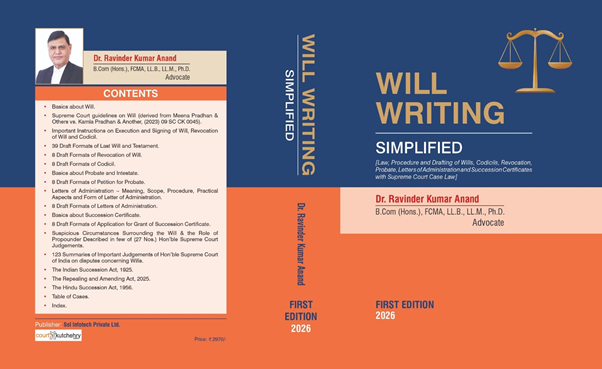
📘 Legal professionals, families and students alike will benefit from Will Writing Simplified, which covers procedure and case law in detail.
🔹 Buy on Amazon
🔹 Buy on Flipkart
Also Read: Savitri Bai & Another v. Savitri Bai: Supreme Court Upholds Validity of Will Over Sale Deed
Legal Framework
Hindu Succession Act, 1956
- Grants’ equal inheritance rights to daughters and sons.
- Applies when a Hindu father dies intestate (without a will).
- Property devolves immediately upon death to all legal heirs, including daughters.
Limitation Act, 1963
Also Read: Thangam & Another v. Navamani Ammal: Supreme Court Upholds Validity of Registered Will
- Prescribes a 12-year limitation period for filing suits related to property possession or declaration of rights.
- The clock starts not at the father’s death, but when the daughter’s right is denied, excluded, or adversely affected (e.g., another heir takes exclusive possession or sells property without her consent).
Practical Scenarios
- Father leaves a will: Daughter can claim her share as per the will.
- Father dies intestate: Daughter can file a suit for her share under succession law.
- Claim denied: Limitation period begins; she must act within 12 years.
- No denial: Her right continues indefinitely until challenged.
Expert Opinions
Legal experts emphasize that daughters should assert their rights early to avoid complications. While the law protects them, delays can lead to evidentiary challenges, disputes among heirs, or adverse possession claims.
Implications for Families
- For daughters: Assurance of equal rights, but vigilance needed to protect claims.
- For heirs: Transparency in property division reduces litigation.
- For society: Reinforces gender equality in inheritance laws.
Conclusion
The law is clear: daughters have equal rights in their father’s property, and there is no statutory deadline under succession law. However, the 12-year limitation period under the Limitation Act ensures that claims must be pursued once denied. This balance protects daughters’ rights while preventing indefinite disputes.
Keywords for SEO & Faster Searches
Daughter property rights India, Hindu Succession Act inheritance, intestate property claim, Limitation Act 12 years, daughter share in father’s property, inheritance law India, intestate succession daughters, property dispute India, legal rights of daughters inheritance.
Also Read: Lilian Coelho & Others v. Myra Philomena Coalho: Supreme Court Restores Scrutiny of Suspicious Wills