
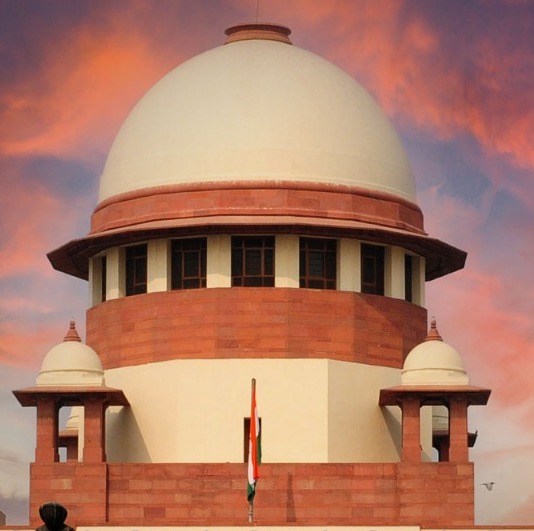
SC Rules Civil Remedies Cannot Block Criminal Proceedings, Restores FIRs in Fraud Case
Court emphasizes distinct domains of civil and criminal law
Fraud allegations must face criminal scrutiny despite civil remedies
By Legal Reporter
New Delhi: May 30, 2026:
The Supreme Court has clarified that the existence of a civil remedy does not bar criminal proceedings, restoring FIRs that had been quashed by lower courts. This ruling reinforces the principle that civil and criminal law operate in distinct spheres, and one cannot be used to shield against the other when allegations of fraud or criminal misconduct are involved.
Background
The case arose from disputes involving allegations of fraud and breach of trust in commercial transactions. The High Court had quashed FIRs on the ground that civil remedies were available to the complainant. On appeal, the Supreme Court restored the FIRs, holding that availability of civil remedies does not negate criminal liability.
This ruling builds on precedents such as State of Haryana v. Bhajan Lal (1992), Indian Oil Corporation v. NEPC India Ltd. (2006), and Rajesh Bajaj v. State of NCT of Delhi (1999), where the Court consistently held that criminal proceedings cannot be quashed merely because civil remedies exist.
Key Legal Provisions
1. Indian Penal Code (IPC)
- Section 420: Cheating and dishonestly inducing delivery of property.
- Section 406: Criminal breach of trust.
- Section 120B: Criminal conspiracy.
2. Code of Criminal Procedure (CrPC), 1973
- Section 482: Inherent powers of High Courts to quash proceedings.
- Court clarified that these powers must be exercised sparingly and not to stifle legitimate prosecution.
3. Doctrine of Coexistence of Remedies
- Civil and criminal remedies can coexist.
- Fraudulent conduct may give rise to both civil liability (damages, restitution) and criminal liability (punishment).
Supreme Court’s Findings
- Civil Remedy ≠ Criminal Immunity: The Court held that the mere existence of a civil remedy does not mean criminal proceedings should be quashed.
- Fraudulent Intent Matters: Allegations of fraud, cheating, or breach of trust must be examined in criminal courts.
- High Court’s Error: The High Court erred in quashing FIRs solely because civil remedies were available.
- Restoration of FIRs: FIRs were restored, allowing investigation to proceed.
Analytical Perspective
Strengthening Rule of Law
The ruling reinforces that fraudulent conduct cannot be sanitized by civil settlements. Criminal law serves a public purpose beyond private compensation.
Judicial Discipline
By restoring FIRs, the Court emphasized that High Courts must exercise caution under Section 482 CrPC. Quashing should be reserved for cases where allegations are patently absurd or malicious.
Commercial Implications
Businesses must recognize that disputes involving fraud or misrepresentation may attract both civil suits and criminal prosecution. Settling civil claims does not extinguish criminal liability.
Detailed FAQ
Q1. What was the Supreme Court’s ruling?
That civil remedies do not bar criminal proceedings; FIRs quashed by the High Court were restored.
Q2. Why did the High Court quash the FIRs?
It held that since civil remedies were available, criminal proceedings were unnecessary.
Q3. What did the Supreme Court say about this?
It ruled that civil and criminal remedies can coexist, and fraud allegations must face criminal scrutiny.
Q4. Which IPC sections were involved?
Sections 420 (cheating), 406 (criminal breach of trust), and 120B (criminal conspiracy).
Q5. What is Section 482 CrPC?
It gives High Courts inherent powers to quash proceedings, but only in rare cases to prevent abuse of process.
Q6. Can civil settlements extinguish criminal liability?
No. Criminal liability serves a public purpose and cannot be waived by private agreements.
Q7. What precedents support this ruling?
Bhajan Lal (1992), Indian Oil v. NEPC (2006), Rajesh Bajaj (1999).
Q8. What happens next in this case?
The restored FIRs will be investigated by police, and criminal courts will decide liability.
Q9. How does this affect businesses?
They must ensure compliance and transparency; fraud allegations can lead to both civil and criminal action.
Q10. What principle does this ruling reinforce?
That civil remedies cannot shield criminal misconduct.
Conclusion
The Supreme Court’s ruling is a landmark in the intersection of civil and criminal law. By restoring FIRs, the Court reaffirmed that fraud and cheating allegations must face criminal investigation, regardless of civil remedies. This ensures that criminal law retains its deterrent and punitive role, protecting public interest and reinforcing the integrity of the justice system.