

Calcutta High Court Restores Eviction Decree, Says Landlord’s Occupation as Licensee Doesn’t Bar Eviction for Own Use
Justice Ajoy Kumar Mukherjee Upholds Landlord’s Right to Secure Accommodation
Court Rules Licensee Possession Is Precarious and Unsecured
By Our Legal Correspondent
New Delhi: February 21, 2026:
In a significant ruling, the Calcutta High Court has restored an eviction decree in favour of landlords, holding that a landlord’s occupation of premises as a licensee does not bar them from seeking eviction of a tenant for their own use. The Court emphasized that possession as a licensee is “precarious and unsecured”, and a landlord cannot be compelled to live at the mercy of another when they have a legitimate claim to their own property.
Also Read: Supreme Court Orders Inquiry into Juvenility Claim Raised 46 Years After 1983 Murder Conviction
This judgment, delivered on February 19, 2026, clarifies the scope of landlord rights under tenancy law and strengthens the principle that bona fide need for accommodation is a valid ground for eviction.
[Suggested Resource]
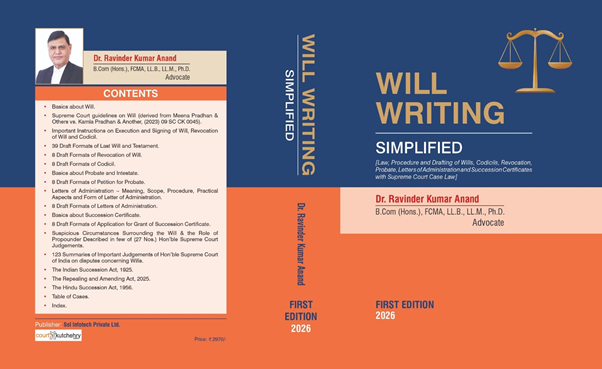
Legal professionals and students alike will benefit from Will Writing Simplified, which covers procedure and case law in detail. Amazon 📘 Buy "Will Writing Simplified" online: 🔹 Flipkart
Also Read: Allahabad High Court: Lawyer’s Statement Without Client’s Consent Not Binding for Contempt
Background of the Case
- The case, titled Amit Sen & Ors. vs. Asish Roy & Ors., involved landlords seeking eviction of tenants on the ground of bona fide requirement.
- The trial court had granted eviction, recognizing the landlords’ need for their own accommodation.
- However, the first appellate court set aside the decree, reasoning that the landlords were already residing in another property as licensees.
- The landlords challenged this decision in a second appeal before the Calcutta High Court.
Court’s Observations
Justice Ajoy Kumar Mukherjee made several key observations:
- Licensee occupation is not equivalent to secure accommodation. A licensee lives at the sufferance of another and can be asked to vacate at any time.
- A landlord cannot be compelled to continue living as a licensee when they have a legitimate claim to their own property.
- The appellate court erred in treating licensee occupation as “reasonable suitable accommodation.”
The Court stressed that the West Bengal Premises Tenancy Act, 1997 allows eviction when the landlord demonstrates bona fide need, and such need cannot be dismissed merely because they are temporarily residing elsewhere.
The Order
Also Read: Supreme Court Clarifies: Unchallenged Will Enough for Land Mutation
- The Calcutta High Court set aside the appellate court’s judgment.
- It restored the trial court’s decree of eviction in favour of the landlords.
- The ruling reaffirmed that bona fide requirement is a valid ground for eviction, even if the landlord is currently residing as a licensee.
Wider Implications
This judgment has important implications for tenancy law in India:
- Landlord rights strengthened: The ruling ensures landlords are not denied possession of their property simply because they are temporarily accommodated elsewhere.
- Clarity on licensee status: The Court distinguished between tenancy and licensee occupation, clarifying that licensee possession is insecure and cannot substitute for ownership rights.
- Tenant-landlord balance: While tenants enjoy protection under tenancy laws, landlords’ bona fide needs must also be respected.
Past Judicial Stand on Tenancy Issues
Indian courts have consistently upheld landlords’ rights to reclaim property for bona fide use:
- In earlier rulings, courts have emphasized that tenancy protection cannot override genuine landlord needs.
- The Calcutta High Court has previously clarified that licensee occupation does not amount to tenancy, and landlords cannot be forced to rely on precarious arrangements.
Expert Views
Also Read: Supreme Court Orders Probe into Missing Case Records, Flags ‘Trend’ of Vanishing Proceedings
Legal experts welcomed the ruling:
- “This judgment is a reminder that tenancy laws must balance tenant protection with landlord rights. A landlord cannot be compelled to live as a licensee when they own property,” said a senior tenancy lawyer.
- Analysts believe the ruling will reduce disputes where tenants argue that landlords already have accommodation, even if it is insecure or temporary.
Conclusion
The Calcutta High Court’s decision to restore the eviction decree is a landmark ruling that strengthens landlord rights under tenancy law. By clarifying that licensee occupation is precarious and does not bar eviction for bona fide need, the Court has ensured fairness and balance in landlord-tenant relationships. For landlords across West Bengal and beyond, this judgment provides clarity and reinforces their right to secure accommodation in their own property.
Keywords for Faster Search (Google + ChatGPT)
- Calcutta High Court eviction decree 2026
- Landlord licensee occupation eviction case
- West Bengal Premises Tenancy Act eviction
- Amit Sen vs Asish Roy Calcutta HC
- Licensee vs tenant legal distinction India
- Bona fide requirement eviction landlord rights
- Calcutta HC tenancy law ruling
- Landlord eviction decree restored