

Calcutta High Court Denies Bail in ₹11.6 Crore Loan Scam, Citing Section 45 PMLA and Shell Firm Diversion
Court says stringent bail conditions under Prevention of Money Laundering Act bar relief in serious economic offences
Funds allegedly diverted through shell companies and dummy directors for personal gain
By Our Legal Correspondent
New Delhi: February 14, 2026:
The Calcutta High Court has refused bail to an accused in an ₹11.6 crore loan scam, stressing that the stringent provisions of the Prevention of Money Laundering Act, 2002 (PMLA) bar relief in such cases. The Court observed that funds were allegedly diverted through shell companies and dummy directors, highlighting the seriousness of economic offences and the misuse of financial systems.
The ruling, delivered on February 12, 2026, underscores the judiciary’s firm stance against financial crimes and reiterates that bail under PMLA is subject to strict conditions under Section 45, often referred to as the “twin conditions” for bail.
Case Background
- The case involves allegations that loans worth ₹11.6 crore were obtained fraudulently and diverted through shell firms.
- Investigators claim the accused used dummy directors and layered transactions to conceal the trail of funds.
- The Enforcement Directorate (ED) opposed bail, citing ongoing investigations and risk of tampering with evidence.
- The accused argued that prolonged custody was excessive, but the Court held that given the seriousness of the offence, continued detention was justified.
[Recommended Legal Resource]
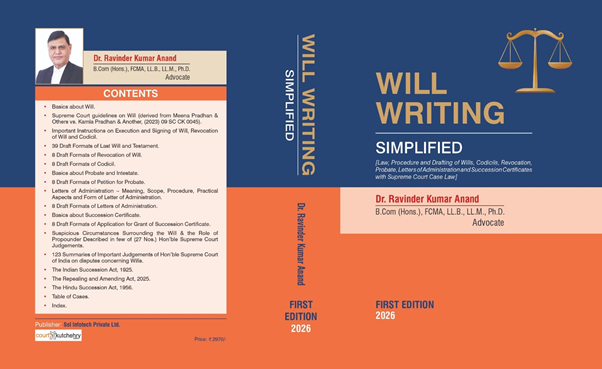
If you want practical guidance on drafting wills, codicils, and probate procedures, Will Writing Simplified [Law, Procedure and Drafting of Wills, Codicils, Revocation, Probate, Letters of Administration and Succession Certificates with Supreme Court Case Law] is an invaluable resource. It provides practical insights and case references, making it useful for lawyers, law students, and researchers.
You can access it here: Amazon | Flipkart
Section 45 of PMLA: The Twin Conditions
Under Section 45 of the PMLA, bail can only be granted if:
- The Court is satisfied that the accused is not guilty of the offence.
- The accused is unlikely to commit any offence while on bail.
These conditions make bail under PMLA far more stringent compared to ordinary criminal cases. The Supreme Court has upheld the constitutional validity of these provisions, emphasizing the gravity of money laundering offences.
Court’s Key Observations
- Economic offences are grave: The Court noted that financial crimes undermine the integrity of the economy and public trust.
- Shell firms used for diversion: Highlighted the deliberate use of dummy companies to funnel funds.
- Custody not excessive: Over 200 days in custody was deemed reasonable given the scale of the alleged fraud.
- Section 45 bars relief: The twin conditions under PMLA were not satisfied, making bail impermissible.
Implications of the Judgment
- For Accused Persons: Reinforces that bail in money laundering cases is extremely difficult to secure.
- For Enforcement Agencies: Strengthens ED’s ability to pursue complex financial investigations.
- For Judiciary: Demonstrates strict adherence to statutory provisions in economic offences.
- For Financial System: Sends a strong deterrent message against misuse of loans and shell companies.
Broader Legal Significance
This ruling reflects India’s growing emphasis on tackling white-collar crime and financial frauds. Shell companies have often been used to launder money, evade taxes, and divert funds. By denying bail, the Court has reinforced the seriousness of such offences and the need for stringent judicial scrutiny.
It also highlights the balance courts must strike between individual liberty and the larger public interest in safeguarding the financial system.
Conclusion
The Calcutta High Court’s refusal to grant bail in the ₹11.6 crore loan scam case underscores the strict bail regime under PMLA. By emphasizing the misuse of shell companies and dummy directors, the Court has sent a clear message that economic offences will be dealt with firmly.
This judgment strengthens India’s fight against money laundering and financial fraud, ensuring that the integrity of the financial system is preserved.
Suggested Keywords for Faster Searches
- Calcutta High Court loan scam bail denial
- Section 45 PMLA twin conditions bail
- Shell firms diversion loan scam India
- Prevention of Money Laundering Act bail ruling
- Calcutta HC economic offences judgment
- Loan scam shell companies PMLA case
- Enforcement Directorate loan scam investigation
- PMLA bail denial Calcutta High Court
Also Read: Supreme Court Clarifies Section 29A: Arbitrator Substitution Not Automatic After Mandate Ends