
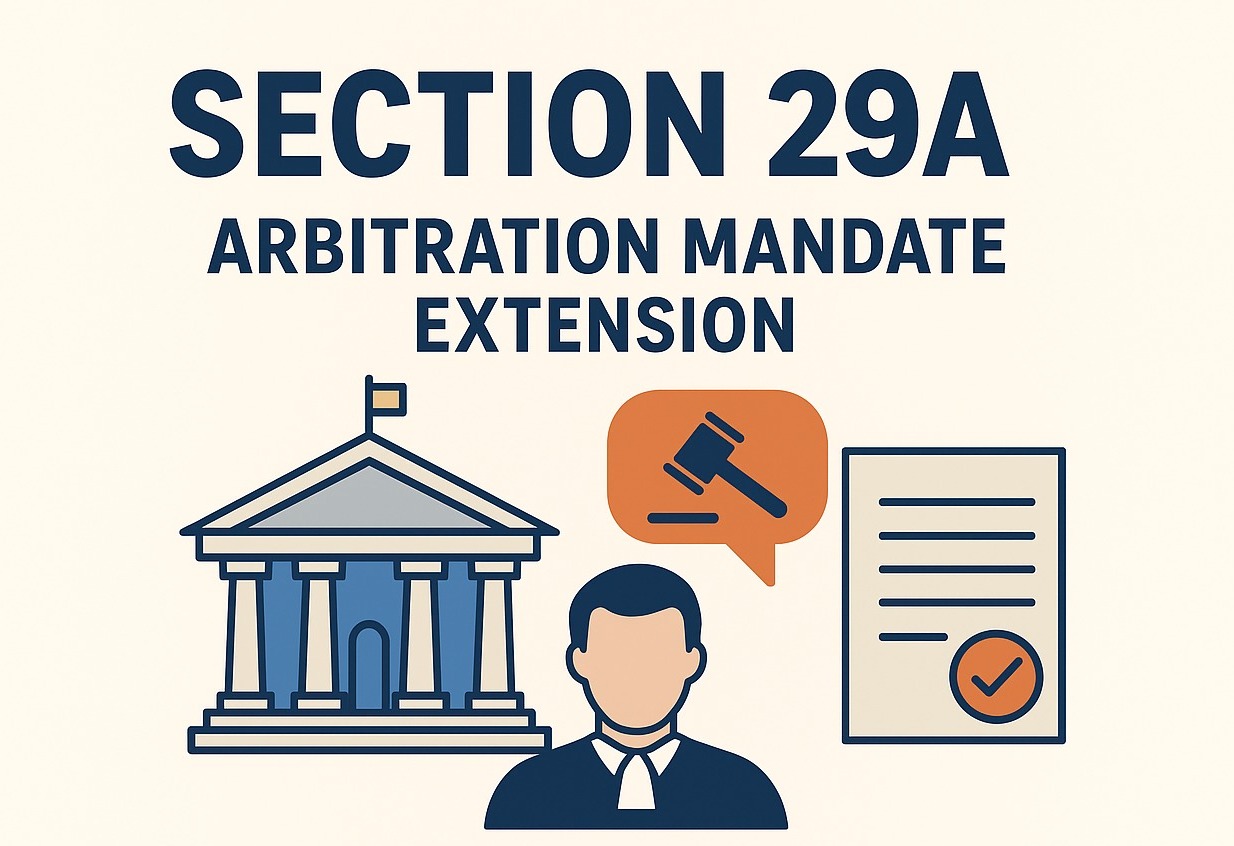
Supreme Court Clarifies Section 29A: Arbitrator Substitution Not Automatic After Mandate Ends
Court Says Extension or Substitution of Arbitrator Lies Within Judicial Discretion
Ruling Resolves Confusion Over Arbitration Deadlines and Continuity of Tribunals
By Legal Reporter
New Delhi: February 14, 2026:
In a landmark judgment, the Supreme Court of India has clarified the interpretation of Section 29A of the Arbitration and Conciliation Act, 1996, ruling that substitution of an arbitrator is not mandatory upon the termination of the arbitral tribunal’s mandate. The decision, delivered in February 2026, addresses a long-standing ambiguity in arbitration law and is expected to have far-reaching implications for ongoing and future arbitration proceedings across the country.
Also Read: Supreme Court: High Courts Must Address All Issues in Writ Petitions, Not Just One Point
[Recommended Legal Resource]
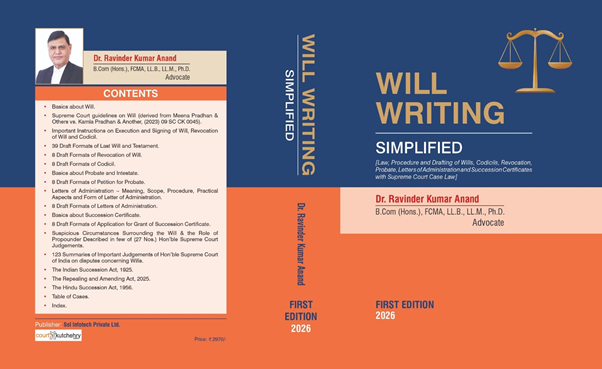
For readers seeking deeper insights into Indian legal procedures, drafting, and Supreme Court case law, the book Will Writing Simplified [Law, Procedure and Drafting of Wills, Codicils, Revocation, Probate, Letters of Administration and Succession Certificates with Supreme Court Case Law] is an excellent resource. It provides practical guidance on drafting and interpreting legal documents, making it invaluable for lawyers, students, and professionals.
Background of the Case
The controversy arose from a Madhya Pradesh High Court ruling that had ordered substitution of an arbitrator under Section 29A (6) after the tribunal’s mandate expired under Section 29A (4). The High Court relied on earlier observations in Mohan Lal Fatehpuria v. Bharat Textiles, where substitution was seen as obligatory.
However, the Supreme Court bench comprising Justices Sanjay Kumar and Alok Aradhe set aside the High Court’s decision, holding that courts have discretion either to extend the mandate of the existing tribunal or to appoint a substitute arbitrator.
What Section 29A Provides
Section 29A was introduced to ensure timely completion of arbitration proceedings:
- Section 29A (1): Arbitration must be completed within 12 months from the date of reference.
- Section 29A (3): Parties may extend the period by six months.
- Section 29A (4): If the award is not made within this period, the arbitrator’s mandate terminates.
- Section 29A (5) & (6): Courts may extend the mandate and, if necessary, substitute the arbitrator.
The Supreme Court clarified that substitution is not automatic; it is a matter of judicial discretion depending on the facts of each case.
Key Points of the Judgment
- No Automatic Substitution: Termination of mandate does not mean the arbitrator must be replaced.
- Judicial Discretion: Courts can either extend the mandate or appoint a new arbitrator.
- Flexibility in Arbitration: The ruling prevents unnecessary disruption of proceedings when an arbitrator has already invested significant effort.
- Balancing Efficiency and Fairness: The judgment seeks to balance timely resolution with continuity of proceedings.
Implications for Arbitration Practice
This ruling is significant for businesses, lawyers, and arbitrators:
- Reduced Delays: Parties can avoid restarting proceedings with a new arbitrator.
- Cost Efficiency: Extending the mandate saves costs associated with substitution.
- Legal Certainty: The judgment resolves conflicting interpretations across High Courts.
- International Confidence: Clarification strengthens India’s position as an arbitration-friendly jurisdiction.
Also Read: Is Lending Cash to Relatives Illegal? Understanding Section 269SS of the Income Tax Act
Expert Reactions
Legal experts have welcomed the decision:
- Supporters argue that the ruling promotes efficiency and respects the tribunal’s work.
- Critics caution that discretion must be exercised carefully to avoid bias or unfairness.
- Arbitration Institutions see this as a step toward aligning Indian arbitration law with global best practices.
Related Developments
The Supreme Court has recently delivered other important rulings in arbitration law:
- In C. Velusamy vs. K Indhera (2026), the Court allowed retrospective extension of an arbitrator’s mandate even after an award was delivered late.
- In January 2026, the Court held that arbitrator ineligibility can be challenged at any stage, reinforcing safeguards against bias.
Together, these judgments reflect a broader judicial effort to refine India’s arbitration framework.
Conclusion
The Supreme Court’s ruling on Section 29A marks a turning point in arbitration law. By clarifying that substitution of arbitrators is not mandatory, the Court has provided flexibility and certainty to arbitration proceedings. This decision will likely reduce delays, enhance efficiency, and strengthen India’s reputation as a hub for dispute resolution.
Also Read: Supreme Court Allows Patent Mapping in Cancer Drug Dispute Between Bristol Myers Squibb and Zydus
Suggested Keywords for SEO & Faster Searches
- Supreme Court Section 29A arbitration ruling 2026
- Arbitrator substitution mandate termination India
- Arbitration and Conciliation Act Supreme Court case
- Section 29A(4) and 29A(6) interpretation
- Supreme Court arbitration law India 2026
- Judicial discretion in arbitrator substitution
- Arbitration deadlines Supreme Court ruling
- Arbitration efficiency India Supreme Court judgment
- Arbitration case law India 2026
- Will Writing Simplified book legal resource
Also Read: McDonald’s India Outlet Warned Over Rotten Tomatoes and Reused Oil: Food Safety Laws in Focus