
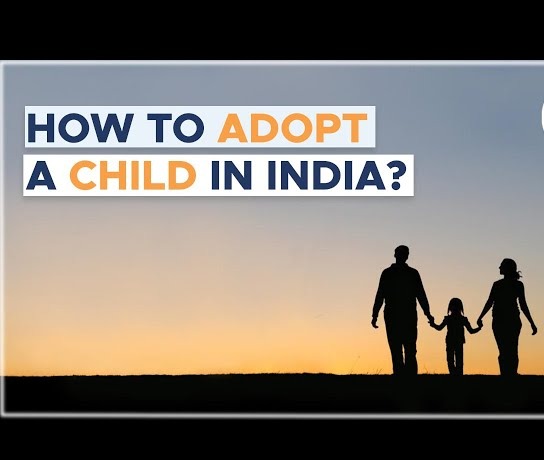
Adoption in India: The Legal Process
Statutory Frameworks Governing Adoption
Judicial and Policy Dimensions
By Vishwas Kumar
New Delhi: May 01, 2026:
Analytical Overview
1. Hindu Adoptions and Maintenance Act (HAMA), 1956
- Eligibility of adoptive parents: Any Hindu male or female of sound mind and majority age can adopt, subject to marital status conditions (e.g., consent of spouse required unless legally separated).
- Eligibility of child: The child must be Hindu, unmarried, and under 15 years of age (unless custom permits otherwise).
- Gender restrictions: Adoptive parents cannot adopt a child of the same gender if they already have one (e.g., a Hindu male cannot adopt a son if he already has one).
- Legal effect: Section 12 ensures the adopted child is deemed the legitimate child of the adoptive parents, with full inheritance rights.
For a deeper understanding of corporate succession disputes and the legal interpretation of testamentary documents, this landmark ruling in Krishna Kumar Birla vs Rajendra Singh Lodha offers critical insights into probate proceedings, validity of wills, and high-stakes inheritance litigation in India.
2. Juvenile Justice (Care and Protection of Children) Act, 2015
- Scope: Provides a secular framework for adoption across all religions.
- Process: Adoption is finalized through an order of the District Court or designated authority after scrutiny by the Central Adoption Resource Authority (CARA).
- Eligibility of adoptive parents: Any person of sound mind, irrespective of religion, can adopt. Married couples must adopt jointly with consent of both spouses.
- Eligibility of child: Orphans, abandoned, or surrendered children declared legally free for adoption by the Child Welfare Committee.
- Legal effect: Adoption under JJ Act creates an irrevocable parent-child relationship, severing ties with biological parents.
3. Guardians and Wards Act, 1890 (for non-Hindus before JJ Act)
- Historically, non-Hindus could only take children in guardianship, not adoption. Guardianship did not confer inheritance rights.
- The JJ Act now supersedes this, ensuring equal rights for adopted children across communities.
Key Takeaways
- HAMA provides a religion-specific framework for Hindus, with detailed eligibility rules.
- JJ Act ensures secular adoption, granting equal rights across communities.
- Guardianship under older laws did not confer inheritance rights, highlighting the importance of JJ Act reforms.
- Judicial oversight and CARA regulation ensure transparency and child welfare in the adoption process.
FAQ: Simplifying the Legal Points
Q1: Who can adopt under HAMA?
Any Hindu adult of sound mind, subject to marital consent rules and gender restrictions.
Q2: Who can adopt under the JJ Act?
Any adult of sound mind, regardless of religion. Married couples must adopt jointly.
Q3: What is CARA’s role?
The Central Adoption Resource Authority regulates adoption procedures, maintains databases, and ensures compliance with JJ Act.
Q4: Does adoption under JJ Act differ from guardianship?
Yes. Guardianship does not confer inheritance rights, while JJ Act adoption creates full legal parent-child status.
Q5: Is adoption reversible?
No. Adoption under both HAMA and JJ Act is irrevocable once finalized.
Reflections on Policy Gaps and Reforms
Despite strong statutory frameworks, policy gaps remain:
- Religious disparities: Muslim law does not recognize adoption, relying on guardianship or JJ Act.
- Awareness and accessibility: Many families remain unaware of JJ Act provisions, leading to reliance on informal arrangements.
- Judicial delays: Court procedures can prolong adoption, affecting child welfare.
Reform suggestions:
- Harmonize adoption laws across religions to ensure uniformity.
- Simplify procedures under JJ Act to reduce delays.
- Strengthen awareness campaigns to encourage legal adoption over informal guardianship.
Conclusion: Adoption in India has evolved from fragmented religious frameworks to a more unified secular system under the JJ Act. Yet, policy gaps and procedural delays demand reform to ensure every child finds a secure, legally recognized family.