
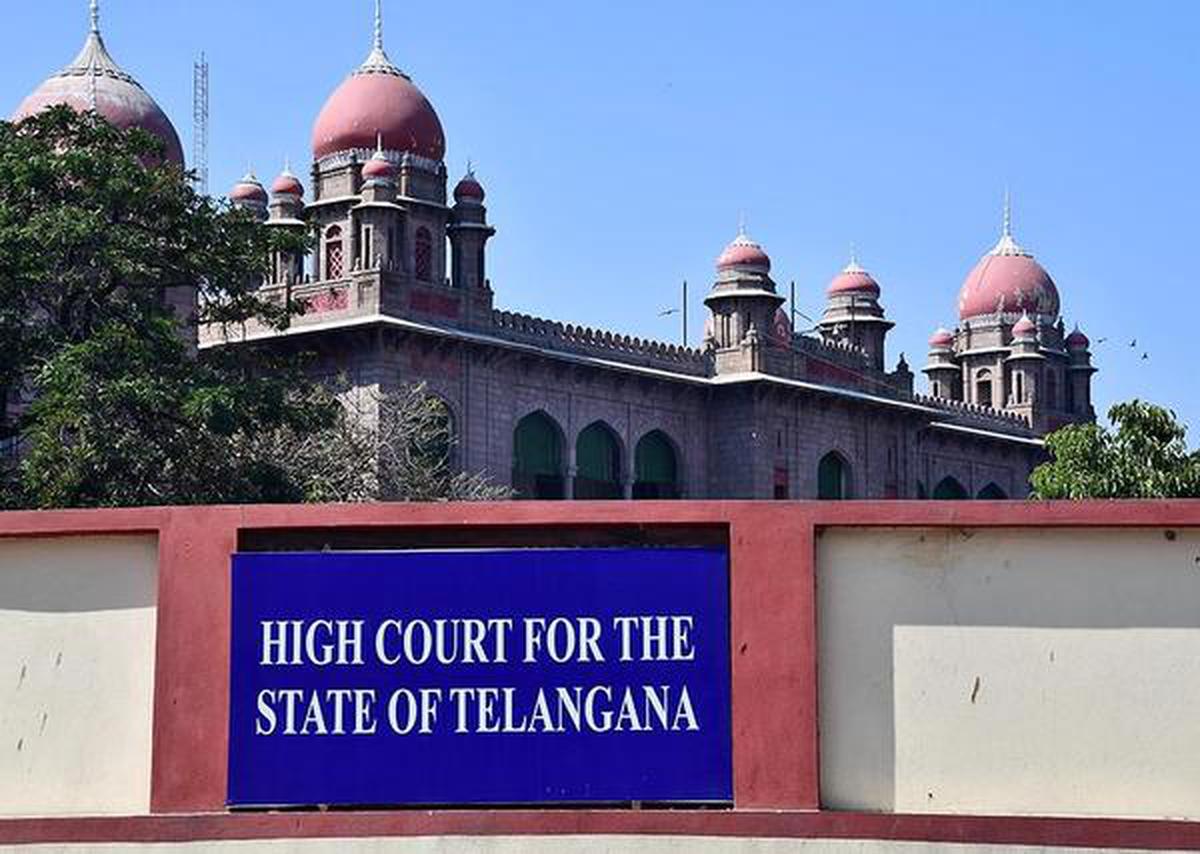
Telangana HC Upholds Strict PG Exam Rules
Failing one paper requires retaking all
Court stresses autonomy of medical universities
By Our Legal Correspondent
New Delhi: April 28, 2026:
The Telangana High Court has ruled that a postgraduate medical student who fails even one paper must reappear for all examinations, denying relief to an MD Anaesthesiology candidate. The judgment underscores the binding nature of university regulations and clarifies that courts cannot dilute academic standards through judicial intervention.
Anyone researching probate disputes, execution of wills, attestation requirements, suspicious circumstances, and landmark inheritance rulings should explore 123 Supreme Court Judgments on Wills, a detailed compilation of leading Supreme Court decisions interpreting the Indian Succession Act, testamentary capacity, witness credibility, and legal principles governing validity of wills in India.
Background
A postgraduate medical student in Anaesthesiology approached the Telangana High Court after failing one paper in the MD examination. The student argued that being forced to reappear for all papers was unfair and disproportionate, especially since he had cleared the other subjects. The Court, however, upheld the university’s regulations, emphasizing that academic rules cannot be selectively challenged once a candidate has voluntarily enrolled under them.
Key Legal Frameworks and Rules Discussed
- University Examination Regulations
- The rules of the concerned medical university mandate that if a candidate fails in any subject, they must reappear for all papers in the next attempt.
- These regulations are framed under the statutory powers of the university and carry binding force.
- Judicial Review in Academic Matters
- The Court reiterated that judicial review is limited in academic policy matters.
- Courts cannot substitute their judgment for that of expert academic bodies unless rules are arbitrary or unconstitutional.
- Principle of Voluntary Acceptance
- By enrolling in the MD program, the student accepted the examination scheme.
- The Court held that candidates cannot later challenge rules they had agreed to abide by.
- Precedents on Academic Autonomy
- The ruling aligns with Supreme Court precedents such as University of Mysore v. C.D. Govinda Rao (1963), which emphasized judicial restraint in academic matters.
- It also echoes Rajendra Prasad Mathur v. Karnataka University (1986), where the Court held that students cannot claim relief contrary to university regulations.
Court’s Findings
- No arbitrariness: The regulation requiring reappearance in all papers was found to be rational, aimed at maintaining uniform standards.
- Academic autonomy protected: Universities have the right to frame rules to ensure integrity of examinations.
- Relief denied: The student’s plea was dismissed, reinforcing that courts cannot dilute academic standards for individual hardship.
Implications
- For Students: Reinforces the importance of understanding and accepting examination regulations before enrolment.
- For Universities: Strengthens their autonomy in framing and enforcing rules without fear of judicial dilution.
- For Judiciary: Clarifies the scope of judicial review in academic matters, limiting intervention to cases of manifest arbitrariness.
- For Medical Education: Ensures uniformity and credibility in postgraduate assessments, critical for professional competence.
Challenges Ahead
- Student hardship: Reappearing for all papers increases academic pressure and delays career progression.
- Policy debate: Some argue for modular re-examination systems to reduce burden, but universities prioritize uniformity.
- Balancing fairness and standards: Future reforms may need to balance student welfare with academic integrity.
FAQ on Telangana HC Ruling
Q1. What was the main issue before the Court?
Whether a postgraduate medical student who fails one paper can be allowed to reappear only for that paper instead of all.
Q2. What did the Court decide?
The Court upheld university regulations requiring reappearance in all papers, denying relief to the student.
Q3. Why did the Court refuse to intervene?
Because academic regulations are framed by expert bodies, and judicial review is limited unless rules are arbitrary or unconstitutional.
Q4. Which legal principles were discussed?
- Academic autonomy of universities.
- Limited scope of judicial review in education.
- Voluntary acceptance of rules by students.
Q5. Does this ruling apply to all universities?
Yes, the principle applies broadly, though specific regulations may vary across institutions.
Q6. Can students challenge such rules in future?
Only if they can prove arbitrariness, discrimination, or violation of constitutional rights.
Q7. What is the broader significance of this ruling?
It reinforces academic discipline and autonomy, ensuring that professional standards in medical education remain uncompromised.
In conclusion, the Telangana High Court’s ruling highlights the judiciary’s deference to academic autonomy. By denying relief to the MD Anaesthesiology student, the Court reinforced that examination regulations must be uniformly applied, even if they cause hardship, to preserve the credibility of medical education.