
Property Rights: The Hidden Engine of India’s Growth
SVAMITVA Scheme Unlocks Rural Credit
Formal Titles Transform Dead Capital into Economic Assets
By Business Reporter
New Delhi: April 16, 2026:
For decades, millions of Indians lived in homes they “owned” but lacked legal proof of ownership. These assets were dead capital—valuable in practice but unusable in the formal economy. Without clear titles, families could not use property as collateral, access loans, or participate in transparent property markets.
In disputes relating to wills, inheritance, and testamentary succession, courts have consistently emphasized the importance of proving genuineness, proper execution, and absence of suspicious circumstances. A key ruling in this context is Apoline D’Souza vs. John D’Souza , where the Supreme Court examined critical issues relating to validity of wills and succession rights. This judgment is highly relevant for understanding how courts determine the authenticity of testamentary documents under Indian law.
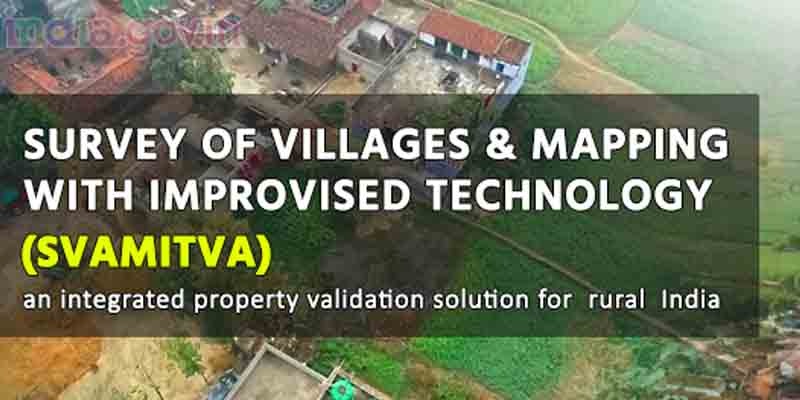
The SVAMITVA scheme, launched by the Government of India, is changing this landscape by providing digital property cards to rural households. This initiative is not just administrative—it is economic reform at scale.
Key Laws and Rules Discussed
- SVAMITVA Scheme (Survey of Villages and Mapping with Improvised Technology in Village Areas)
- Provides rural households with property ownership records.
- Uses drone-based mapping and GIS technology to create accurate land records.
- Enables issuance of property cards recognized by banks and financial institutions.
- Property Rights under Indian Law
- Governed by the Transfer of Property Act, 1882 and Registration Act, 1908.
- Ownership requires legal documentation and registration to be enforceable.
- Lack of formal titles historically excluded rural households from credit markets.
- Economic Impact
- Rural credit has surged by 23% since SVAMITVA’s rollout, with the sharpest gains among women and backward classes.
- Formal titles enable collateralization, price discovery, and functioning property markets.
Broader Implications
- Women’s Empowerment: Women are emerging as key beneficiaries, gaining financial agency through recognized ownership.
- Market Formation: Clear titles allow properties to be bought, sold, and valued transparently, creating liquidity in rural markets.
- Inclusive Growth: Property rights are bridging the gap between informal ownership and formal economic participation.
[RESEARCH RESOURCES]
BUY & READ BOOK, WILL WRITING SIMPLIFIED, By Dr Ravinder Kumar Anand. [📘 Buy Will Writing Simplified online: Amazon | Flipkart ]
FAQ: Property Rights and Growth
Q1. What is the SVAMITVA scheme?
It is a government program that provides rural households with digital property cards based on drone surveys, giving them legal proof of ownership.
Q2. Why are property rights important for economic growth?
Without legal titles, property cannot be used as collateral or traded in formal markets. Recognized ownership unlocks credit, investment, and wealth creation.
Q3. How does SVAMITVA empower women?
By granting property cards, women gain recognized ownership, enabling them to access loans and participate in financial decisions.
Q4. What laws govern property ownership in India?
The Transfer of Property Act, 1882 and Registration Act, 1908 are key frameworks ensuring enforceable ownership rights.
Q5. What is “dead capital”?
A term coined by economist Hernando de Soto, referring to assets that cannot be leveraged in the formal economy due to lack of legal recognition.
Q6. How does formalization affect rural credit?
Banks accept property cards as collateral, leading to a surge in rural lending and financial inclusion.
Q7. What challenges remain?
While ownership is being formalized, political voice and representation remain limited, potentially capping the full benefits of economic agency.
Key Takeaways
- SVAMITVA is a landmark reform that transforms informal ownership into formal property rights.
- Rural credit growth of 23% demonstrates the tangible impact of property formalization.
- Women and marginalized groups are emerging as major beneficiaries.
- Property rights are not just legal—they are economic multipliers, enabling markets, mobility, and inclusive growth.
India’s next big growth story may not lie in startups or digital platforms alone—it is being rewritten in villages, through property rights that turn homes into assets and citizens into stakeholders in the economy.