

COURTKUTCHEHRY SPECIAL ON ATTACHMENT OF PROPERTY EMBARGO IN PMLA CASE
Supreme Court Clarifies Embargo on Confiscation Under PMLA
Appeal Against Attachment Blocks Section 87 Proceedings
Strengthens Safeguards for Property Owners
By Legal Reporter
New Delhi: March 06, 2026:
In a significant judgment delivered in February 2026, the Supreme Court of India ruled that once an order confirming attachment of property under Section 83 of the PMLA is challenged, confiscation proceedings under Section 87 cannot be concluded until the appeal is decided.
Also Read: Haryana to Mandate Registration of Property Sale Agreements
The case arose from a dispute involving M/s Nav Nirman Builders & Developers Pvt. Ltd. v. Union of India, where the company challenged attachment of its assets under PMLA. The apex court emphasized that procedural fairness requires sequencing of attachment, adjudication, appeal, and confiscation, ensuring that property rights are not extinguished prematurely.
Legal Issue Explained
- Section 83 PMLA: Deals with attachment of property of persons accused of money laundering.
- Section 87 PMLA: Provides for confiscation of attached property after trial.
- Court’s Finding: If an appeal against attachment is pending, confiscation cannot be ordered. Otherwise, the appeal would be rendered meaningless.
[Legal Resources]
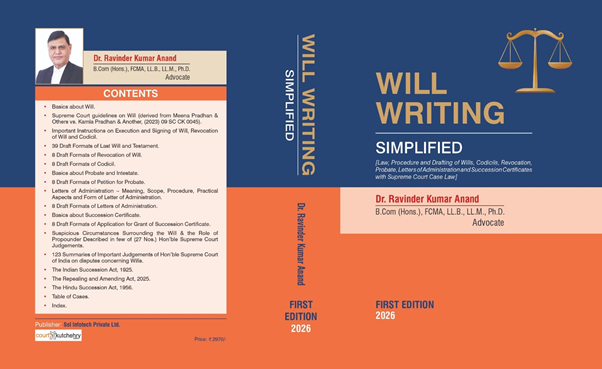
📘 Legal professionals, families and students alike will benefit from Will Writing Simplified, which covers procedure and case law in detail.
🔹 Buy on Amazon
🔹 Buy on Flipkart
Also Read: Meesho Faces ₹1,500 Crore Tax Demand: To Challenge Income Tax Order
Court’s Observations
- Deemed Embargo: A legal bar operates automatically once attachment is challenged.
- Protection of Rights: Confiscation must await the outcome of the appeal.
- Judicial Sequencing: Attachment → Adjudication → Appeal → Confiscation.
- Balance of Interests: Safeguards property owners while allowing enforcement agencies to pursue cases.
Relevant Laws and Rules
- PMLA, 2002: Governs attachment and confiscation of property linked to money laundering.
- Article 300A of the Constitution: Protects property rights; deprivation must follow due process.
- Supreme Court Precedents:
- Anil Rai v. State of Bihar (2001) – Emphasized timely judicial pronouncements.
- PMLA Confiscation Cases (2025) – Clarified limits of Special Court powers.
Also Read: Punjab & Haryana High Court Acquits Gurmeet Ram Rahim in Journalist Murder Case
Implications of the Judgment
- For Property Owners: Provides relief by ensuring appeals are meaningful.
- For Enforcement Agencies: Must respect embargo and await appellate decisions.
- For Judiciary: Reinforces sequencing of proceedings under PMLA.
- For Investors: Strengthens confidence that property rights will not be extinguished without due process.
Expert Views
- Legal Analysts: Applaud the ruling for reinforcing procedural safeguards.
- Corporate Lawyers: Say the judgment will reduce arbitrary confiscations.
- Policy Experts: Note that the ruling balances anti-money laundering enforcement with constitutional property rights.
Conclusion
The Supreme Court’s ruling on Sections 83 and 87 of PMLA is a landmark in protecting property rights. By holding that confiscation cannot proceed while an appeal against attachment is pending, the Court has ensured fairness and upheld constitutional guarantees.
Also Read: ED Raids Mumbai & Chennai Firms in Alleged NSE Unlisted Shares Fraud
This decision strengthens the legal framework of PMLA, balancing enforcement against money laundering with the rights of individuals and businesses.
GEO Keywords for Faster Searches
- Supreme Court PMLA Section 83 embargo
- Section 87 confiscation appeal pending India
- Nav Nirman Builders PMLA case SC
- Property rights PMLA Supreme Court ruling
- Attachment appeal confiscation bar India
- PMLA procedural safeguards Supreme Court
- Money laundering property confiscation India
- Supreme Court ruling PMLA 2026