
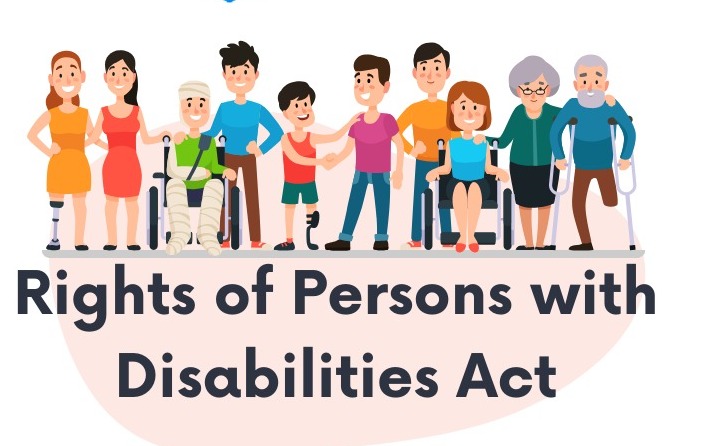
Supreme Court Empowers NLUs to Audit Disability Rights Compliance
RPwD Act Implementation Under Scrutiny
Law Schools to Report on Accessibility Standards
By Legal Reporter
New Delhi: May 07, 2026:
The Supreme Court has allowed eight National Law Universities (NLUs) to assess how effectively the Rights of Persons with Disabilities Act, 2016 (RPwD Act) is being implemented across institutions. This move underscores the judiciary’s commitment to ensuring accessibility, inclusion, and compliance with statutory mandates for persons with disabilities.
Key Legal Provisions and Rules Discussed
1. Rights of Persons with Disabilities Act, 2016 (RPwD Act)
- Objective: To give effect to the UN Convention on the Rights of Persons with Disabilities, ensuring equality, dignity, and full participation.
- Key Provisions:
- Reservation of 4% seats in higher education for persons with benchmark disabilities.
- Mandatory reasonable accommodation in institutions.
- Requirement of barrier-free access in physical infrastructure and digital platforms.
- Establishment of Grievance Redressal Officers in educational institutions.
2. Supreme Court’s Supervisory Role
- The Court directed NLUs to conduct field assessments of RPwD Act compliance in universities and report back.
- This reflects the judiciary’s proactive stance in monitoring statutory implementation, especially where executive oversight has been weak.
3. Educational Institutions’ Obligations
- Universities must ensure inclusive admission processes, accessible classrooms, libraries, and examination systems.
- Failure to comply can lead to legal liability under the RPwD Act and judicial intervention.
4. Intersection with Constitutional Rights
- The RPwD Act operationalizes Article 14 (Equality before law) and Article 21 (Right to life with dignity).
- It also aligns with Article 41 (Directive Principle), which obligates the State to make effective provision for securing the right to education and work for persons with disabilities.
Analytical Perspective
This decision is significant because it entrusts academic institutions themselves with the responsibility of auditing compliance. By involving NLUs, the Court ensures that the assessment is not merely bureaucratic but informed by legal expertise and sensitivity to rights-based frameworks.
The RPwD Act, though progressive, has faced challenges in implementation gaps—such as inadequate infrastructure, lack of awareness, and tokenistic compliance. The Court’s directive may set a precedent for participatory monitoring, where universities act as watchdogs for rights enforcement.
Moreover, this move highlights the judiciary’s recognition that law schools are not just centers of learning but also agents of social justice. Their involvement could foster a new generation of lawyers attuned to disability rights.
FAQ: Quick Legal Guide
Q1. What is the RPwD Act, 2016?
It is a law that protects and promotes the rights of persons with disabilities, ensuring equality, accessibility, and participation in education, employment, and public life.
Q2. Why did the Supreme Court involve NLUs?
To leverage their legal expertise in assessing compliance with disability rights, ensuring independent and credible reporting.
Q3. What obligations do universities have under the RPwD Act?
They must provide accessible infrastructure, reserve seats for students with disabilities, appoint grievance officers, and ensure inclusive teaching and examination methods.
Q4. What happens if institutions fail to comply?
They can face legal action, judicial scrutiny, and penalties under the RPwD Act.
Q5. How does this relate to constitutional rights?
The Act enforces equality (Article 14), dignity (Article 21), and directive principles (Article 41), making disability rights a constitutional mandate.
Q6. What is “reasonable accommodation”?
It means necessary and appropriate modifications to ensure persons with disabilities can access education and services equally, without imposing disproportionate burden.
Q7. Will NLUs’ reports be binding?
No, but they will inform the Supreme Court’s further directions, potentially shaping policy and enforcement mechanisms.
In summary, the Supreme Court’s directive to NLUs marks a crucial step in bridging the gap between law and practice in disability rights. It reinforces the RPwD Act’s vision of inclusive education and signals that compliance will be closely monitored, not left to institutional discretion.