
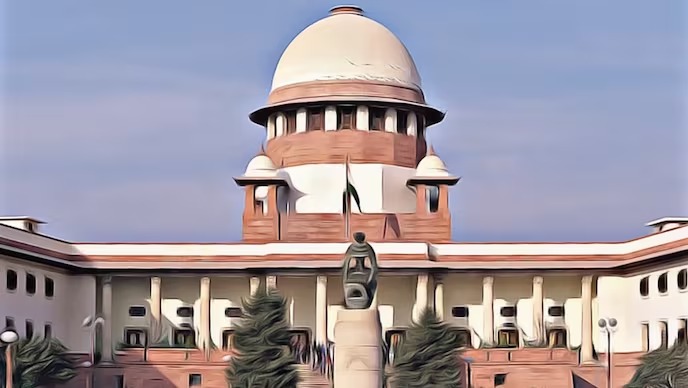
Supreme Court Allows Degrees Despite Invalid Certificates, Orders ₹10 Lakh Compensation Each
Court Balances Shortage of Qualified Doctors with Accountability
Landmark Ruling Highlights Gaps in Medical Education Regulation
By Legal Reporter
New Delhi, March 2026:
In a significant judgment, the Supreme Court of India has allowed students who obtained medical degrees with invalid certificates to retain their qualifications, citing the country’s acute shortage of qualified doctors. However, the court imposed a penalty of ₹10 lakh compensation per student, to be paid to the authorities, ensuring accountability while protecting the careers of young professionals.
Background of the Case
The case involved students who had secured admission to medical colleges using certificates later found to be invalid. Despite completing their courses and earning degrees, their qualifications were challenged.
The Supreme Court faced a difficult balance:
- On one hand, the certificates used for admission were invalid.
- On the other, the students had already completed rigorous medical training and were serving in a country facing a serious shortage of doctors.
The court decided that stripping them of their degrees would harm public interest, but accountability had to be enforced through financial penalties.
[Legal Note]
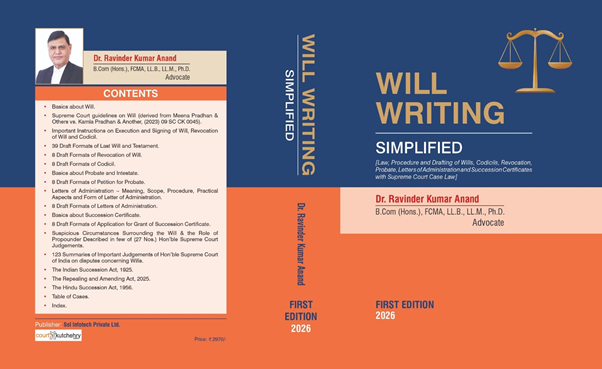
📘 Legal professionals and students alike will benefit from Will Writing Simplified, which covers procedure and case law in detail. BUY TODAY: Amazon 🔹 Flipkart
Also Read: Karnataka Gangrape Case Raises Alarm: Why Law Warns Against Risky Associations
Court’s Observations
- Shortage of Doctors: India faces a critical gap in doctor‑patient ratios, especially in rural areas.
- Public Interest: Cancelling degrees would worsen the healthcare crisis.
- Accountability: Students must pay ₹10 lakh each as compensation for using invalid certificates.
- Regulatory Oversight: Authorities must strengthen verification processes to prevent recurrence.
Legal Framework
Indian Medical Council Act, 1956 (now repealed, replaced by NMC Act, 2019)
- Governs medical education and recognition of qualifications.
- Requires valid certificates and compliance with admission norms.
National Medical Commission Act, 2019
- Establishes the National Medical Commission (NMC) to regulate medical education.
- Mandates strict verification of eligibility certificates.
Supreme Court’s Powers
- Under Article 142 of the Constitution, the Supreme Court can pass orders to do “complete justice,” balancing legality with public interest.
Also Read: Delhi High Court Cracks Down on FMCG Counterfeiting: Permanent Injunction for HUL & P&G
Larger Implications
- For Students: Protects careers of those who completed medical training but imposes financial accountability.
- For Regulators: Highlights need for stronger admission checks and certificate verification.
- For Healthcare System: Ensures that trained doctors remain available to serve patients.
- For Judiciary: Demonstrates pragmatic judicial intervention in balancing legality with public welfare.
Conclusion
The Supreme Court’s ruling reflects a pragmatic approach to India’s healthcare challenges. By allowing degrees to stand while imposing compensation, the court has ensured that the country does not lose trained doctors, while also sending a strong message against misuse of invalid certificates. This judgment is expected to influence future cases involving educational fraud and regulatory lapses.
Also Read: Pahalgam Terror Attack: GoPro Trail Leads to China, NIA Seeks Judicial Help
Keywords for Faster Search
- Supreme Court medical degrees invalid certificates
- ₹10 lakh compensation medical students India
- Shortage of doctors Supreme Court ruling
- National Medical Commission Act certificate verification
- SC Article 142 medical education case
- Medical education fraud India Supreme Court
- Healthcare shortage India Supreme Court judgment
Also Read: Gujarat High Court Rules Borrower of Insured Vehicle Not a ‘Third Party’