
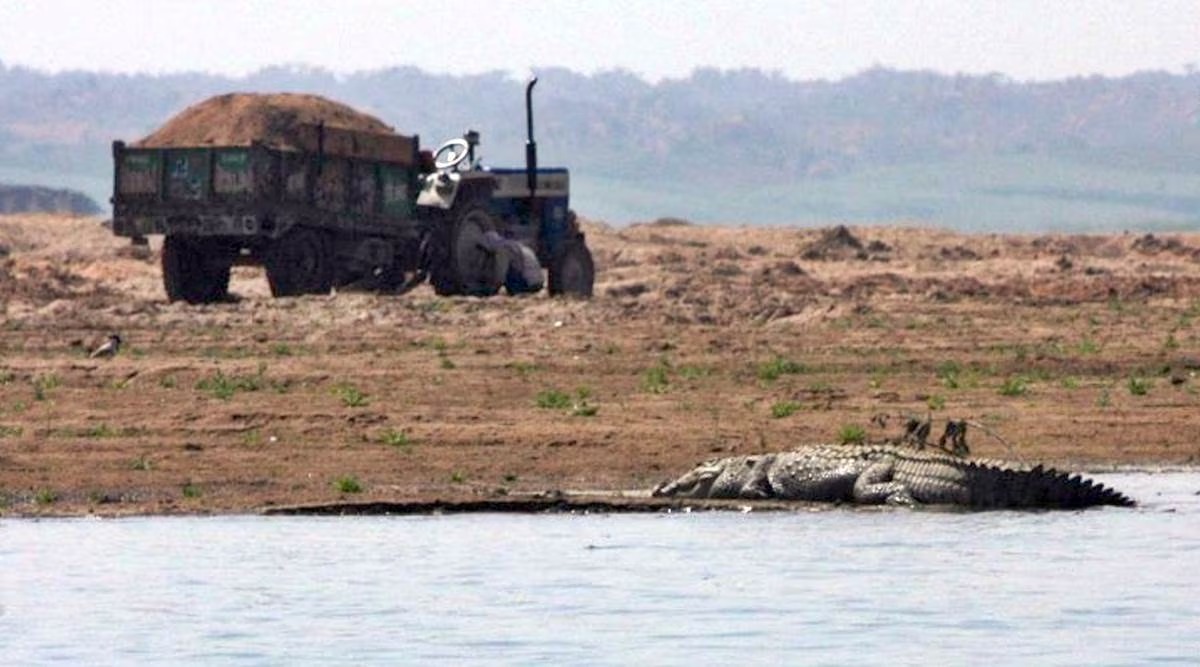
Supreme Court Steps in Against Illegal Sand Mining in Chambal Sanctuary
Judges warn of grave threat to gharials and aquatic life
Court takes suo motu action after media reports
By Legal Reporter
New Delhi: March 14, 2026:
Also Read: Medical Covers for Ultrasound & Laparoscopy Taxable Under GST: AAR Ruling
On March 13, 2026, the Supreme Court bench of Justice Vikram Nath and Justice Sandeep Mehta took suo motu cognisance of illegal sand mining in the National Chambal Sanctuary, a protected zone spanning Madhya Pradesh, Rajasthan, and Uttar Pradesh. The sanctuary is home to the critically endangered gharial (long-snouted crocodile), freshwater dolphins, and other aquatic species. The Court acted after reports revealed that mining was continuing even in areas where gharials had recently been released as part of conservation efforts.
What the Court Said
- The bench noted that illegal mining was rampant even in protected stretches, undermining conservation programmes.
- Justice Mehta observed that newspaper reports and CSR findings showed gharials being forced to relocate due to mining activity.
- The matter has been placed before Chief Justice Surya Kant for further directions.
Also Read: Supreme Court Upholds Deletion of Section 14A Disallowance
[Recommended Legal Resources]
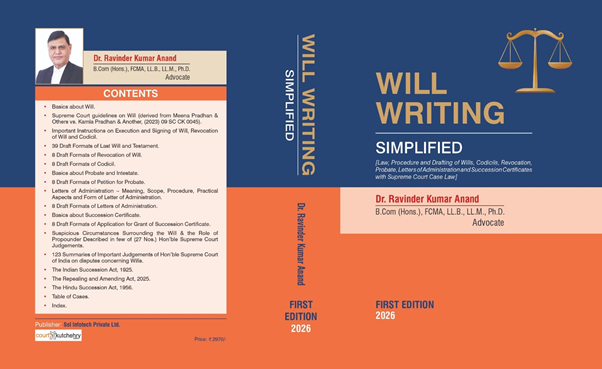
📘 Legal professionals, families and students alike will benefit from Will Writing Simplified, which covers procedure and case law in detail.
🔹 Buy on Amazon
🔹 Buy on Flipkart
Why This Case Matters
Also Read: ITAT Deletes Tax Addition Against Dalmia Family Trust: No Evidence Found
- Ecological Impact: Sand mining destabilizes riverbeds, destroys breeding grounds, and threatens aquatic biodiversity.
- Legal Significance: The Court’s suo motu action shows its proactive role in environmental protection.
- Conservation Crisis: The Chambal Sanctuary is one of the last strongholds of gharials, whose population has already been decimated by habitat loss.
- Governance Challenge: Mining mafias often operate with impunity, highlighting gaps in enforcement by state authorities.
Broader Implications
- For Wildlife: Protecting gharials ensures balance in the river ecosystem, benefiting fish populations and other species.
- For Law Enforcement: The case may push states to strengthen monitoring and crack down on illegal mining syndicates.
- For Policy: Could lead to stricter guidelines on mining near eco-sensitive zones.
- For Citizens: Raises awareness about the environmental cost of unchecked resource extraction.
Conclusion
The Supreme Court’s intervention in the Chambal Sanctuary case is a landmark moment in India’s environmental jurisprudence. By taking suo motu cognisance, the Court has signaled that illegal sand mining is not just a local issue but a national ecological threat. The coming hearings will determine how India balances development with conservation, and whether endangered species like the gharial can be saved from extinction.
Also Read: Gujarat High Court Warns Against Blind Use of AI Citations in Adjudication Orders
Keywords for Faster Searches
Supreme Court Chambal sand mining, illegal sand mining India, gharial conservation Supreme Court, Chambal sanctuary mining case, environmental protection India judiciary, suo motu Supreme Court environment, National Chambal Sanctuary mining ban, gharial endangered species India
Also Read: Extended Stay of Indians Returning from West Asia May Trigger Tax Issues