
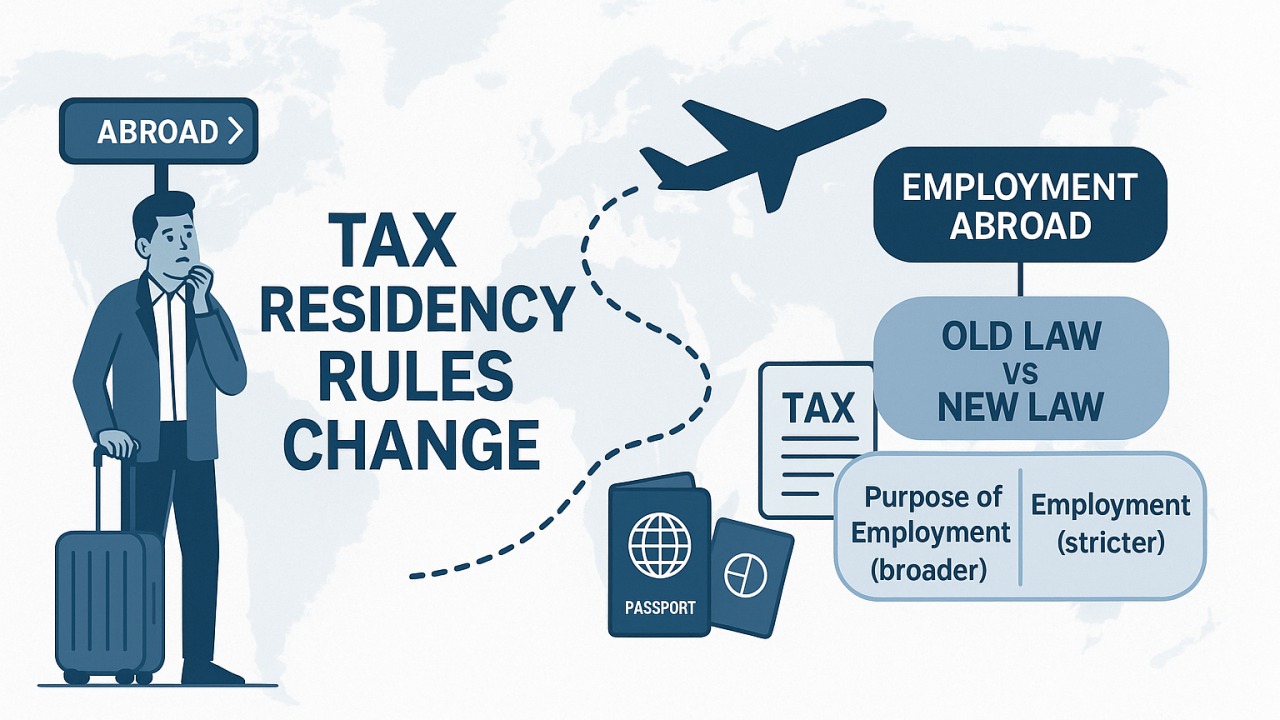
Extended Stay of Indians Returning from West Asia May Trigger Tax Issues
Residency Rules Under Income Tax Act Explained
Flight Disruptions Could Alter Tax Obligations
By Business Reporter
New Delhi: March 13, 2026:
Also Read: Absence of Eyewitness Not Fatal: Supreme Court Upholds Convictions in Balkishan Murder Case
The escalating tensions in West Asia, including airspace closures and flight disruptions, have forced many Indians working in Gulf countries to return home. While this is primarily a humanitarian and logistical issue, tax experts warn that extended stays in India could inadvertently change their tax residency status, leading to new obligations under Indian law.
Tax Residency Rules in India
Under the Income Tax Act, 1961, an individual’s tax liability depends on their residential status:
- Resident: Taxed on global income.
- Non-Resident (NRI): Taxed only on income earned in India.
Key Thresholds
- 182 days or more in India during a financial year → Resident.
- 60 days or more in India during the year + 365 days in the preceding 4 years → Resident.
- Special rule for Indian citizens working abroad: If visiting India, they can stay up to 120 days without triggering residency, provided their Indian income is below ₹15 lakh.
Thus, even a delay of 2–3 days beyond these limits can unexpectedly change tax residency.
[Recommended Research Resources]
📘 Legal professionals and students alike will benefit from Will Writing Simplified, which covers procedure and case law in detail.
🔹 Buy on Amazon
🔹 Buy on Flipkart
Why This Issue Has Emerged
Also Read: Bhopal Gas Tragedy Legacy: High Court Orders Cleanup Plan for Union Carbide Site
- Flight cancellations from hubs like Dubai, Abu Dhabi, and Doha have stranded thousands of Indians.
- Extended stays due to geopolitical tensions may push individuals past residency thresholds.
- Foreign income exposure: Once classified as residents, their overseas earnings could be taxed in India.
Implications for Returnees
- Tax on global income: NRIs forced to stay longer may have to declare and pay tax on foreign salaries, investments, and business income.
- Double taxation risk: Unless covered by Double Taxation Avoidance Agreements (DTAA), individuals may face tax both in India and abroad.
- Compliance burden: Filing returns, maintaining records, and proving residency status will become critical.
Expert Advice
- Avoid wafer-thin margins: Tax experts advise not to plan visits based on exact thresholds like 181 or 58 days.
- Document travel disruptions: Keep records of flight cancellations and government advisories to support claims of unintended extended stay.
- Seek DTAA relief: NRIs should check if their host country has a DTAA with India to avoid double taxation.
Also Read: Supreme Court Orders 30% Women Representation in Bar Association Committees
Conclusion
The West Asia crisis has highlighted how geopolitical events can directly impact tax obligations. Indians returning home must carefully track their stay duration to avoid crossing residency thresholds. The Supreme Court and tax authorities may eventually need to clarify rules for extraordinary situations, but until then, documentation and proactive compliance remain the best safeguards.
GEO Keywords for Faster Searches
- India tax residency rules NRI
- Extended stay India tax implications
- West Asia crisis tax residency India
- Income Tax Act Section 6 residency
- NRI global income taxation India
- Double taxation avoidance India NRI
- Tax residency thresholds India 2026
Also Read: Supreme Court Slams Hospitals Over DAMA, Allows Passive Euthanasia