
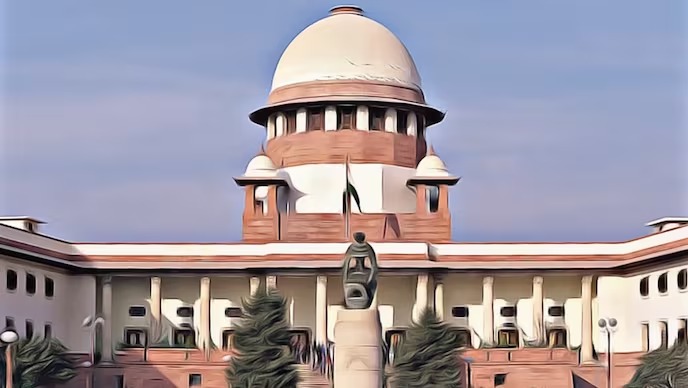
Supreme Court Upholds State Hiring Rules Over AICTE Norms in Recruitment Dispute
Court says AICTE regulations cannot override state recruitment commissions
Ruling brings clarity to teacher appointments in technical institutions
By Our Legal Reporter
New Delhi: January 27, 2026:
Recruitment disputes in India’s education sector often arise when central regulations clash with state rules. A recent Supreme Court judgment has settled one such conflict, ruling that AICTE norms cannot override State Public Service Commission recruitment rules. The case involved the Gujarat Public Service Commission (GPSC) and a candidate who challenged the recruitment process, arguing that it violated AICTE regulations.
Also Read: DTCP Serves Notice as Gurgaon Developer’s Commercial Project Licence Lapses
The Court’s decision is significant because it establishes that AICTE’s Career Advancement Scheme (CAS) regulations are designed to promote teachers already in service, not to govern direct recruitment. This ruling provides clarity for thousands of teaching positions in technical institutions across India.
Background of the Case
- The dispute began when a candidate, Gnaneshwary Dushyantkumar Shah, challenged the GPSC recruitment process for professors in engineering colleges.
- She argued that the process violated AICTE’s 2012 regulations, which prescribe qualifications and procedures for academic staff.
- A single judge of the Gujarat High Court dismissed her plea, ruling that AICTE norms do not apply to direct recruitment.
- However, a division bench of the High Court later invalidated the recruitment, siding with the candidate.
- The GPSC appealed to the Supreme Court, which upheld the single judge’s view and restored the recruitment process.
Court’s Key Observations
- AICTE Regulations Are for Career Advancement: The Court clarified that AICTE norms are meant to help teachers progress in their careers, not to regulate entry-level recruitment.
- State Rules Take Precedence: Recruitment conducted by State Public Service Commissions must follow state rules, not AICTE guidelines.
- Candidate Cannot Challenge Rules After Participation: The Court noted that a candidate who participates in a recruitment process without objection cannot later challenge the rules after failing to secure a job.
- Legal Principle of Finality: Once recruitment rules are accepted, they cannot be reopened by unsuccessful candidates.
Why This Ruling Matters
- For States: Reinforces the authority of State Public Service Commissions in recruitment.
- For Candidates: Clarifies that AICTE norms cannot be used to challenge state recruitment processes.
- For Institutions: Provides certainty in hiring, ensuring that appointments are not invalidated by conflicting regulations.
- For Judiciary: Establishes a precedent for similar disputes across India.
Wider Implications
- Education Sector: Technical institutions can now proceed with recruitment without fear of litigation based on AICTE norms.
- Policy Making: Encourages better coordination between central regulatory bodies and state commissions.
- Legal Clarity: Reduces confusion among candidates about eligibility and recruitment procedures.
- Employment Stability: Ensures that appointments made under state rules remain valid and binding.
Expert Opinions
- Legal Experts: Applaud the ruling for reinforcing the principle that central regulations cannot override state laws unless explicitly stated.
- Education Analysts: Say the judgment will help streamline recruitment in technical institutions.
- Public Service Commissions: Welcome the clarity, as it reduces the risk of recruitment processes being invalidated.
Also Read: Bollywood vs South Cinema: How Legal Battles Shape India’s Film Industry
Conclusion
The Supreme Court’s ruling in the GPSC vs Gnaneshwary Shah case is a landmark judgment that strengthens the authority of State Public Service Commissions. By clarifying that AICTE regulations cannot override state recruitment rules, the Court has ensured stability in teacher appointments across technical institutions. This decision will have far-reaching effects, reduce litigation and provide certainty for both candidates and institutions.
Suggested Keywords for Faster Searches
- Supreme Court AICTE vs State PSC ruling
- AICTE norms recruitment dispute India
- GPSC Supreme Court judgment 2026
- AICTE career advancement scheme regulations
- State Public Service Commission recruitment rules
- Teacher recruitment Supreme Court India
- AICTE vs Gujarat PSC case
- Supreme Court education recruitment ruling India
Also Read: Indian EMIs for Dubai Dream Homes Face Legal Roadblocks