
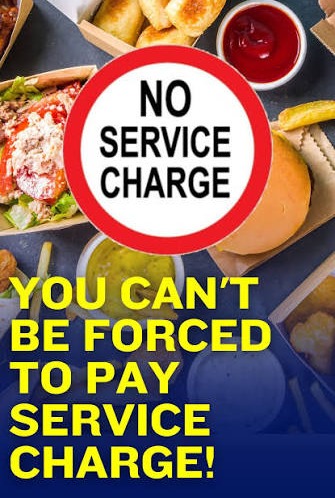
Service Charges in Restaurants: Courts Put Consumers First
Mandatory levies struck down as unfair trade practice
Global lessons on tipping, transparency, and consumer choice
By Vishwas Kumar
New Delhi: June 30, 2026:
Indian consumer law now firmly prohibits restaurants from levying mandatory service charges without diners’ consent. Recent rulings, including the Jalandhar Consumer Commission’s order awarding compensation to a lawyer, and the Delhi High Court’s landmark judgment, have clarified that service charges are voluntary, not compulsory. This shift strengthens consumer rights and forces the hospitality industry to rethink staff compensation models.
Key Laws and Provisions
The debate over restaurant service charges in India is anchored in the Consumer Protection Act, 2019 (CPA, 2019), which defines and prohibits unfair trade practices. The Act empowers the Central Consumer Protection Authority (CCPA) to issue binding guidelines to safeguard consumer rights. Under this framework, the CCPA has taken a firm stance against mandatory service charges, viewing them as coercive and misleading practices that compromise consumer choice.
In July 2022, the CCPA issued comprehensive guidelines that explicitly prohibit restaurants from automatically adding service charges to bills. These guidelines mandate that payment of service charges must be voluntary, based solely on the consumer’s discretion. Importantly, they also bar restaurants from restricting entry, denying service, or otherwise discriminating against diners who refuse to pay. This ensures that consumers are not pressured into accepting charges they did not consent to, reinforcing the principle of transparency in commercial transactions.
The judicial concern lies in whether restaurants can justify mandatory service charges as part of their pricing model. Industry associations argue that service charges are integral to staff welfare and operational costs. However, courts have consistently held that such levies mislead consumers about the true cost of meals. By disguising service charges as compulsory or conflating them with government taxes, restaurants blur the line between voluntary gratuity and mandatory payment. This undermines consumer autonomy and violates the fairness principles enshrined in CPA, 2019.
Recent rulings, including those by the Delhi High Court and district consumer commissions, have reinforced that mandatory service charges constitute unfair trade practices. Together, the CPA, 2019, the CCPA guidelines, and judicial interpretation establish a clear legal framework: restaurants must disclose all costs transparently, and consumers retain the right to refuse service charges without fear of denial or discrimination.
Judicial Precedents
The controversy over mandatory restaurant service charges has been shaped by a series of judicial and regulatory interventions, each reinforcing the principle that consumer consent is paramount. These precedents collectively establish that automatic levies without disclosure or choice amount to unfair trade practices under the Consumer Protection Act, 2019.
The District Consumer Commission, Jalandhar (2026) in Sanjeev Duggal v. Maya Inns Pvt. Ltd. marked a significant moment in consumer jurisprudence. Duggal, a lawyer dining with his family, objected to service charges and buffet fees for a minor child. The Commission held the restaurant liable for levying charges without consent, ordering a refund and awarding ₹15,000 compensation for harassment. This ruling underscored that consumers cannot be coerced into paying charges they did not agree to, and that compensation is a legitimate remedy for unfair trade practices.
The Delhi High Court (2025) in National Restaurant Association of India (NRAI) v. Union of India provided broader constitutional clarity. Upholding the CCPA guidelines of July 2022, the Court ruled that mandatory service charges constitute an unfair trade practice under CPA, 2019. It emphasized that restaurants must disclose all costs transparently and cannot disguise service charges as compulsory levies. The judgment reinforced consumer autonomy, aligning Indian law with global standards of transparency in hospitality.
The CCPA’s enforcement actions (2026) further strengthened this framework. Chains such as Barbeque Nation were directed to discontinue compulsory service charges, reinforcing the voluntary nature of tips. By exercising its statutory powers, the CCPA demonstrated that regulatory oversight can complement judicial rulings, ensuring compliance across the industry.
Other consumer commissions and courts have echoed these principles, consistently stressing that service charges cannot be imposed without explicit consent. Together, these precedents highlight a judicial trend toward protecting consumers from hidden costs and coercive practices. They also signal to the hospitality industry that staff welfare arguments cannot override consumer rights, and that compensation models must be restructured transparently.
In sum, the judicial landscape now firmly establishes that service charges are voluntary. Courts and regulators have converged on a single principle: consumer choice is non-negotiable, and any attempt to bypass it will be treated as an unfair trade practice with legal consequences.
Comparative Perspectives
The debate over restaurant service charges in India gains clarity when viewed against global practices. In the United States, service charges are often added for large groups or special events, but diners are informed in advance. Crucially, tipping remains voluntary, forming a cultural norm rather than a legal obligation. Transparency is the guiding principle—customers know what they are paying and why.
In the United Kingdom and across the European Union, service charges may be included in the bill, but disclosure is mandatory. Restaurants must clearly state whether the charge is optional or compulsory, and consumers retain discretion to refuse or adjust it. This ensures that diners are not misled into believing service charges are government taxes or unavoidable levies. The emphasis is on consumer choice, with regulators ensuring clarity in billing practices.
Australia presents a different model altogether. With a minimal tipping culture and strong wage regulations, service charges are rare. Staff compensation is built into menu pricing, eliminating the need for additional levies. This approach reflects a broader philosophy: wages should be fair and transparent, not dependent on discretionary or hidden charges. Consumers benefit from predictable pricing, while staff enjoy regulated pay.
Against this backdrop, India’s challenge is unique. For decades, restaurants routinely imposed mandatory service charges, often without disclosure, creating confusion and resentment among consumers. The clash between this tradition and modern consumer rights law has now reached a turning point. Courts and regulators have declared that service charges must be voluntary, aligning India with global norms of transparency and fairness. Yet, the transition is complex—restaurants must restructure wage models, and consumers must adapt to a system where gratuity is truly discretionary.
In essence, comparative perspectives show that India is moving toward global best practices, but with the added challenge of dismantling entrenched habits of mandatory levies.
Case Studies & Human Narratives
Sanjeev Duggal’s Complaint: A lawyer dining with family objected to service charges and buffet fees for a minor child. The Commission found unfair trade practice, awarding compensation.
Consumer Grievances Nationwide: Diners often felt coerced into paying charges disguised as government levies.
Restaurant Industry’s View: Associations argued service charges fund staff welfare, but courts held consumer consent paramount.
Extended FAQ on Restaurant Service Charges
Basics
What is a restaurant service charge? It is an extra fee added to the bill by restaurants, usually claimed as staff welfare or gratuity.
Is service charge mandatory in India? No, courts and CCPA guidelines confirm it is voluntary and cannot be imposed without consumer consent.
What do CCPA guidelines say? They prohibit automatic service charges, mandate transparency, and affirm diners’ right to refuse.
How is service charge different from GST? GST is a government tax, while service charge is a private levy by restaurants.
Can restaurants deny service if I refuse? No, refusal of service for not paying service charge is illegal under consumer law.
Judicial Rulings
What did Jalandhar Commission decide in Duggal case? It held the restaurant liable for levying charges without consent, awarding refund and compensation.
What did Delhi HC rule in NRAI case? It upheld CCPA guidelines, declaring mandatory service charges an unfair trade practice.
How did CCPA enforce guidelines against Barbeque Nation? It directed the chain to stop levying compulsory charges, reinforcing consumer choice.
Are service charges unfair trade practices? Yes, courts classify them as unfair when imposed without consent.
What compensation can consumers claim? Refund of charges plus damages for harassment or mental agony.
Practical Concerns
How can diners refuse service charges? By objecting at billing and citing CCPA guidelines.
What documents should consumers keep? Bills, receipts, and proof of payment for filing complaints.
Can restaurants add charges under another name? No, hidden charges under different labels are also prohibited.
Is tipping still allowed? Yes, voluntary tipping remains entirely at consumer discretion.
How to complain about unfair charges? File with District Consumer Commission or CCPA online portal.
Comparative Perspectives
How does US handle service charges? They are disclosed upfront, often for large groups, but tipping is voluntary.
What is UK’s approach? Service charges may be included but must be clearly stated; diners can refuse.
How does EU regulate charges? Transparency is key—charges must be disclosed and cannot mislead consumers.
Why is Australia different? Minimal tipping culture; wages regulated, so service charges are rare.
What global lessons apply to India? Transparency and consumer choice must guide hospitality practices.
Human Impact
How do mandatory charges affect families? They inflate bills unexpectedly, straining affordability.
Why do consumers feel misled? Charges are often disguised as compulsory or government levies.
How do charges impact affordability? They add hidden costs, discouraging dining out for many.
What is the staff welfare argument? Restaurants claim charges support staff, but courts stress wages must be transparent.
How do rulings affect restaurant pricing? They force restaurants to restructure menus and wage models.
Constitutional & Legal Principles
How does Article 14 apply? Arbitrary charges violate equality and fairness principles.
What is doctrine of proportionality? Consumer burdens must be proportionate; hidden charges fail this test.
How does CPA, 2019 define unfair trade practice? Any misleading or coercive practice harming consumers qualifies.
What powers does CCPA have? It can issue guidelines, investigate, and penalize violators.
How do courts balance business rights vs consumer rights? By protecting consumer consent while allowing fair business practices.
Future Outlook
Will mandatory charges disappear? Yes, enforcement and rulings make them unsustainable.
How can restaurants ensure transparency? By clearly displaying prices and voluntary contribution options.
What reforms are needed in hospitality? Better wage structures and clear billing practices.
How can technology help billing clarity? Digital menus and apps can show itemized costs upfront.
What role will Supreme Court play? It may set binding precedent ensuring nationwide compliance.
Can voluntary contributions replace charges? Yes, diners can choose to tip or contribute voluntarily.
How can consumers safeguard rights? By staying informed, keeping receipts, and filing complaints.
Will staff wages be restructured? Likely, as restaurants adapt to loss of service charge revenue.
How does this affect trust in dining? Transparency builds consumer confidence and loyalty.
What is the long-term vision for fair hospitality? A system where pricing is clear, wages are fair, and consumer choice respected.
Op-Ed Closing Vision
The battle over restaurant service charges is more than a dispute about a few hundred rupees—it is a test of India’s consumer rights framework. For decades, diners were compelled to pay mandatory charges, often misled into believing they were government levies. The recent rulings mark a turning point, affirming that consumer consent is non-negotiable.
The Delhi High Court’s judgment and subsequent enforcement by the CCPA underscore a broader principle: transparency in commerce. Restaurants cannot impose hidden costs under the guise of tradition or staff welfare. Consumers must know the true price of their meals, and any gratuity must remain voluntary. This aligns India with global practices where tipping is discretionary, not coerced.
Yet, the industry’s concerns are not trivial. Service charges often funded staff welfare, and their removal forces restaurants to rethink compensation models. The challenge is to balance consumer rights with fair wages. Transparent menu pricing, voluntary contributions, or staff welfare funds could provide alternatives. The solution lies not in coercion but in clarity.
The human stories—like Sanjeev Duggal’s fight for fairness—illustrate the stakes. For ordinary families, mandatory charges erode trust and affordability. For staff, the debate raises questions about livelihood. For the judiciary, it is a test of courage to uphold fairness against entrenched practices.
Looking ahead, India must embrace a hospitality model rooted in transparency. Technology can ensure billing clarity, regulators must enforce compliance, and restaurants must innovate compensation structures. Consumers, empowered by law, must assert their rights. The long-term vision is simple: dining out should be joyful, not a battle over hidden charges.
In affirming that service charges are voluntary, India has taken a decisive step toward fairness. The challenge now is to sustain this momentum, ensuring that consumer rights remain at the heart of commerce, and that hospitality thrives on trust, not coercion.