
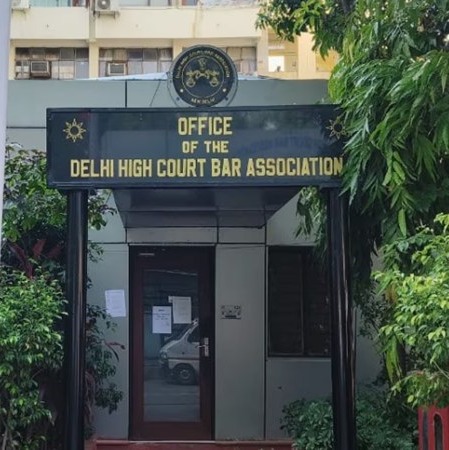
Supreme Court Rules Bar Associations Beyond Writ Jurisdiction
Private bodies of lawyers not ‘State’ under Article 12
Judgment redefines scope of constitutional remedies against professional associations
By Legal Reporter
New Delhi: June 05, 2026:
The Supreme Court has upheld the Delhi High Court’s ruling that bar associations are not “State” under Article 12 of the Constitution, meaning they cannot be subjected to writ jurisdiction. This landmark decision clarifies the constitutional position of professional bodies like bar associations, reinforcing their private character and limiting judicial review against them.
The Supreme Court’s refusal to interfere with the Delhi High Court’s judgment in Sangita Rai v. New Delhi Bar Association has significant implications for constitutional law and the functioning of professional associations. The Court held that bar associations, being voluntary private bodies of advocates, do not qualify as “State” or
“instrumentality of the State” under Article 12 of the Constitution. Consequently, writ petitions under Article 226 or Article 32 cannot be maintained against them.
This ruling touches upon fundamental constitutional doctrines, including the definition of “State,” the scope of writ jurisdiction, and the balance between private autonomy and public accountability.
Key Legal Principles Discussed
1. Article 12 – Definition of ‘State’
- Article 12 defines “State” to include the Government, Parliament, Legislatures, and all local or other authorities within India.
- The test for determining whether a body is “State” hinges on whether it performs public functions or is controlled by the government.
2. Bar Associations as Private Bodies
- Bar associations are voluntary organizations formed by advocates for professional and welfare purposes.
- They are registered under the Societies Registration Act, 1860, or similar statutes, and operate independently of government control.
- Unlike statutory bodies such as Bar Councils (which are established under the Advocates Act, 1961), bar associations are not created by law.
3. Writ Jurisdiction under Articles 32 and 226
- Writs are constitutional remedies available against State action.
- Private disputes or actions of non-State entities generally fall outside writ jurisdiction.
- Exceptions exist where private bodies perform public functions (e.g., educational institutions delivering public education).
4. Precedents Considered
- Ajay Hasia v. Khalid Mujib Sehravardi (1981): Laid down tests for determining whether a body is “State” based on government control and public functions.
- Zee Telefilms Ltd. v. Union of India (2005): Held that BCCI is not “State” under Article 12, though its actions may be subject to judicial review in certain contexts.
- Pradeep Kumar Biswas v. Indian Institute of Chemical Biology (2002): Expanded the scope of Article 12 to include bodies under deep government control.
5. Supreme Court’s Reasoning
- The Court emphasized that bar associations do not discharge public duties akin to State functions.
- Their role is limited to representing members’ interests, organizing welfare activities, and managing internal affairs.
- Hence, they cannot be subjected to writ jurisdiction.
Analytical Discussion
Autonomy vs Accountability
The ruling underscores the autonomy of professional associations. While statutory bodies like Bar Councils are accountable under writ jurisdiction, voluntary associations remain outside constitutional scrutiny. This distinction preserves the independence of professional organizations but raises questions about accountability in cases of alleged arbitrariness.
Implications for Advocates
Advocates aggrieved by bar association decisions must seek remedies under civil law, such as filing suits under the Societies Registration Act or challenging decisions under contract law. Constitutional remedies are unavailable.
Broader Impact
The judgment may influence similar disputes involving other professional associations, trade unions, or clubs. Unless such bodies perform public functions or are under government control, they will remain outside writ jurisdiction.
FAQs for Quick Understanding
Q1. What was the Supreme Court’s ruling?
The Court upheld the Delhi High Court’s decision that bar associations are not “State” under Article 12 and hence not amenable to writ jurisdiction.
Q2. Why are bar associations not considered ‘State’?
Because they are voluntary private bodies of advocates, not created by statute, and do not perform public functions.
Q3. Can writ petitions be filed against Bar Councils?
Yes. Bar Councils are statutory bodies under the Advocates Act, 1961, and fall within the definition of “State.”
Q4. What remedies exist against bar associations?
Aggrieved members can approach civil courts under the Societies Registration Act or challenge decisions through internal mechanisms.
Q5. Does this ruling apply to all professional associations?
Yes, unless the association performs public functions or is under government control.
Q6. What is the difference between Article 12 and Article 226 jurisdiction?
Article 12 defines “State” for fundamental rights enforcement. Article 226 empowers High Courts to issue writs, but only against State or bodies performing public duties.
Q7. Could a bar association ever be treated as ‘State’?
Only if it assumes statutory functions or exercises authority delegated by law, which is not the case presently.
Conclusion
The Supreme Court’s ruling reinforces the principle that writ jurisdiction is reserved for State action and public functions. By excluding bar associations from this ambit, the Court has clarified the constitutional boundaries of professional autonomy. While this strengthens the independence of legal associations, it also highlights the need for robust internal governance and civil remedies to ensure fairness and accountability.