
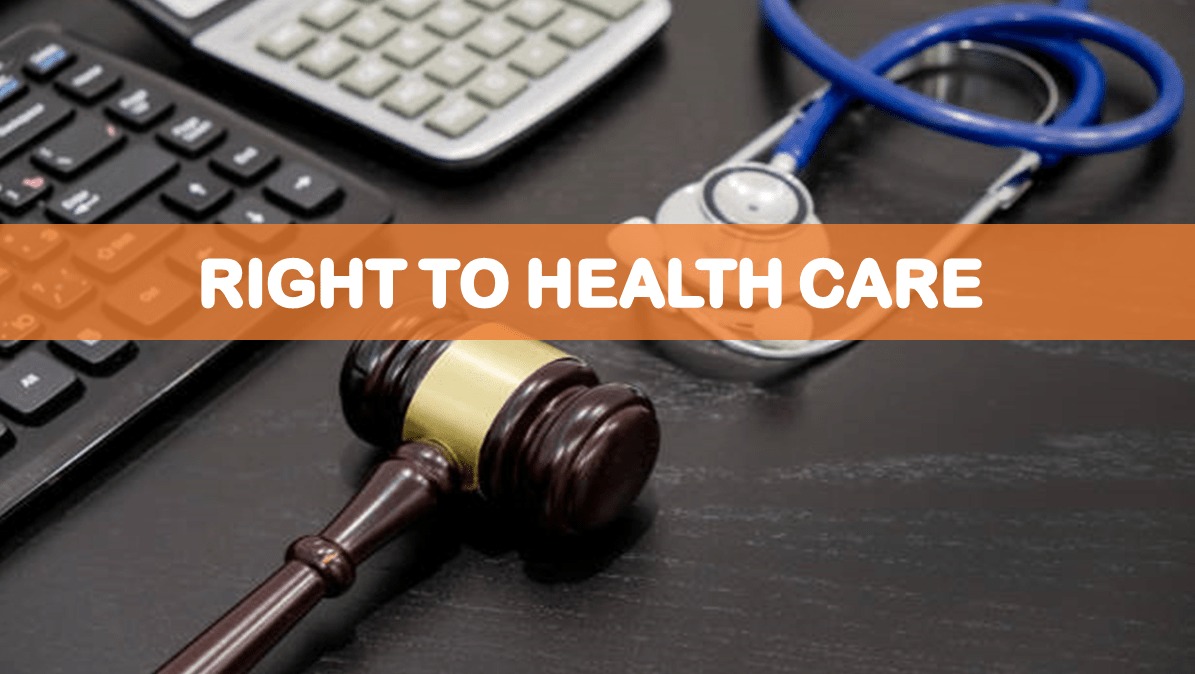
Right to Health: Constitutional Promises and Judicial Realities in India
From hospital access to pandemic preparedness, courts are redefining the meaning of health as a fundamental right.
How India’s judiciary interprets Article 21 to safeguard healthcare, and what this means for citizens and global health governance.
By Vishwas Kumar
New Delhi: June 04, 2026:
Health is the foundation of human dignity and productivity. Yet, the Indian Constitution does not explicitly list health as a fundamental right. Instead, it is embedded indirectly through Article 21 (Right to Life and Personal Liberty), which courts have expansively interpreted to include the right to health. This judicial innovation has transformed healthcare into a constitutional promise, empowering citizens to demand accountability from the state.
The supply and distribution of petroleum products in India are governed by a detailed regulatory framework designed to ensure availability, prevent hoarding, and maintain market stability. Readers interested in the legal provisions governing the petroleum sector can refer to the Oil Regulation of Supply and Distribution Order, 1998, which lays down important rules relating to the distribution and control of petroleum products across the country.
From landmark rulings on emergency medical care to directives during the COVID‑19 pandemic, the judiciary has consistently emphasized that health is central to life. Courts have directed governments to provide hospital facilities, regulate drug prices, and strengthen public health infrastructure. These interventions have reshaped governance, ensuring that healthcare is not just policy but a constitutional obligation.
Globally, India’s jurisprudence on health rights is studied as a model for expanding constitutional protections. As pandemics, digital health, and biotechnology reshape healthcare, the judiciary’s role will only grow. This article explores the constitutional foundations of the right to health, landmark cases, judicial activism, global comparisons, citizen activism, and the future of healthcare justice.
Section 1: Constitutional Foundations
- Article 21: Interpreted to include health, making it a fundamental right.
- Directive Principles: Article 47 obligates the state to improve public health and nutrition.
- Fundamental Duties: Citizens are expected to maintain health and hygiene.
- Courts have used these provisions to expand constitutional morality, ensuring that health is treated as essential to life and dignity.
Section 2: Landmark Health Cases
1. Paschim Banga Khet Mazdoor Samity v. State of West Bengal (1996)
This case began when a worker injured in an accident was denied treatment at several government hospitals due to lack of facilities. The Supreme Court ruled that the state has a constitutional obligation to provide emergency medical care. It emphasized that failure to do so violates Article 21, the right to life. The judgment transformed emergency healthcare into a fundamental right, compelling governments to improve hospital infrastructure and ensure that no citizen is denied urgent treatment.
2. Consumer Education & Research Centre v. Union of India (1995)
Workers in hazardous industries often faced unsafe conditions without adequate health safeguards. The Supreme Court held that the right to health and medical care is a fundamental right under Article 21. It directed employers to provide health insurance and safe working environments. This case expanded workplace safety into constitutional territory, ensuring that industrial growth could not come at the cost of workers’ health.
3. State of Punjab v. Mohinder Singh Chawla (1997)
A government employee sought reimbursement for medical treatment abroad. The Supreme Court ruled that the right to health includes access to free medical treatment for government employees. While limited in scope, the case reinforced the principle that healthcare is a constitutional entitlement, not a privilege.
4. Vincent v. Union of India (1987)
This PIL highlighted the circulation of substandard drugs in India. The Supreme Court directed the government to regulate drug quality and ensure safe medicines for citizens. The ruling linked public health to Article 21, stressing that access to safe drugs is part of the right to life.
5. Paramanand Katara v. Union of India (1989)
A landmark case where the Court ruled that doctors must provide immediate medical aid to accident victims, regardless of formalities. It declared that saving life takes precedence over legal or bureaucratic procedures. This judgment revolutionized emergency care, making it a constitutional duty for medical professionals.
6. Bandhua Mukti Morcha v. Union of India (1984)
This PIL exposed the plight of bonded labourers working in inhumane conditions. The Court held that rehabilitation and healthcare for bonded labourers are part of the right to life. It expanded Article 21 to include dignity, health, and humane working conditions, strengthening labour rights.
7. Municipal Council, Ratlam v. Vardhichand (1980)
Citizens of Ratlam filed a PIL against poor sanitation and open drains causing health hazards. The Supreme Court directed the municipality to provide proper sanitation facilities. This case established that local bodies have a constitutional duty to protect public health, linking governance to Article 21.
8. Right to Food Case (PUCL v. Union of India, 2001)
Filed during drought conditions, this PIL demanded food security for the poor. The Court directed governments to provide mid‑day meals in schools and strengthen food distribution schemes. It expanded the right to food and nutrition as part of the right to health under Article 21.
9. Common Cause v. Union of India (2018)
This case legalized passive euthanasia under strict guidelines. The Court recognized the right to die with dignity as part of the right to life. It marked a profound expansion of health rights, acknowledging autonomy and end‑of‑life care within constitutional protections.
10. Olga Tellis v. Bombay Municipal Corporation (1985)
Pavement dwellers challenged their eviction, arguing it deprived them of livelihood. The Court held that the right to livelihood is part of the right to life. By linking livelihood to health and survival, the case underscored the socio‑economic dimensions of constitutional health rights.
11. State of Andhra Pradesh v. Lavu Narendranath (1971)
This case dealt with medical education and access to doctors. The Court emphasized that equitable distribution of medical education and facilities is essential for public health. It reinforced the idea that healthcare infrastructure is a constitutional responsibility.
12. In Re: COVID‑19 Management (2021)
During the pandemic, the Supreme Court monitored government response to oxygen shortages, hospital beds, and vaccine distribution. It directed authorities to ensure transparency and accountability. This case demonstrated judicial activism in real‑time crisis management, embedding pandemic preparedness into constitutional health rights.
13. COVID‑19 PILs (2020–21)
Multiple PILs were filed across High Courts demanding oxygen supply, hospital facilities, and vaccine access. Courts intervened to ensure equitable distribution of resources. These cases highlighted the judiciary’s role in safeguarding health during emergencies, reinforcing Article 21’s relevance in modern crises.
14. Lafarge Umiam Mining v. Union of India (2011) (health‑environment overlap)
Though primarily environmental, this case addressed the health impacts of mining on local communities. The Court balanced industrial development with environmental clearance, emphasizing sustainable practices. It linked ecological health to human health, broadening constitutional interpretations of Article 21.
Section 3: Judicial Activism in Health
- Courts act as guardians of health rights, ensuring accountability.
- Judicial activism has expanded access but raised concerns about overreach.
- Critics argue that courts sometimes encroach on policy domains, but supporters see them as vital in filling governance gaps.
- The challenge lies in balancing constitutional obligations with resource constraints.
Section 4: Global Comparisons
- South Africa: Explicit constitutional right to health.
- US: Healthcare remains a policy issue, not a constitutional right.
- EU: Health rights embedded in social charters.
- India’s unique approach—judicial interpretation rather than explicit constitutional text—makes it a global reference point.
Section 5: Citizens, NGOs & Health Activism
- NGOs file PILs on drug pricing, hospital access, and workplace safety.
- Citizen campaigns demand affordable medicines and better facilities.
- Digital health activism during COVID‑19 amplified voices, linking constitutional rights to healthcare demands.
- Courts increasingly recognize citizen activism as vital to enforcing health rights.
Section 6: Future Outlook
- Health rights will evolve with AI, telemedicine, and biotechnology.
- Courts will face petitions on data privacy in health apps and digital records.
- India’s judiciary is poised to lead global debates on constitutional health rights.
- The future lies in integrating constitutional values with technological innovation to ensure accessible, equitable healthcare.
Conclusion
The right to health in India reflects the adaptability of constitutional law. By interpreting Article 21 dynamically, courts have ensured that healthcare is not just policy but a constitutional promise. Landmark cases have reshaped governance, holding governments accountable for medical care and public health.
Globally, India’s jurisprudence is studied as a model for expanding rights. Yet, challenges remain: resource constraints, enforcement gaps, and balancing judicial activism with policy. The future will require integrating constitutional values with technological innovation, ensuring that healthcare remains accessible, equitable, and dignified.
In conclusion, India’s constitutional journey in health rights demonstrates that law can be a powerful tool for justice. By embedding health into the heart of democracy, India offers hope that constitutional values can safeguard both dignity and survival in the 21st century.
40 FAQs on Right to Health
Basics
1. Is health a fundamental right in India?
Yes, courts interpret Article 21 to include the right to health.
2. Which Article directly mentions health?
Article 47 directs the state to improve public health and nutrition.
3. Why is health linked to Article 21?
Because life and dignity are impossible without healthcare.
4. Is healthcare free in India?
Public hospitals provide free or subsidized care, but access varies.
5. Can citizens demand medical facilities?
Yes, through PILs invoking the right to health.
Landmark Cases
6. What was Paschim Banga case (1996)?
It established the right to emergency medical care.
7. What did Consumer Education case (1995) decide?
It recognized workplace health and safety as fundamental rights.
8. What did Mohinder Singh Chawla case (1997) affirm?
Free medical treatment for government employees.
9. How did courts respond during COVID‑19?
They directed governments to ensure oxygen, beds, and vaccines.
10. Has the Supreme Court addressed drug pricing?
Yes, PILs have led to regulation of essential medicines.
Constitutional Dimensions
11. How do Directive Principles support health?
They guide the state to improve nutrition and healthcare.
12. Are Fundamental Duties linked to health?
Yes, citizens must maintain hygiene and protect public health.
13. Can courts enforce Directive Principles?
Indirectly, through PILs and Article 21 interpretation.
14. Is health part of human dignity?
Yes, courts consistently link health to dignity.
15. Does the Constitution mention hospitals?
Not explicitly, but courts mandate adequate facilities.
Global Comparisons
16. Does South Africa have a constitutional right to health?
Yes, explicitly guaranteed.
17. How does the US differ?
Healthcare is policy‑based, not a constitutional right.
18. What about the EU?
Health rights are embedded in social charters.
19. Is India’s approach unique?
Yes, it relies on judicial interpretation rather than explicit text.
20. Is India studied globally?
Yes, as a model for expanding rights through courts.
Citizens & Activism
21. Can NGOs file health PILs?
Yes, many have done so on drug pricing and hospital access.
22. Do citizens campaign for medicines?
Yes, activism has led to affordable drug policies.
23. Was digital activism important during COVID‑19?
Yes, online petitions amplified demands for oxygen and vaccines.
24. Can workplace health be enforced?
Yes, through PILs and labor rights cases.
25. Do courts recognize mental health?
Yes, as part of the right to health.
Challenges
26. Are resources a constraint?
Yes, courts balance rights with state capacity.
27. Is enforcement a problem?
Yes, rulings often face delays in implementation.
28. Do courts risk overreach?
Critics argue they sometimes encroach on policy.
29. Can health rights slow policy?
They can, but ensure accountability.
30. Is inequality a challenge?
Yes, access to healthcare remains uneven.
Future Outlook
31. Will AI reshape health rights?
Yes, courts may face petitions on AI in healthcare.
32. Is telemedicine constitutionally relevant?
Yes, as part of access to healthcare.
33. Will health data privacy be litigated?
Yes, especially with digital health apps.
34. Can biotechnology raise constitutional issues?
Yes, in areas like genetic testing and bioethics.
35. Will India lead global health debates?
Likely, given its proactive judiciary.
Miscellaneous
36. Is vaccination a constitutional issue?
Yes, linked to public health and Article 21.
37. Can courts mandate hospital facilities?
Yes, they have directed governments to improve infrastructure.
38. Is workplace safety part of health rights?
Yes, recognized by the Supreme Court.
39. Can citizens demand clean water?
Yes, water is part of the right to health.
40. Why is health vital for democracy?
Because without healthcare, citizens cannot fully exercise rights.