
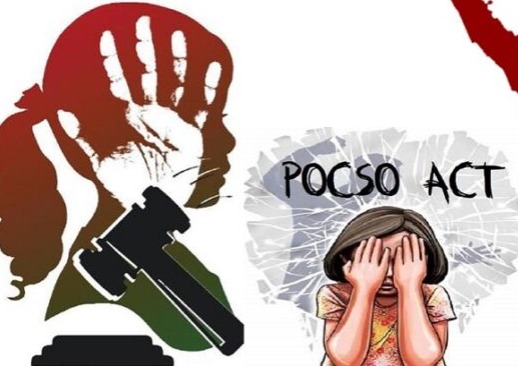
Supreme Court: POCSO Act Covers Minors in Sex Trafficking Cases
Judges Affirm Overlap Between POCSO and ITPA
Minor Victims Entitled to Stronger Safeguards Against Exploitation
By Legal Reporter
New Delhi: June 02, 2026:
The Supreme Court has ruled that the Protection of Children from Sexual Offences Act (POCSO), 2012, applies when the victim of commercial sex trafficking is a minor, even if the offence is prosecuted under the Immoral Traffic (Prevention) Act (ITPA), 1956. This landmark judgment clarifies that minors exploited in sex trafficking are entitled to the full protection of POCSO, ensuring stronger safeguards against sexual abuse.
Readers interested in succession law, inheritance rights, and disputes involving family property may refer to the Supreme Court judgment in Gurcharan Singh & Others v. Angrez Kaur & Another , which discusses important legal principles relating to succession, competing claims among heirs, and the adjudication of property rights under Indian law.
1. Case Background
The case arose from a prosecution under the Immoral Traffic (Prevention) Act, 1956, where a minor girl was rescued from a brothel. The trial court convicted the accused under ITPA but did not apply POCSO provisions. On appeal, the issue was whether POCSO should apply when the victim of trafficking is a child.
The Supreme Court bench of Justices B.V. Nagarathna and Augustine George Masih held that POCSO applies automatically if the victim is below 18 years, regardless of whether the offence is framed under ITPA.
2. Supreme Court’s Observations
- POCSO is a special law designed to protect children from sexual offences.
- Commercial sexual exploitation of minors falls squarely within POCSO’s ambit.
- ITPA addresses trafficking and exploitation, but POCSO provides additional safeguards for minors.
- Courts must apply both statutes harmoniously to ensure maximum protection.
3. Legal Framework
- Protection of Children from Sexual Offences Act, 2012 (POCSO):
- Section 3–7: Define penetrative and non-penetrative sexual assault.
- Section 42: Provides for enhanced punishment when offences overlap with other laws.
- Immoral Traffic (Prevention) Act, 1956 (ITPA):
- Section 3–6: Punish keeping a brothel, living on earnings of prostitution, procuring or detaining persons for prostitution.
- Juvenile Justice (Care and Protection of Children) Act, 2015: Provides rehabilitation and care for rescued minors.
4. Judicial Precedents
- Independent Thought v. Union of India (2017): Expanded child protection under POCSO.
- Bachpan Bachao Andolan v. Union of India (2011): Directed stronger measures against child trafficking.
- State v. Neeraj Dutta (2023): Clarified evidentiary standards in sexual offence cases.
5. Why POCSO Must Apply
- Trafficked minors are victims of sexual assault, not just trafficking.
- POCSO ensures child-friendly procedures, mandatory reporting, and stricter punishment.
- Applying only ITPA risks diluting protection for minors.
6. Broader Implications
- For Courts: Must apply POCSO in all trafficking cases involving minors.
- For Law Enforcement: Strengthens obligation to register FIRs under POCSO alongside ITPA.
- For Victims: Guarantees access to child-sensitive procedures and rehabilitation.
- For Society: Reinforces zero tolerance for child sexual exploitation.
7. Comparative Perspective
- UK: Child trafficking cases prosecuted under Sexual Offences Act, with enhanced penalties.
- US: Federal Trafficking Victims Protection Act ensures minors are treated as victims of sexual exploitation, not offenders.
8. Critical Analysis
The ruling closes a critical gap in child protection law. By mandating POCSO’s application, the Court ensures minors trafficked for sex are recognized as victims of sexual abuse, not merely as trafficked persons. This harmonization of statutes strengthens India’s compliance with international conventions like the UN Convention on the Rights of the Child and the Palermo Protocol on Trafficking.
Detailed FAQ for Quick Understanding
Q1: What did the Supreme Court decide?
That POCSO applies whenever the victim of sex trafficking is a minor, even if charges are under ITPA.
Q2: Why is POCSO important in trafficking cases?
Because it provides child-friendly procedures, mandatory reporting, and stricter punishment for sexual offences.
Q3: What is the difference between ITPA and POCSO?
ITPA targets trafficking and exploitation; POCSO specifically protects children from sexual offences.
Q4: Can both laws apply together?
Yes. Courts must apply them harmoniously to maximize protection.
Q5: What age qualifies as a minor under POCSO?
Any person below 18 years.
Q6: What happens if only ITPA is applied?
The victim may lose access to child-sensitive procedures and enhanced safeguards under POCSO.
Q7: Does this ruling affect rehabilitation?
Yes, minors rescued from trafficking must be rehabilitated under Juvenile Justice Act provisions.
Q8: How does this align with international law?
It strengthens India’s compliance with UN conventions on child rights and anti-trafficking protocols.