
Health Insurance Under Siege: Strategic Research on Medical Inflation in India
Medical Inflation Threatens Household Wealth
Legal Frameworks and Policy Remedies for Common Insurers
By Vishwas Kumar
New Delhi: April 28, 2026:
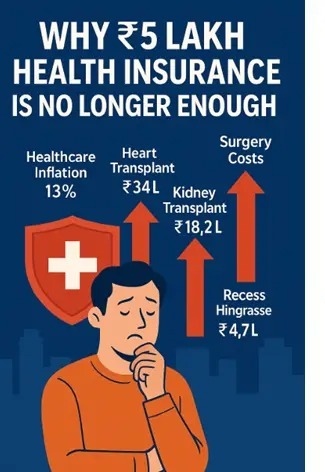
India’s healthcare financing system is under unprecedented strain. Medical inflation, estimated at 12–14% annually, is eroding household savings and undermining the protective value of health insurance. Strategic research studies highlight how this inflationary spiral is not just an economic issue but a socio-legal crisis, demanding urgent regulatory and policy interventions. ijfmr.com insuredindia.com rjwave.org
To understand how courts evaluate the validity of wills, scrutinize suspicious circumstances, and balance testamentary freedom with the rights of legal heirs, read the judgment in Lilian Coelho vs Myra Philomena Coalho, which highlights key principles on burden of proof, attestation of wills, and resolution of inheritance disputes under Indian law.
Constitutional and Legal Context
While the Right to Health is not explicitly enshrined as a fundamental right in India’s Constitution, judicial interpretation of Article 21 (Right to Life) has expanded to include access to healthcare. Courts have repeatedly emphasized that health is integral to human dignity. However, legislative frameworks have lagged this judicial recognition.
Key legal aspects include:
- Consumer Protection Act (2019): Provides recourse for policyholders against unfair practices by insurers and hospitals.
- IRDAI Regulations: Mandate transparency in exclusions, standardized definitions, and timely claim settlement.
- Portability Rights: Policyholders can transfer accrued benefits when switching insurers.
- Judicial Precedents: Courts have ruled against exploitative hospital pricing and upheld the duty of insurers to honour claims promptly.
Strategic Research Findings
Recent studies reveal:
- Household Wealth Erosion: Medical inflation doubles hospitalization costs roughly every five years, outpacing savings growth. A cardiac procedure costing ₹5 lakh today could reach ₹10 lakh by 2030.
- Supply-Side Drivers: Import dependency for medical equipment, rising pharmaceutical costs, and specialist fees drive inflation.
- Insurance Ecosystem Vulnerabilities: Fixed-sum policies fail to keep pace with inflation, leaving gaps in coverage.
- Global Comparisons: Models like Thailand’s Universal Coverage Scheme and Brazil’s Unified Health System demonstrate how codifying health rights and regulating costs can mitigate inflationary pressures.
Policy Remedies and Legal Safeguards
Strategic research recommends:
- Codification of Right to Health: Making it a fundamental, enforceable right to strengthen accountability.
- Super Top-Up Policies: Affordable extensions that provide coverage up to ₹50–75 lakh.
- Critical Illness Covers: Lump-sum payouts for cancer, stroke, or heart attack to protect income.
- Public Infrastructure Investment: Strengthening government hospitals to reduce reliance on costly private care.
- Pricing Regulation: Legal caps on essential procedures and medicines to curb exploitative pricing.
Implications for Common Insurers
For everyday policyholders, the takeaway is clear: static coverage is a financial trap. Without periodic review and augmentation, insurance policies lose value against rising costs. Legal safeguards like portability rights and consumer protection remedies exist, but proactive engagement is essential.
Insurers, meanwhile, face reputational and regulatory risks if they fail to adapt. Transparent communication, inflation-indexed products, and compliance with IRDAI norms are not just legal obligations but strategic necessities.
[RESEARCH RESOURCES]
BUY & READ THE BOOK, WILL WRITING SIMPLIFIED, By Dr Ravinder Kumar Anand. [📘 Buy Will Writing Simplified online: Amazon | Flipkart ]
FAQ: Key Legal Points
Q1. Is the Right to Health a fundamental right in India?
Not explicitly, but judicial interpretation of Article 21 includes healthcare as part of the right to life.
Q2. How does medical inflation affect insurance?
It erodes the real value of fixed-sum policies, making them inadequate over time.
Q3. What legal protections exist for policyholders?
Consumer Protection Act (2019), IRDAI regulations on transparency and claim settlement, and portability rights.
Q4. What remedies do courts provide?
Courts have ruled against exploitative pricing and upheld insurers’ duty to honor claims promptly.
Q5. What are super top-up policies?
Add-on covers that extend protection beyond a deductible, often up to ₹50–75 lakh.
Q6. How can public policy help?
By codifying the Right to Health, investing in public infrastructure, and regulating medical pricing.
Context for Citations
This article synthesizes insights from:
- Socio-legal analysis of medical inflation in India (Anisha Bano & Rahul Chouhan, 2025) ijfmr.com
- Household wealth erosion studies (Lakshya Sharma, 2024) insuredindia.com
- Regional healthcare affordability analyses (Manojit Chakraborty, 2025) rjwave.org
Together, these sources provide empirical evidence of inflation’s impact, legal precedents, and comparative policy models. They contextualize the crisis for common insurers and highlight actionable remedies.