
Lying to Government Counsel Is Lying to the Bench: Why the Madras High Court Ruling Marks a Watershed Moment for Administrative Accountability
Judicial Tolerance Reaches Breaking Point as Bureaucratic Deceit Obstructs Waterbody Protection and Perverts the Due Course of Justice
From Concealed Land Registers to Criminal Contempt: Deconstructing Article 215, the Contempt of Courts Act, and the Fiduciary Duties of Public Servants
By Legal Editor
New Delhi: August 06, 2026:
In an era where court dockets are burdened by mounting arrears, the reliance of the judiciary upon the integrity of state representatives is not merely a procedural convenience—it is a foundational pillar of the rule of law. When government officials furnish false instructions, omit material facts, or suppress statutory records while briefing state counsel, they do not simply misguide their own legal representatives; they directly undermine the administration of justice.
Addressing this critical vulnerability in public law litigation, the Madras High Court issued a stern warning in . A Division Bench comprising Justice G.R. Swaminathan and Justice B. Pugalendhi held that state administrative officers who convey false or misleading information to government advocates commit acts that directly interfere with judicial proceedings, making them personal targets for criminal contempt actions.
This ruling exposes a chronic ailment within public administration: the practice of government departments relying on obfuscation to shield illegalities, avoid executive accountability, or stall judicial mandates. By linking departmental deception directly to criminal contempt jurisprudence under Section 2(c) of the Contempt of Courts Act, 1971, the Madras High Court has established a precedent designed to enforce administrative truthfulness.
2. Factual Matrix: The Marungapuri Taluk Waterbody Dispute
The controversy stems from a writ petition filed under Article 226 of the Constitution of India by two petitioners seeking the removal of unauthorized encroachments from a vital natural water channel. The petition pinpointed three specific survey numbers in Marungapuri Taluk, Tiruchirappalli District, alleging that private encroachers had blocked the flow of water by erecting permanent structures across the watercourse.
During the initial hearing, the Government Advocate, acting upon written and oral briefing provided by local revenue authorities, submitted to the Court that while two of the referenced survey numbers were indeed government-owned water bodies, the third survey number constituted private patta land (privately titled land), thereby placing it outside the immediate scope of summary public eviction.
However, the petitioners produced an authentic copy of the historical 'A' Register extract—the foundational revenue document under the Tamil Nadu Revenue Code detailing tenure, land classification, and administrative remarks. The 'A' Register explicitly listed the third property under the remark column as Karanthapadikulam Neerpidipu (a designated water spread/catchment area).
Upon closer scrutiny of the documents handed to the Government Advocate by the executive officials, the Bench discovered a glaring discrepancy: the crucial remark identifying the parcel as a water spread area had been physically or digitally cropped out of the state's official copy. This deliberate suppression of revenue entries was intended to lead the state counsel—and by extension, the Court—to believe the land was an unencumbered private holding.
Recognizing this suppression as an attempt to mislead the court, the Division Bench invoked its inherent jurisdiction. The Court directed its Registrar (Judicial) to issue formal communication to the Tahsildar of Marungapuri Taluk, demanding a show-cause explanation for transmitting false instructions. The Bench signalled its intention to initiate suo motu criminal contempt proceedings should the official response fail to purge the deceit.
3. Statutory and Constitutional Foundations of Contempt Jurisprudence
To appreciate the legal gravity of the Madras High Court’s ruling, one must examine the statutory framework governing contempt of court in India.
│ Constitutional & Statutory Framework │
▼ ▼
│ Article 215, Constitution of India │ │ Contempt of Courts Act, 1971 │
│ (Inherent Power of High Court to │ │ Section 2(c): Criminal Contempt │
│ Punish for Contempt of Itself) │ │ (Interference with Justice) │
A. The Contempt of Courts Act, 1971
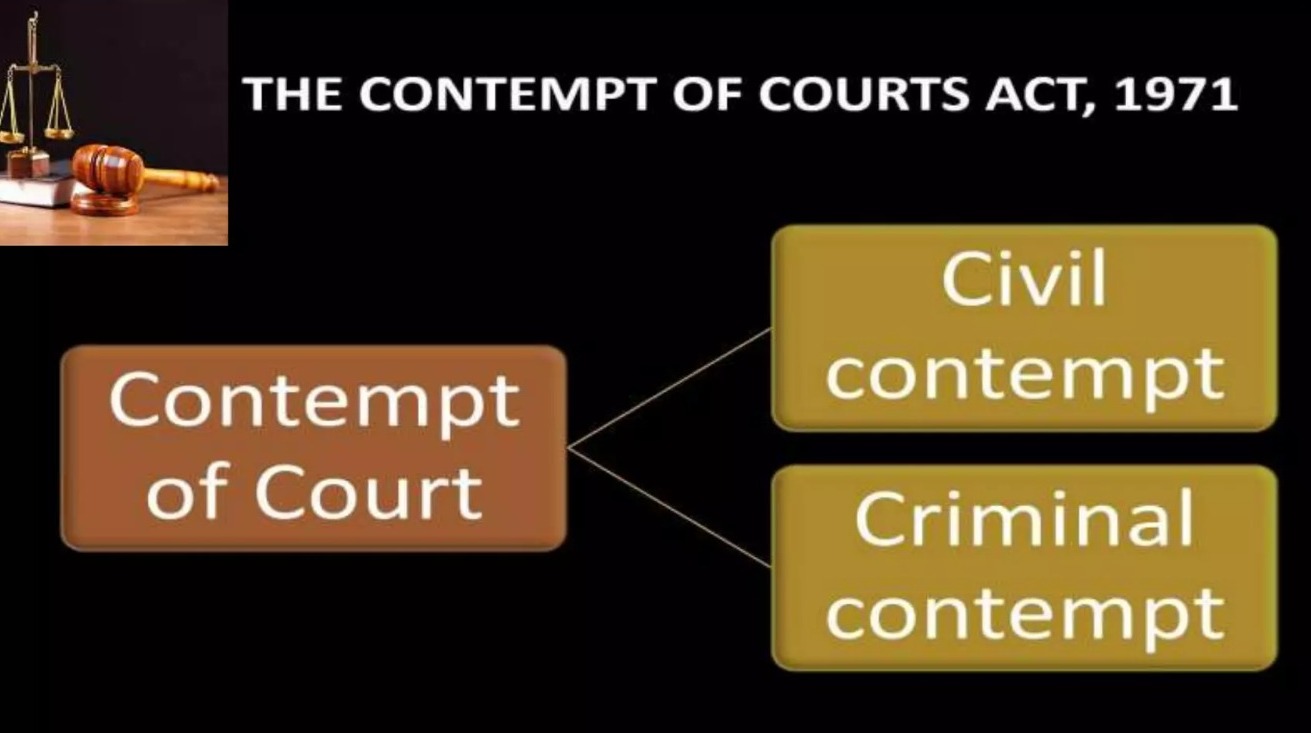
Under Section 2(c) of the Contempt of Courts Act, 1971, "criminal contempt" is broadly defined as the publication of any matter or the doing of any act whatsoever which:
Scandalizes or lowers the authority of any court;
Prejudices, or interferes with, the due course of any judicial proceeding; or
Interferes with, or obstructs, the administration of justice in any other manner.
Historically, contempt actions against public officials focused on civil contempt under Section 2(b)—specifically, the willful disobedience of court orders or undertakings. However, in J Abdul Malik, the High Court pivoted toward criminal contempt under Section 2(c)(iii). Supplying fabricated records or misleading briefing to a government lawyer does not merely disobey a directive; it actively corrupts the evidentiary stream upon which judicial determinations are made.
B. Constitutional Inherent Powers Under Article 215
The High Court's jurisdiction to penalize contempt is an inherent constitutional power derived from Article 215 of the Constitution of India, which designates every High Court as a "court of record" holding all powers of such a court, including the power to punish for contempt of itself. Supreme Court precedents, including Supreme Court Bar Association v. Union of India (1998) and M.V. Jayarajan v. High Court of Kerala (2015), affirm that statutory limitations in the 1971 Act cannot restrict the constitutional imperative of High Courts to safeguard the purity of judicial administration.
C. Penal Sanctions for False Evidence
The act of submitting false statements through government channels also intersects with statutory provisions under Indian criminal law:
Section 191 & 193 of the Indian Penal Code (IPC) (now mirrored in Sections 227 & 229 of the Bharatiya Nyaya Sanhita, 2023 - BNS): Define and punish the offense of giving false evidence and fabricating false evidence for use in judicial proceedings.
Section 209 IPC / Section 242 BNS: Punishes anyone who dishonestly or fraudulently makes a false claim before a court of justice.
When a Tahsildar or administrative officer provides deceptive details to state counsel, knowing that those details will form the basis of oral representations before a judge, the official acts as a principal offender in fabricating evidence intended to mislead a judicial tribunal.
4. The Role of Government Counsel and the Duty of Utmost Good Faith
A critical dimension of the High Court's observation lies in its judicial recognition of the operational realities of state representation. In Indian constitutional practice, High Courts handle thousands of public law matters daily. Judges cannot independently audit every land record, municipal plan, or departmental file. Consequently, the court relies heavily on the oral submissions made by Law Officers—such as Advocates General, Additional Advocates General, Government Pleaders, and Standing Counsel.
Briefs & ┌──────────────────────┐
│ Public Officers / │ ───────────────────────> │ Government Advocates │
│ Executive Officials │ (Fiduciary Duty of │ (Officers of Court) │
└──────────────────────┘ Utmost Good Faith) └──────────┬───────────┘
│
│ Represents Facts
▼
┌──────────────────────┐
│ High Court Bench │
│ (Relies on Integrity)│
└──────────────────────┘
Government counsel are not mere mouthpieces for executive departments; they are primary Officers of the Court. Their paramount obligation is to assist the tribunal in arriving at a just outcome, even if doing so exposes executive lapses. However, state attorneys are constrained by the briefings provided by field officers, such as Tahsildars, Block Development Officers, and District Collectors.
When local officials suppress entries—such as hiding the Neerpidipu classification on an 'A' Register document—they abuse the fiduciary relationship between executive departments and government law officers. The Court explicitly recognized this reliance, noting:
"We in most of the cases go by the oral submissions made by the Government counsel. The Government counsel, in turn, rely on the instructions given to them by the officials concerned. Any false information given to the Government counsel directly interferes with the administration of justice. It would constitute contempt of Court."
This statement eliminates the defence of "bureaucracy through proxy." Officials can no longer hide behind the argument that because they did not personally file a sworn affidavit before the court, their oral or informal misdirection to state lawyers carries no legal liability.
5. Doctrine of Waterbody Conservation and Land Classification
The factual substrate of this case touches upon the protection of ecologically sensitive waterbodies in Tamil Nadu. The judicial handling of waterbody encroachments reveals why courts take a zero-tolerance approach to administrative deceit in environmental matters.
A. Statutory Protection of Water Spread Areas
Under the Tamil Nadu Protection of Tanks and Eviction of Encroachments Act, 2007, alongside long-standing provisions of the Tamil Nadu Land Encroachment Act, 1905, waterbodies—including Kulam (ponds), Kuttai (small tanks), Neerpidipu (catchment/water spread areas), and Odai (streams)—are held by the State in public trust.
The Supreme Court of India in Intellectuals Forum v. State of A.P. (2006) and the Madras High Court Bench in T.S. Senthil Kumar v. Government of Tamil Nadu (2010) established that:
Land classified as a waterbody or catchment spread cannot be reclassified or converted for private or commercial use.
Even if an individual holds a private patta over land falling within a designated catchment area (Neerpidipu), the owner's bundle of rights is severely restricted. The title-holder cannot construct permanent barriers, alter top surface topography, or undertake activities that impede natural hydrological flow.
B. Eviction Mandate and Time-Bound Execution
In J Abdul Malik, the Division Bench reiterated that all unauthorized encroachments in designated water spread areas must be removed via due process of law. Ordering a strict four-month deadline, the High Court instructed the Tahsildar to issue statutory notices under eviction laws, afford encroachers an opportunity to be heard, and clear the watercourse. By imposing a rigid time frame alongside the contempt notice, the court ensured that executive delays would not jeopardize seasonal water channels.
6. Systemic Implications and the Future of Administrative Liability
The Madras High Court’s ruling sends clear signals across the administrative hierarchy, establishing several operational principles for public governance:
│ SYSTEMIC IMPACT MATRIX │
──────────────────────────────────────┤
│ Administrative Area │ Practical Legal Consequence │
──────────────────────────────────────┤
│ Executive Accountability │ Personal contempt liability for field officers who │
│ │ suppress entries or misinform state lawyers. │
──────────────────────────────────────┤
│ Duty of State Attorneys │ Mandate to independently verify original revenue │
│ │ extracts rather than relying on unverified copies. │
├────────────────────────────┼─────────────────────────────────────────────────────┤
│ Public Record Integrity │ Digital transparency enforcement for 'A' Registers │
│ │ and land classification archives. │
──────────────────────────────────────┘
Elimination of Administrative Immunity: Public officials often operate under the assumption that official acts performed during litigation are protected by administrative immunity. This ruling establishes that providing misleading instructions to court officers constitutes an intentional act of obstruction, stripping away executive protections.
Verification Responsibilities for Law Officers: Government Advocates must exercise higher due diligence when receiving documents from department representatives. When discrepancies exist between public extracts produced by petitioners and internal departmental copies, government counsel must insist on inspecting primary revenue records.
Digitization and Record Purity: The suppression of entries in photocopied revenue documents underscores the urgent need for tamper-proof, digitized, and publicly accessible land records across states. Authentic revenue records must be directly accessible to judicial forums to eliminate executive tampering.
7. Comprehensive FAQ: Searchable Legal Index on Bureaucratic Contempt and False Information
To assist legal practitioners, researchers, public servants, and litigants, this searchable FAQ index provides answers to common legal inquiries regarding contempt liability, executive instructions, and judicial precedents.
QUICK ACCESS FAQ INDEX BY CATEGORY
[01] Bureaucratic Contempt Mechanics [06] Eviction Procedures
[02] Distinction: Civil vs. Criminal [07] Burden of Proof in Contempt
[03] Status of Patta in Waterbodies [08] Perjury vs. Contempt Charges
[04] Law Officers & Fiduciary Duty [09] Remedies for Aggrieved Litigants
[05] Protection under Public Immunity [10] Key Precedents & Citations
[FAQ-01] Can a government official be held liable for contempt of court without directly filing a false affidavit?
Yes. As established in J Abdul Malik v. District Collector, an official who provides false information or suppressed documents to a government advocate—knowing that this information will be orally presented to the court—is liable for criminal contempt. The act of misdirecting state counsel directly interferes with the administration of justice under Section 2(c) of the Contempt of Courts Act, 1971.
[FAQ-02] What is the difference between Civil Contempt and Criminal Contempt in administrative matters?
Civil Contempt (Section 2(b)): Refers to willful disobedience of a specific judgment, decree, direction, order, or writ issued by a court, or willful breach of an undertaking given to a court.
Criminal Contempt (Section 2(c)): Refers to acts that scandalize the court, prejudice ongoing proceedings, or obstruct the administration of justice. Supplying fabricated instructions to mislead a judge constitutes criminal contempt because it perverts the decision-making process itself.
[FAQ-03] Can private property ('Patta' land) located inside a catchment area ('Neerpidipu') be built upon?
No. Holding a patta (title deed) over land classified in revenue registers as Neerpidipu (water spread or catchment area) confers limited ownership rights. The owner cannot erect permanent structures, raise embankments, or alter the land in any manner that obstructs the natural inflow and outflow of water. Any construction on such land is subject to eviction as an illegal obstruction of a water body.
[FAQ-04] What is the legal status of oral representations made by Government Advocates in court?
Oral representations made by Government Advocates carry high evidentiary weight because courts operate on the presumption of official regularity and good faith. Because judges rely on these statements to pass interim and final orders, any falsity within the underlying instructions compromises the judicial process, triggering criminal contempt jurisdiction against the originating official.
[FAQ-05] Are public servants protected from contempt prosecution by administrative indemnity clauses?
No. Statutory immunity clauses (which protect public servants for acts done "in good faith" under state legislation) do not cover acts of perjury, fraud, or deliberate misrepresentation to judicial forums. Furthermore, constitutional powers under Article 215 override statutory protections, ensuring High Courts can penalize officials who disrupt judicial proceedings.
[FAQ-06] What procedure must revenue officials follow before evicting waterbody encroachers?
Revenue officials must comply with principles of natural justice and applicable statutory procedures:
Issuance of a formal show-cause notice under the Tamil Nadu Protection of Tanks and Eviction of Encroachments Act, 2007, or the Tamil Nadu Land Encroachment Act, 1905.
Providing a reasonable opportunity for the alleged encroacher to submit written objections and supporting documents.
Passing a reasoned order considering the objections prior to physical eviction.
[FAQ-07] What standard of proof is required to establish criminal contempt against an official?
Criminal contempt proceedings are quasi-criminal in nature. The standard of proof required is proof beyond reasonable doubt. The court must be satisfied that the official intentionally provided false information or deliberately concealed records with the knowledge that it would mislead judicial proceedings.
[FAQ-08] How does criminal contempt differ from perjury under the Bharatiya Nyaya Sanhita (BNS) / Indian Penal Code (IPC)?
Perjury (Sections 191/193 IPC; Sec 227/229 BNS): Focuses on giving false evidence under oath or fabricating evidence for legal proceedings, requiring a specific statutory complaint under Section 340 of the Code of Criminal Procedure (CrPC) / Section 379 of the Bharatiya Nagarik Suraksha Sanhita (BNSS).
Criminal Contempt: Enforces the court’s inherent constitutional authority under Article 215 to immediately penalize acts that interfere with justice, without requiring a separate criminal trial.
[FAQ-09] What remedies do citizens have if local officials submit false reports to courts regarding public grievances?
Litigants can:
Obtain certified extracts of official public records (such as 'A' Registers, FMB maps, or Town Survey records).
Produce these certified extracts via a counter-affidavit to demonstrate discrepancies.
Formally request the court to initiate suo motu criminal contempt proceedings under Article 215 against the misinforming officers, alongside seeking perjury proceedings under CrPC Section 340 / BNSS Section 379.
[FAQ-10] What are the key precedents on false affidavits and administrative contempt in India?
Dhananjay Sharma v. State of Haryana (1995): The Supreme Court held that filing false affidavits or fabricating records to deceive the court constitutes criminal contempt.
Chandra Shashi v. Anil Kumar Verma (1995): The apex court affirmed that fabricating documents to gain an unfair advantage in litigation obstructs justice and warrants penal punishment.
J Abdul Malik v. District Collector (2026): The Madras High Court extended this doctrine to executive officers who provide false instructions to government advocates.