
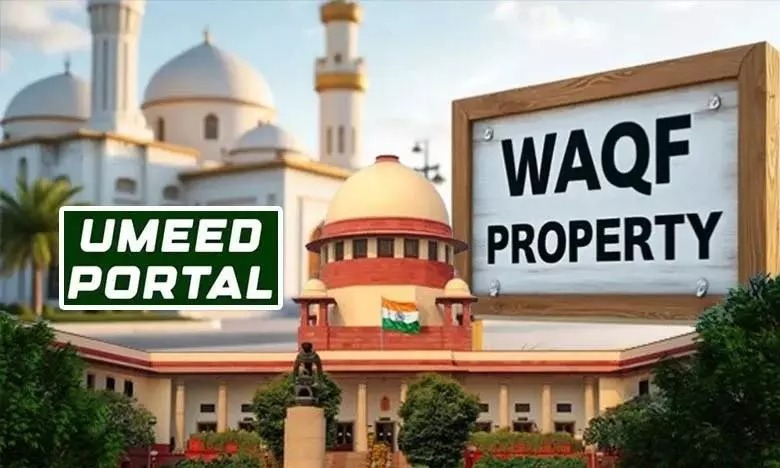
Madras High Court: Mere Mention of ‘Waqf’ in Title Deed Does Not Create Public Waqf
Court distinguishes private family trusts from public waqf
Tamil Nadu Waqf Board’s notification set aside
By Our Legal Correspondent
New Delhi: March 06, 2026:
Also Read: DRT Orders Karur Vysya Bank Recovery of ₹99 Lakh from Defaulting Borrower
The Madras High Court has delivered a landmark judgment in CRP No. 877 of 2023, involving the Tamil Nadu Waqf Board and the heirs of M. Sirajudeen Sayeed. The dispute centered on whether properties described with terms like “Waqf” or “Mosque” in title deeds automatically qualify as public waqf properties. The Court ruled that such terminology alone is insufficient, and the true nature of the property depends on whether ownership and income are irrevocably dedicated to God.
[Recommended Research Resources]
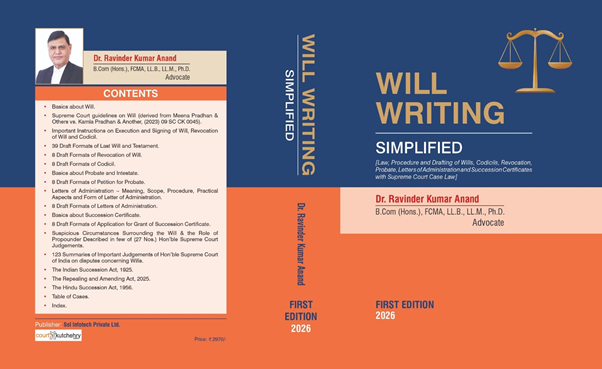
📘 Legal professionals and students alike will benefit from Will Writing Simplified, which covers procedure and case law in detail.
🔹 Buy on Amazon
🔹 Buy on Flipkart
Also Read: Delhi High Court Quashes Attempt-to-Murder Case, Calls Mother–Child Bond Sacrosanct
Background of the Case
- The Tamil Nadu Waqf Board had issued a notification in 2009, registering certain properties as waqf.
- The heirs of M. Sirajudeen Sayeed challenged this, arguing that the properties were part of a private family trust (Waqf-alal-aulad).
- The Waqf Tribunal upheld the Board’s notification, but the petitioners approached the High Court under Article 227 of the Constitution of India.
- Justice P.B. Balaji delivered the ruling on 27 February 2026, setting aside the Tribunal’s order.
Court’s Observations
Also Read: Karnataka High Court Denies Custody to Mother Accused in Prostitution Racket
- Terminology is not decisive: The Court held that mere use of words like “Waqf” or “Mosque” in a deed does not prove public dedication.
- Requirement of complete divestment: For a property to become a public waqf, both the corpus and usufruct must be vested in God.
- Family maintenance clause: If a deed allows family members to retain surplus income for their own needs, the property remains a private trust.
- Legal distinction: The Court distinguished between public waqf (for community benefit) and Waqf-alal-aulad (family trust with religious dedication).
Legal Significance
- Clarifies waqf law: The ruling provides clarity on how courts should interpret property deeds involving religious endowments.
- Limits Waqf Board powers: The judgment restricts the Board from unilaterally declaring private family properties as public waqf.
- Protects private trusts: Families with historical religious trusts gain legal protection against misclassification.
Implications
- For families: Ensures that private religious trusts are not wrongly taken over by waqf authorities.
- For Waqf Boards: Requires stricter scrutiny before registering properties as waqf.
- For legal practitioners: Sets a precedent for future disputes involving religious property and inheritance.
Also Read: MP High Court Orders Enquiry Against Trial Judge Over Non-Compliance
Conclusion
The Madras High Court’s ruling in M. Sirajudeen Sayeed v. Tamil Nadu Waqf Board is a milestone in waqf jurisprudence. By distinguishing between public waqf and private family trusts, the Court has reinforced the principle that dedication must be absolute and irrevocable to constitute a public waqf. This judgment will guide future cases involving religious endowments and property rights in India.
Keywords for Faster Searches
- Madras High Court waqf ruling 2026
-
- Sirajudeen Sayeed vs Tamil Nadu Waqf Board
- Waqf-alal-aulad private family trust
- Public waqf property law India
- Justice P.B. Balaji waqf judgment
- Tamil Nadu Waqf Board property dispute
- Waqf law clarification India
Also Read: RBI Caps Digital Fraud Claims at ₹50,000: Banks Must Prove Customer Liability