
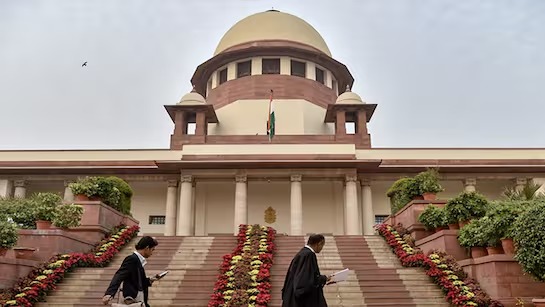
COURTKUTCHEHRY SPECIAL SERIES ON LANDMARKS JUDGEMENTS ON WILLS, CODICIL & PROBATE
Kanta Yadav v. Om Prakash Yadav & Ors: Supreme Court Rules Probate Not Mandatory for Delhi Wills
Section 213 Bar Inapplicable in Delhi
Appeal Dismissed, High Court’s View Affirmed
By Vishwas Kumar
New Delhi: March 21, 2026
To explore more legal precedents, refer to this top Supreme Court case laws on wills and probate.
In Kanta Yadav v. Om Prakash Yadav and Others (Civil Appeal No. 5823 of 2019, decided on 24 July 2019), the Supreme Court of India clarified an important aspect of succession law concerning the requirement of probate for Wills executed in Delhi. The appellant had challenged the Delhi High Court’s ruling that Section 213 of the Indian Succession Act, which bars enforcement of rights under a Will without probate, does not apply in Delhi.
The bench comprising Hon’ble Mr. Justice L. Nageswara Rao and Hon’ble Mr. Justice Hemant Gupta upheld the High Court’s reasoning. The Court noted that Delhi was historically part of Punjab and therefore outside the territorial scope of Section 57(a) and (b) of the Succession Act, which govern the applicability of Section 213. As a result, probate is not a pre-condition for establishing rights under a Will executed in Delhi by a Hindu. The Court further observed that both suits concerning the Will could proceed simultaneously, as there was no statutory bar.
By dismissing the appeal, the Supreme Court reinforced the principle that probate requirements are geographically limited and do not extend to regions like Delhi. This ruling provides clarity for litigants in succession disputes, ensuring that Wills executed in Delhi can be relied upon without the procedural hurdle of probate.
The judgment is significant for inheritance law, as it balances statutory interpretation with historical territorial application. It safeguards testamentary rights in Delhi, while affirming that probate is not universally mandated across India.
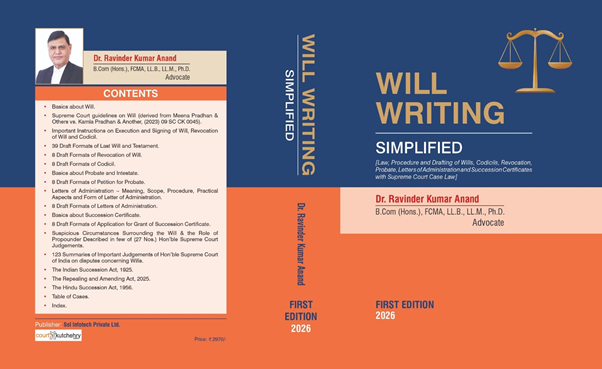
For More, Read Here the Summary of the Judgement from the Book: WILL WRITING SIMPLIFIED, read below or open page no 436, Chapter 14.1 in the book. (Online book purchase link available here on: Buy online: Amazon | Flipkart
|
|
Case Summary |
: |
Kanta Yadav v. Om Prakash Yadav and Others |
|
|
Court |
: |
Supreme Court of India |
|
|
Citations |
: |
(2019) 07 SC CK 0085: Civil Appeal No. 5823 of 2019. |
|
|
Link |
: |
https://www.courtkutchehry.com/judgements/1003747/kanta-yadav-vs-om-prakash-yadav-ors/
|
|
|
Decided on |
: |
24 July 2019 |
|
|
Coram |
: |
Hon’ble Mr. Justice L. Nageswara Rao and Hon’ble Mr. Justice Hemant Gupta. |
|
|
Relevant Paragraphs |
: |
Para Nos. 2 – 14 |
1. Facts of the Case:
Zorawar Singh, owner of immovable property in Delhi, executed a Will (16 June 1985) and a codicil (21 Oct 1995) bequeathing self-acquired property to both parties. He died on 4 Jan 1986. Two suits followed—one by respondents for declaration & injunction concerning the Wills of Zorawar Singh and his wife Ram Pyari (Will 18 June 2009); another by appellant claiming natural succession. The Single Judge of Delhi High Court rejected the plaint under Order 7 Rule 11 CPC citing bar of Section 213 Succession Act. The Division Bench reversed, holding the bar inapplicable in Delhi. Hence, this appeal.
2. Law Points Involved:
(i). Maintainability of suit without probate of Will under Section 213 of the Indian Succession Act 1925.
(ii). Territorial extent and application of Sections 57 and 213 of the Act to Delhi region (formerly Punjab before 1966).
For more clarity, refer to cases explaining validity of wills and attestation requirements.
(iii). Interpretation of Sections 96 & Order 7 Rule 11 CPC in context of bar to civil suit without probate.
3. Acts / Provisions / Articles Referred:
(i). Code of Civil Procedure 1908-Section 96, Order 7 Rule 11
(ii). Indian Succession Act 1925-Sections 57(a)(b)(c), 213(1)(2)
4. Judgements Referred:
(i). Ram Chand v. Sardara Singh, (1961) 11 P&H CK 0008,
(ii). M/s Behari Lal Ram Charan v. Karam Chand Sahni, (1966) 09 P&H CK 0011,
(iii). Mrs. Winifred Nora Theophilus v. Lila Deane, (2001) 07 DEL CK 0043.
(iv). Rajan Suri v. State, (2005) 12 DEL CK 0074.
(v). Clarence Pais v. Union of India, (2001) 02 SC CK 0104.
5. Obiter Dicta:
Delhi being formerly part of Punjab (before 1 Nov 1966) does not fall within territories of Bengal, Madras or Bombay as mentioned in Section 57(a) & (b); hence, Section 213(1) bar is inapplicable to Wills executed in Delhi by Hindus, Buddhists, Sikhs or Jains.
6. Ratio Decidendi:
Under Section 213(2) read with Section 57 (a)&(b), probate is required only for Wills made in Bengal, Madras, or Bombay or relating to property situated therein. Since Delhi is outside these territories, probate is not necessary for establishing rights under a Will executed in Delhi by Hindu testators.
7. Final Ruling:
Appeal dismissed. Judgment of Delhi High Court affirmed. No probate is necessary for Will executed in Delhi relating to property in Delhi by Hindu, Buddhist, Sikh or Jain testator.
8. Gist – Dispute and Final Decision:
The appellant challenged Delhi High Court’s decision that Section 213 bar does not apply in Delhi. Supreme Court upheld the view that probate is not a pre-condition for establishing rights under a Will executed in Delhi by a Hindu, since Delhi was part of Punjab and outside the territorial operation of Section 57(a) and (b). Hence, both suits could proceed together. Appeal dismissed with no error found in High Court’s reasoning.
Read full Judgement Here:
Kanta Yadav v. Om Prakash Yadav and Others
Supreme Court of India
(2019) 07 SC CK 0085: Civil Appeal No. 5823 of 2019.
https://www.courtkutchehry.com/judgements/1003747/kanta-yadav-vs-om-prakash-yadav-ors/
You Can Also Purchase the Book from here on: Buy online: Amazon | Flipkart
Also Read: probate related disputes decided by Supreme Court