
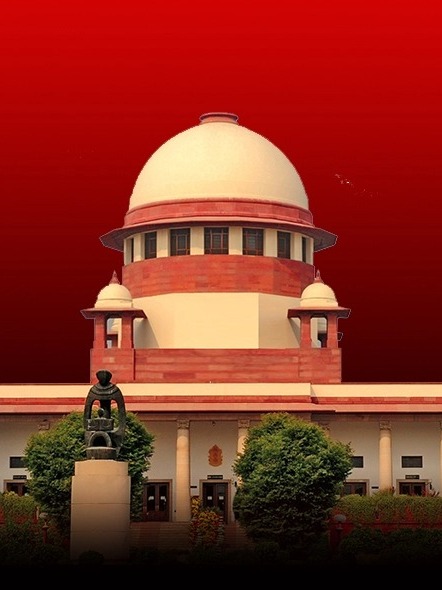
Lawful Lessees Retain Rights Despite Roshni Act’s Fall, Rules J&K High Court
Government Order of 1981 prevails over misapplied Roshni Act
Court affirms equality under Article 14, protects leaseholders from eviction
By Our Legal Correspondent
New Delhi: May 11, 2026:
The Jammu & Kashmir and Ladakh High Court has ruled that lawful lessees of Nazool land cannot be treated as unauthorized occupants merely because the Roshni Act of 2001 was struck down. The Court emphasized that valid leaseholders retain their rights under the Government Order of 1981, which provided for conferment of proprietary rights upon payment of half the market value.
For readers researching inheritance disputes, title determination, and succession rights in family property matters, the Supreme Court judgment in Ashutosh Samanta (D) By LRs & Ors vs Sm Ranjan Bala Dasi & Ors provides valuable legal guidance. The Court examined competing ownership claims, evidentiary standards in civil litigation, and principles governing partition, possession, and succession under Indian property law.
Background of the Case
In Radha Krishen Koul & Anr. v. UT of J&K & Ors., the Jammu & Kashmir and Ladakh High Court overturned a writ court order that had dismissed petitions of two leaseholders. The appellants had been in continuous lawful possession of Nazool land under valid lease documents renewed up to 2014. Despite this, they were treated as unauthorized occupants after the Roshni Act, 2001 was struck down in Prof. S.K. Bhalla v. State of J&K.
The Division Bench of Justice Sanjeev Kumar and Justice Sanjay Parihar clarified that the appellants’ rights stemmed from the Government Order of 1981, not the Roshni Act, and therefore they could not be penalized due to the latter’s invalidation.
Key Legal Frameworks
- Government Order of 1981
- Allowed conferment of proprietary rights to Nazool landholders upon payment of half the prevailing market value.
- Several similarly situated persons had already been granted ownership rights under this scheme.
- Roshni Act, 2001
- Enacted to confer ownership rights on long-standing occupants of State land, with the aim of generating revenue for power projects.
- Defined “State land” broadly, covering permissive and non-permissive possession.
- Struck down in 2020 for being unconstitutional and misused.
- Article 14 of the Constitution of India
- Guarantees equality before law.
- The Court held that denying appellants ownership rights under the 1981 policy, while granting them to others, violated Article 14.
- Order XXIII Rule 1 CPC
- Concerns withdrawal of suits.
- The Court clarified that its principle applies to writ petitions only when causes of action are identical. Since earlier petitions related to demolition and rent issues, they did not bar the present claim.
Court’s Observations
- Lawful Possession: The appellants were neither encroachers nor unauthorized occupants; their leases were validly extended.
- Misapplication of Roshni Act: Their case was wrongly processed under the Roshni Act instead of the 1981 Government Order.
- Equality Principle: Denial of proprietary rights amounted to unequal treatment compared to similarly placed persons.
- Relief Granted: The Court directed the government to confer ownership rights within three months, aligning appellants’ case with precedents like Hotel Ahdoos.
Implications of the Ruling
- For Leaseholders: Protects lawful lessees from being unfairly branded unauthorized occupants due to legislative changes.
- For Government: Reinforces obligation to apply correct legal frameworks and avoid arbitrary treatment.
- For Judicial Practice: Clarifies that writ petitions cannot be dismissed on grounds of suppression of facts unless causes of action are identical.
This judgment strengthens property rights of lawful lessees and ensures that administrative errors or legislative invalidations do not unjustly deprive them of ownership.
FAQ: Quick Legal Understanding
Q1. What is Nazool land?
Nazool land refers to government-owned land managed by the Nazool Department, often leased to individuals for residential or commercial use.
Q2. What did the Government Order of 1981 provide?
It allowed leaseholders of Nazool land to acquire proprietary rights by paying half the market value.
Q3. Why was the Roshni Act struck down?
The Act was invalidated for being unconstitutional and misused, leading to arbitrary regularizations of State land.
Q4. Can lawful lessees be treated as unauthorized occupants after the Roshni Act’s fall?
No. The High Court held that valid leaseholders retain their rights under the 1981 policy and cannot be penalized.
Q5. What role does Article 14 play here?
Article 14 ensures equality before law. Denying appellants rights granted to others under the same policy violated this principle.
Q6. What relief did the Court grant?
The Court directed the government to confer ownership rights to the appellants within three months, at parity with other beneficiaries.
Q7. Does filing multiple writ petitions bar relief?
Not necessarily. Only if petitions involve identical causes of action. Since earlier petitions concerned demolition and rent, they did not bar the present claim.
In summary, the J&K High Court reaffirmed that lawful lessees cannot be stripped of their rights due to the Roshni Act’s invalidation. Their entitlement under the Government Order of 1981 remains intact, ensuring fairness and constitutional equality.