
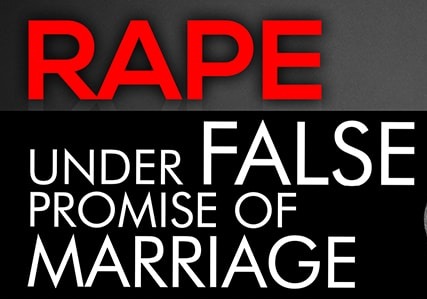
Deceitful Promises and the Law: High Court Rejects Pre-Arrest Bail for Lawyer Accused of Exploiting Client
Evaluating the Boundaries of Consent under Section 69 of the Bharatiya Nyaya Sanhita and the Scrutiny of Pre-Arrest Relief
Judicial Restraint in Discretionary Bail Remedies to Prevent Miscarriage of Justice and Shield Evidence
By Legal Editor
New Delhi: August 25, 2026:
The Indian criminal jurisprudence governing sexual offenses has undergone a significant paradigm shift following the overhaul of legacy statutes like the Indian Penal Code (IPC), 1860, and the Code of Criminal Procedure (CrPC), 1973. Under the updated legislative framework—the Bharatiya Nyaya Sanhita (BNS), 2023, and the Bharatiya Nagarik Suraksha Sanhita (BNSS), 2023—the law explicitly criminalizes sexual relations obtained through false promises, false assurances of career advancement, and suppressed personal identities. A pivotal instance reflecting this strict judicial stance emerged in the case of S v State of Madhya Pradesh [2026 LiveLaw (MP) 341], where the High Court of Madhya Pradesh denied anticipatory bail to a practicing advocate accused of sexually exploiting a female client under the guise of a false promise of marriage.
The single-judge bench, presided over by Justice Gajendra Singh, upheld the principle that discretionary extraordinary remedies, such as pre-arrest bail under Section 482 of the BNSS (formerly Section 438 CrPC), must be applied with extreme caution. When credible prima facie material—including corroborative hotel registry records, witness testimonies, and administrative proceedings—indicates deliberate deceit from the outset of a relationship, courts must prioritize the integrity of the ongoing investigation over individual liberty.
Key Statutory Provisions and Legal Framework
The dispute revolves primarily around Section 69 of the Bharatiya Nyaya Sanhita (BNS), 2023. Historically, cases where sexual relations were established upon a promise of marriage were prosecuted under Section 375/376 of the IPC by applying Section 90 of the IPC (consent given under a misconception of fact). The BNS, 2023, explicitly streamlined this issue by introducing Section 69, which explicitly defines and punishes "sexual intercourse by employing deceitful means, etc."
Section 69 of BNS, 2023: This section prescribes that anyone who, by deceitful means or by making a promise to marry without any intention of fulfilling it, engages in sexual intercourse with a woman—where such intercourse does not amount to the offense of rape—shall be punished with imprisonment extending up to ten years and a fine. The statutory explanation clarifies that "deceitful means" includes false promises of employment or promotion, fraudulent inducements, or marrying after suppressing one's true legal status or identity.
Section 482 of BNSS, 2023: Replaced Section 438 of the former CrPC, governing the power of the High Court or the Court of Session to grant direction for bail to a person apprehending arrest.
Judicial Discretion and Precedent (Nikita Jagganath Shetty v State of Maharashtra [2025]): High courts continuously rely on Supreme Court precedent emphasizing that anticipatory bail is an extraordinary privilege, not a standard rule. Granting pre-arrest bail in serious criminal allegations where the accused has the potential to tamper with physical or digital evidence (such as mobile photos or call records) or intimidate witnesses risks creating a serious miscarriage of justice.
Detailed Factual Matrix and Legal Analysis
In S v State of Madhya Pradesh [2026 LiveLaw (MP) 341], the prosecutrix initially approached the applicant, a legal practitioner, seeking professional legal consultation. The applicant allegedly proposed marriage while representing himself as a single, unmarried man. Though initially reluctant, the complainant agreed after persistent persuasion.
───────────────────────────┐
│ CHRONOLOGY OF EVENTS │
────────────────────────────┤
│ 1. Legal Consultation & Marriage Proposal │
│ • Client approaches advocate for legal advice │
│ • Advocate claims single status & proposes marriage │
────────────────────────────┤
│ 2. Coerced Sexual Intimacy & Subsequent Encounters │
│ • Repeated hotel visits (Dewas Hotel: Sept–Dec 2025) │
│ • Intimacy secured on explicit assurance of marriage │
────────────────────────────┤
│ 3. Delay Tactics & Deceit Uncovered │
│ • Advocate delays marriage citing mother's illness │
│ • Client discovers advocate is married with a 1-year-old child │
────────────────────────────┤
│ 4. Evidentiary Concealment, Threats & Formal Complaint │
│ • Attempted deletion of digital evidence & physical assault │
│ • FIR registered (Crime No. 90/2026, Kharakuan PS, Ujjain) │
│ • Rejection of pre-arrest bail by Sessions Court & High Court │
────────────────────────────┘
The applicant secured sexual intimacy at a hotel in Dewas on multiple recorded dates: September 7, October 19, November 2, and December 25, 2025. Whenever the prosecutrix pressed for the formalization of their marriage, the applicant offered excuses regarding his mother’s failing health. The victim subsequently discovered that the applicant was already legally married and the father of a one-year-old child.
When confronted, the accused allegedly physically assaulted the victim, attempted to forcibly delete digital photos from her mobile device, and threatened her with dire consequences. Following these developments, an FIR (Crime No. 90/2026) was registered at Police Station Kharakuan, District Ujjain, under Section 69 of the BNS.
Judicial Analysis: Distinction Between Breach of Promise and Deceitful Inducement
The defence argued that a mere failure or breakdown of a relationship should not be converted into criminal prosecution. However, Indian jurisprudence draws a clear legal distinction between:
A Mere Breach of Promise: A scenario where the accused genuinely intended to marry the prosecutrix at the inception of intimacy, but subsequent unforeseen circumstances, family opposition, or incompatibility prevented the fulfillment of the promise.
Deceit at the Inception (False Promise): A situation where the promise to marry was bad faith (mala fide) from the very beginning, made solely to induce consent for sexual acts without any intention to fulfill it.
In this case, because the applicant was already married and had a child, he was legally incapable of contracting a valid second marriage under the law. Thus, the representation of being single was fraudulent from the inception, establishing a clear prima facie case under Section 69 BNS.
Comparative Evaluation: Legacy IPC vs. Modern BNS Provisions
Frequently Asked Questions (FAQ)
This searchable legal FAQ index covers key legal questions surrounding Section 69 BNS, pre-arrest bail rules, and false promises of marriage.
1. What constitutes "deceitful means" under Section 69 of the Bharatiya Nyaya Sanhita (BNS)?
Under Section 69 of the BNS, "deceitful means" includes making a false promise of employment or promotion, inducing sexual relations through fraudulent claims, or marrying/promising to marry after actively suppressing one's real legal marital status or identity.
2. How does Section 69 BNS differ from the offense of Rape under Section 63 BNS?
Section 63 defines rape (formerly IPC 375) as sexual acts conducted without consent, against will, or through force/coercion. Section 69 specifically penalizes sexual intercourse obtained by deceitful means or false promises of marriage where the victim's physical consent was obtained under deception, explicitly creating a standalone offense distinct from classical rape.
3. What is the difference between a breach of promise to marry and a false promise to marry?
A breach of promise occurs when a person genuinely intends to marry at the time of the sexual encounter but fails to fulfill the promise later due to valid, unexpected reasons. A false promise occurs when the person has zero intention of marrying from the very beginning and uses the assurance solely as a tool to obtain sexual consent.
4. Can an already married person claim a genuine intention to marry a third party?
No. Under Indian personal laws, an individual who is already legally married cannot enter into a second valid marriage without legally dissolving the first. Therefore, promising marriage while concealing an existing marriage constitutes deception from the outset.
5. What factors do courts evaluate when considering Anticipatory Bail under Section 482 BNSS?
Courts evaluate:
The nature and gravity of the offense.
The risk of the accused absconding or evading trial.
The likelihood of the accused threatening witnesses or tampering with physical/digital evidence.
The necessity of custodial interrogation to advance the investigation.
6. Is an offense under Section 69 BNS bailable or non-bailable?
An offense under Section 69 of the BNS is cognizable and non-bailable, triable by a Court of Session, carrying a punishment of imprisonment up to ten years along with a fine.
7. Why was the precedent Nikita Jagganath Shetty v State of Maharashtra [2025] cited?
The High Court cited Nikita Jagganath Shetty [2025] to highlight that pre-arrest bail is an extraordinary discretionary remedy. Granting it routinely in grave cases can hamper investigative procedures, impede the collection of evidence, and lead to a miscarriage of justice.
Legal Parameter — Old Law (IPC, 1860 & CrPC, 1973) — New Law (BNS, 2023 & BNSS, 2023)
Primary Statutory Provision — Section 375/376 IPC read with Section 90 IPC (Misconception of Fact) — Section 69 BNS, 2023 (Deceitful Means & False Promise)
Definition of Deceit — Dependent on judicial interpretation and case law precedence — Statutory definition explicitly includes suppressed identity, false employment/promotion promises
Maximum Punishment — Imprisonment up to 10 years or life imprisonment (under Rape provisions) — Imprisonment extending up to 10 years plus mandatory fine
Pre-Arrest Bail Provision — Section 438 CrPC, 1973 — Section 482 BNSS, 2023
Evidentiary Threshold — Focus on proving total lack of valid consent — Focus on proving fraudulent intent at the time of initial inducement