
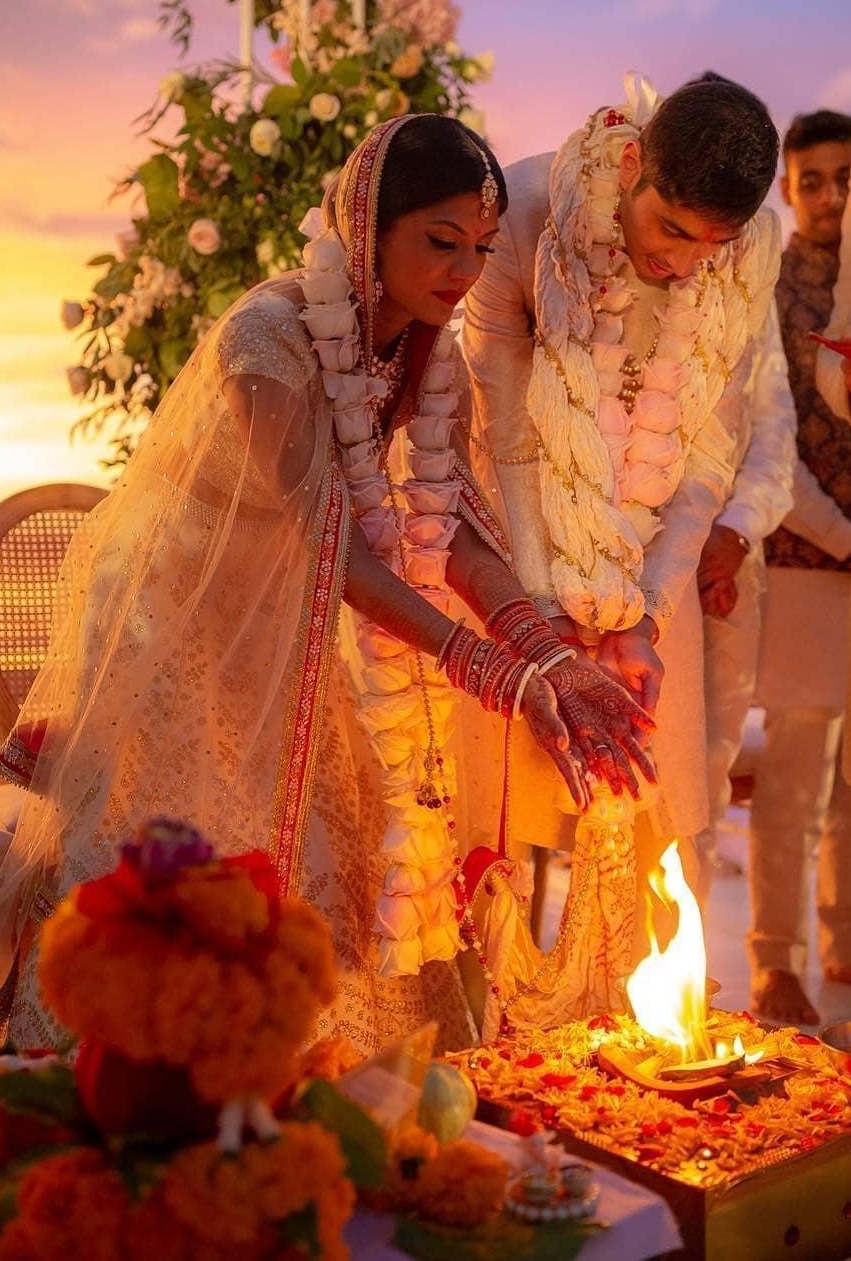
Beyond the Registry: Why a Marriage Certificate Cannot Substitute Holy Rituals Under Hindu Law
The Gujarat High Court Reaffirms That Without 'Saptapadi' or Customary Rites, a Registered Hindu Marriage Holds No Legal Sanctity
Analyzing the Interplay Between Section 7 and Section 8 of the Hindu Marriage Act in the Wake of Evolving Judicial Precedents
By Legal Editor
New Delhi: June 30, 2026:
In an increasingly digitized and bureaucratic world, the general public often operates under the assumption that a government-issued document carries ultimate legal weight. In matters of civil status, property ownership, and contractual obligations, a state registration certificate is typically viewed as the definitive proof of a transaction or transition. However, when it comes to the solemnization of marriages governed by personal laws in India—specifically the —this assumption can lead to profound legal errors.
The division bench of the Gujarat High Court, in its recent landmark ruling in , sent a clear and unequivocal message to the public and the legal community alike: a registered marriage certificate cannot create a valid marriage where the essential traditional and customary rituals were never performed. This decision reinforces the legal truth that under Hindu personal law, marriage is fundamentally a samskara (a sacred sacrament) rather than a mere administrative contract or a commercial transaction. By exploring the complex statutory layers of Section 7 and Section 8 of the HMA, this article provides a comprehensive legal analysis of how Indian courts handle cases where registration exists but the sacred fire was never lit.
The Legal Crux: Decoding Section 7 and Section 8 of the Hindu Marriage Act
To understand the core legal friction in contemporary matrimonial disputes, one must examine the delicate structural balance between Section 7 and Section 8 of the . These two sections serve completely distinct legal functions, yet they are frequently conflated by couples seeking quick legal status.
Section 7: The True Birth of a Hindu Marriage
Section 7 of the HMA governs the ceremonies required for a valid Hindu marriage. The statute explicitly dictates:
A Hindu marriage may be solemnized in accordance with the customary rites and ceremonies of either party thereto.
Where such rites and ceremonies include the Saptapadi (the taking of seven steps by the bridegroom and the bride jointly before the sacred fire), the marriage becomes complete and binding when the seventh step is taken.
The operative word within this statutory framework is "solemnized." As interpreted consistently by the judiciary, solemnization implies that the marriage must be celebrated and executed with the exact proper rituals, form, and dignity demanded by the specific customs of the community. In communities where Saptapadi is the standard practice, the law leaves absolutely no room for ambiguity: until the seventh step is fully completed, the legal status of "husband and wife" does not exist. It is not an evolving or incomplete status; it is legally non-existent.
Section 8: The Limited Scope of Registration
In contrast, Section 8 of the HMA deals with the registration of Hindu marriages. It empowers State Governments to formulate rules ensuring that the particulars of marriages are entered into a Hindu Marriage Register for the explicit purpose of "facilitating the proof of Hindu marriages."
The judiciary has repeatedly emphasized that the entry of details in the marriage register under Section 8 is purely evidentiary. Registration acts as an administrative mechanism to provide an easy, verifiable record of a marriage that has already taken place through valid religious solemnization. Section 8 does not possess the legislative power to cure any inherent ceremonial defects or to miraculously validate a marriage that never occurred in reality. If the foundational event under Section 7 is missing, the administrative record under Section 8 is a certificate of nothingness.
The Factual Matrix of Kaushal Pramodbhai Sonar v. Khushi Sanjay Shah
The absolute necessity of distinguishing between registration and actual performance was highlighted dramatically in the facts of .
Background of the Case
The appellant, a man residing in the United Kingdom, discovered to his shock that a woman (the respondent) had approached his parents in India displaying an officially registered marriage certificate, claiming to be his legally wedded wife. The man strongly denied ever marrying her, asserting that they had never performed any Hindu rites, ceremonies, or rituals, and had never cohabited or lived together as husband and wife.
According to the appellant, his signatures had been obtained fraudulently on administrative marriage documents while he was employed at a business owned by the woman’s father, under pressure involving a promised promotion or threats of immediate termination.
The Trial Court's Error and the High Court's Correction
Crucially, during the judicial proceedings, the woman herself submitted a written statement admitting that no marriage rites or ceremonies had ever been performed, no lawful marriage had been solemnized, and they had never lived as a couple. Despite this mutual admission by both parties that no ceremony had taken place, the Family Court rejected the man's petition to declare the marriage null and void. The Family Court held that the mere existence of an official, registered marriage certificate raised a strong legal presumption of a valid marriage, requiring a full-fledged, lengthy trial to dismantle.
On appeal, the Division Bench of the Gujarat High Court, comprising Justice Ilesh J. Vora and Justice R.T. Vachhani, forcefully set aside the Family Court's order. The High Court observed that when both parties openly admit that the mandatory religious ceremonies under Section 7 were completely absent, it is a futile exercise and an abuse of the legal process to force them to undergo a protracted trial. The High Court reiterated that registration under Section 8 is a secondary step to simplify proof and cannot create a legal status out of thin air. Consequently, the court declared the alleged marriage completely null and void.
Aligning with the Apex Court: The Legacy of Dolly Rani (2024)
The Gujarat High Court's ruling is not an isolated interpretation; rather, it perfectly aligns with the landmark precedent set by the Supreme Court of India in the case of .
In Dolly Rani, a bench comprising Justices B.V. Nagarathna and Augustine George Masih dealt with a situation where two trained commercial pilots had acquired a marriage certificate from an entity and subsequently registered it under the Uttar Pradesh Marriage Registration Rules, 2017, without actually undergoing any customary ceremonies. When marital discord arose, they approached the Supreme Court under Article 142 of the Constitution, asking the court to declare that no valid marriage ever subsisted between them.
The Supreme Court used that opportunity to issue a passionate critique of the increasing commercialization and casualization of the institution of marriage among younger generations. The Apex Court remarked:
"A marriage is not an event for 'song and dance' and 'wining and dining' or an occasion to demand and exchange dowry and gifts by undue pressure... A marriage is not a commercial transaction. It is a solemn foundational event celebrated so as to establish a relationship between a man and a woman who acquire the status of a husband and wife for an evolving family."
The Supreme Court explicitly ruled that unless the essential ceremonies required under Section 7 of the HMA are performed, there is absolutely no marriage in the eyes of the law. A certificate issued by any authority, institutional or governmental, in the absence of the requisite ceremonies, does not confirm marital status or establish a valid marriage under the HMA.
Critical Analysis: The Sacramental Nature vs. Civil Alternatives
The jurisprudential consistency between the Supreme Court's 2024 judgment and the Gujarat High Court's 2026 ruling highlights a fundamental truth about Indian family law: the strict preservation of the sacramental nature of Hindu marriage.
+---------------------------------------------------------------------------------+
| MAKING A HINDU MARRIAGE VALID |
+---------------------------------------------------------------------------------+
| |
| STEP 1: Solemnization (Section 7 HMA) |
| [Customary Rites / Saptapadi (7 Steps)] |
| │ |
| ▼ |
| CREATES THE LEGAL STATUS OF HUSBAND & WIFE |
| │ |
| ▼ |
| STEP 2: Registration (Section 8 HMA) |
| [Administrative Recording / Marriage Certificate] |
| │ |
| ▼ |
| SERVES AS FACILITATIVE PROOF OF THE EXISTENCE OF MARRIAGE |
| |
+---------------------------------------------------------------------------------+
The Philosophical Underpinnings of Samskara
As noted by the courts, a Hindu marriage is traditionally seen as a samskara (sacrament). This stands in direct contrast to Western concepts of marriage or other personal laws where marriage is viewed as a civil contract requiring offer, acceptance, and consideration. The invocation of ancient texts like the Rig Veda by the courts emphasizes the deep spiritual friendship (sakha) and permanent union intended by the Saptapadi.
By stating that a marriage is incomplete until the final step is taken around the sacred fire, the law establishes that the transition into the Grihastha Ashrama (householder stage) is a profound spiritual transformation that cannot be replicated by a sub-registrar stamp.
The Contrast with the Special Marriage Act, 1954
It is critical to note that Indian law provides a clear, secular alternative for couples who do not wish to engage in religious rituals: the Special Marriage Act, 1954 (SMA). Under the SMA, marriage is entirely a civil contract. It does not require any religious ceremonies, Saptapadi, or sacred fires. A valid marriage under the SMA is established entirely through the secular process of giving notice, waiting out the statutory objection period, and signing the official registry in front of a Marriage Officer and three witnesses.
If a couple chooses to marry under the Hindu Marriage Act, 1955, they explicitly choose to bind themselves to the sacramental requirements of personal law. Therefore, they cannot later argue that a purely civil or administrative registration under Section 8 should erase their total failure to comply with the ritualistic requirements of Section 7.
Practical Implications for Future Matrimonial Litigation
The clear distinction reinforced by the Gujarat High Court has massive practical implications for family court litigation across the country:
Elimination of Frivolous Exploitation: It prevents individuals from using fraudulently obtained, coerced, or purely administrative marriage registration certificates to extort maintenance, claim property rights, or file criminal charges under the guise of being a legally wedded spouse.
Reduction of Unnecessary Trials: In cases where it is clear and undisputed that no customary rituals were performed, higher courts can quickly step in to quash proceedings and declare the marriage void, bypassing years of painful, expensive family court trials.
Heightened Burden of Proof: Litigants who rely solely on a marriage certificate to establish their marital rights must be fully prepared to provide credible evidence of the actual performance of ceremonies if the validity of the marriage is challenged by the other party.
Conclusion: Upholding the Integrity of Legal and Cultural Institutions
The ruling in acts as a powerful reminder of the limits of administrative bureaucracy. While the state can record, register, and facilitate the proof of a citizen's personal status, it cannot manufacture a sacred status where the necessary legal and cultural foundations are completely missing.
By prioritizing the substance of Section 7 over the mere form of Section 8, the Indian judiciary continues to preserve the integrity of the institution of marriage, ensuring that the law respects both the ancient traditions embedded in personal laws and the modern need for clarity, consent, and truth in domestic relationships.
Searchable Legal Index & Detailed FAQ
Use this index to quickly navigate through the key legal questions and concepts discussed in recent judicial rulings on the validity of Hindu marriages.
Index of Questions
Does an official government marriage certificate prove a Hindu marriage is valid?
What are the essential ceremonies required under Section 7 of the Hindu Marriage Act?
Is Saptapadi mandatory for every single Hindu marriage?
What happens if a couple registers their marriage under Section 8 but never performs any rituals?
How does a marriage under the Special Marriage Act differ from the Hindu Marriage Act?
Can a Family Court force a full trial if both parties admit no ceremonies took place?
What did the Supreme Court say about the institution of marriage in the Dolly Rani case?
1. Does an official government marriage certificate prove a Hindu marriage is valid?
No. A government-issued marriage certificate under the Hindu Marriage Act, 1955, acts merely as prima facie (at first sight) facilitative proof that a marriage has occurred. It possesses significant evidentiary value, but it does not create a valid marriage on its own. If it is proven or admitted that the essential religious and customary rituals required to solemnize the marriage were never performed, the certificate becomes legally meaningless, and the marriage is considered void in the eyes of the law.
2. What are the essential ceremonies required under Section 7 of the Hindu Marriage Act?
Under Section 7(1) of the HMA, a marriage must be performed strictly in accordance with the customary rites and ceremonies of either the bride's or the groom's community. Section 7(2) explicitly highlights that if these rites include the Saptapadi (the joint taking of seven steps by the couple around the sacred fire), the marriage is only complete, legally binding, and final when the seventh step is fully taken.
3. Is Saptapadi mandatory for every single Hindu marriage?
Not universally, but it depends entirely on custom. Saptapadi is mandatory for all communities whose traditional customs require it to complete a marriage. However, Section 7 recognizes that different communities have unique, long-standing customary rites. For example, certain regions or communities might recognize the tying of a Thali (Mangalsutra) or the exchange of garlands as the conclusive, binding ritual. The critical legal requirement is that whatever specific customary rituals are recognized by the parties' communities must be fully performed.
4. What happens if a couple registers their marriage under Section 8 but never performs any rituals?
In the total absence of customary rituals under Section 7, a registration under Section 8 is considered null and void. It fails to confer the legal status of "husband and wife" upon the couple. As clarified by both the Supreme Court in Dolly Rani (2024) and the Gujarat High Court in Kaushal Pramodbhai Sonar (2026), registration simply records a pre-existing valid marriage; it cannot magically validate a non-existent ceremony.
5. How does a marriage under the Special Marriage Act differ from the Hindu Marriage Act?
The core differences are structured as follows:
6. Can a Family Court force a full trial if both parties admit no ceremonies took place?
No. As established by the Gujarat High Court in , if the respondent explicitly admits in writing that no marriage rites, rituals, or solemnization ever occurred, there is no triable issue left. Forcing the parties to endure a lengthy, painful, and expensive trial just because an administrative certificate exists is an abuse of judicial process. The court must declare the marriage void immediately.
7. What did the Supreme Court say about the institution of marriage in the Dolly Rani case?
In , the Supreme Court strongly deprecated the practice of treating marriage as a casual event for mere "song, dance, wining, and dining," or as a commercial transaction. The Apex Court reminded citizens that a Hindu marriage is a highly sacred institution (samskara) that establishes a lifelong, dignity-affirming, equal, and consensual relationship meant to build a family, and it must always be entered into with deep thought and complete adherence to lawful ceremonies.
Feature — Hindu Marriage Act, 1955 (HMA) — Special Marriage Act, 1954 (SMA)
Nature — Sacramental and deeply rooted in personal religious laws. — Purely civil, secular contract governed by state law.
Requirement — Mandatory performance of customary rituals/ceremonies (e.g., Saptapadi). — No religious ceremonies or traditional rituals are required.
Validation — Validated when the final customary step/ritual is fully completed. — Validated when the couple and 3 witnesses sign before a Marriage Officer.