
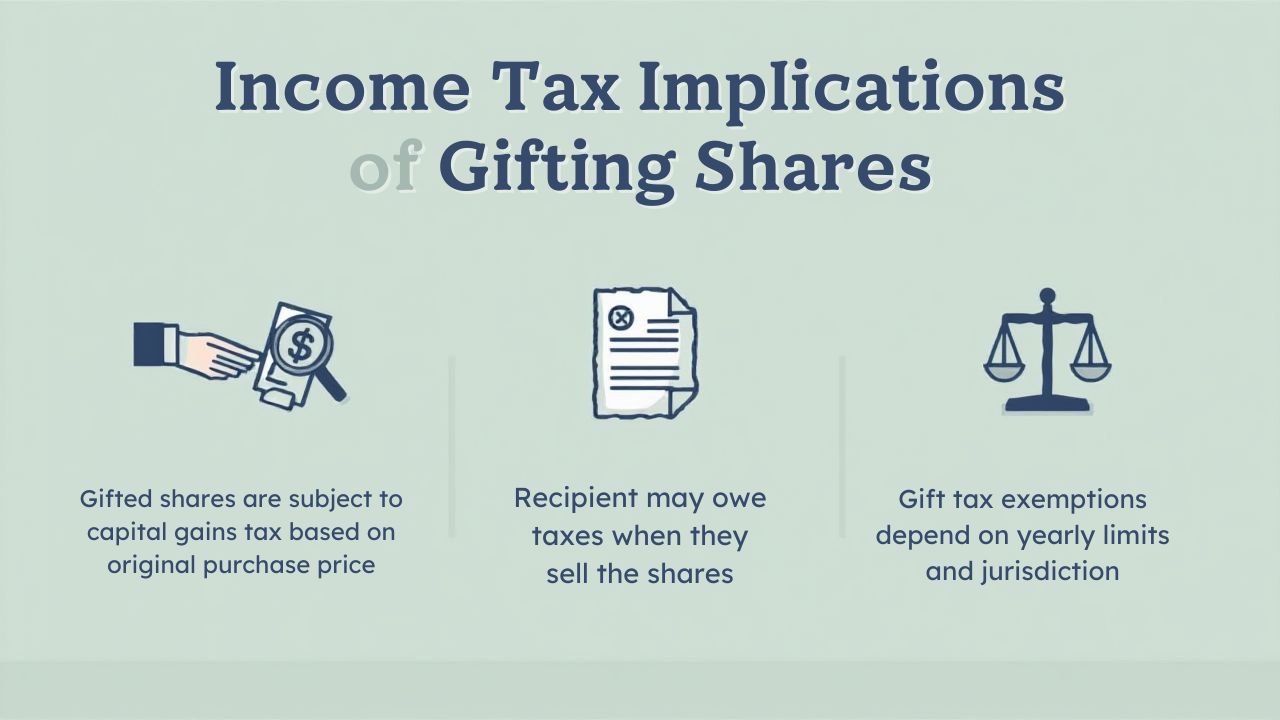
Family Gifts of Shares: Tax-Free, But with Strings Attached
Documentation is Key: Missing Proof Can Trigger Tax Notices
Selling Later? Recipient Carries Forward Original Holding Period
By Legal Reporter
New Delhi: April 16, 2026:
The Finance Bill 2024 has sharpened the rules around gifting equity shares and mutual funds. While transfers within family as gifts remain tax-free, the law now demands stricter documentation and clarity of intent. Any lapse can convert a tax-free gift into a taxable transaction, exposing investors to capital gains liability.
In matters relating to wills, succession, and testamentary validity, courts have consistently emphasized strict compliance with legal formalities and proof of execution. A key ruling in this area is Balathandayutham and Another vs. Ezhilarasan , where the Supreme Court examined crucial aspects of proof of will, attestation, and suspicious circumstances. This judgment is highly relevant for understanding how courts evaluate the genuineness of testamentary documents.
Analytical Overview
1. Tax-Free Transfers
- Gifts to immediate relatives (spouse, parents, children) are exempt under Section 47 of the Income Tax Act.
- No capital gains tax applies if the transfer is genuinely a gift without consideration.
2. Taxable Transfers
- Transfers involving payment or consideration are treated as sales.
- Gifts to non-relatives (friends, distant cousins) are taxable.
3. Documentation Essentials
- Gift deed (signed and stamped).
- Proof of relationship.
- PAN details of both parties.
- Demat/bank statements showing transaction trail.
- Purchase and valuation proof.
- Disclosure in income tax filings.
4. Recipient’s Tax Liability
- Recipient inherits donor’s holding period.
- Example: Father held shares for 3 years, son sells after 6 months → Long-term capital gains.
5. ITR Filing
- ITR-1 allowed only if income < ₹50 lakh and LTCG ≤ ₹1.25 lakh.
- Otherwise, ITR-2 is mandatory.
Flowchart: Tax-Free vs Taxable Transfers
Step 1: Nature of Transfer
- Gift / Will / Trust → Step 2
- Sale / Payment → Taxable
Step 2: Relationship
- Immediate Relative → Tax-Free
- Non-relative → Taxable
Step 3: Documentation
- Proper deed + proof → Safe
- Missing proof → Risk of notices
Step 4: Recipient’s Sale
- Holding period includes donor’s → Tax benefit
- If sale → Tax based on recipient’s holding only
Step 5: ITR Filing
- ITR-1 only for small LTCG cases
- Otherwise ITR-2
[RESEARCH RESOURCES]
Indian courts have consistently laid down detailed principles governing wills, probate, and testamentary succession, especially in cases involving suspicious circumstances and proof of execution. For a comprehensive understanding of these legal standards, you can explore this curated collection of 123 Supreme Court Judgments on Wills , which covers key rulings on attestation, genuineness, and validity of wills under Indian law.
EXTRACTS FROM BOOK, WILL WRITING SIMPLIFIED, By Dr Ravinder Kumar Anand. [📘 Buy Will Writing Simplified online: Amazon | Flipkart ]
FAQs
Q1. Is gifting shares to my spouse taxable?
No, transfers to immediate relatives are tax-free if done as a gift.
Q2. What if I sell shares to my brother at a nominal price?
That counts as a sale. Capital gains tax applies.
Q3. Do I need a gift deed?
Yes, a signed gift deed is essential to prove intent.
Q4. How is the recipient taxed when selling gifted shares?
Recipient’s holding period includes donor’s. Tax treatment depends on combined duration.
Q5. Can I use ITR-1 to report gains from gifted shares?
Only if income < ₹50 lakh and LTCG ≤ ₹1.25 lakh. Otherwise, use ITR-2.
Q6. Are gifts to friends tax-free?
No, only gifts to specified relatives are exempt.
Q7. What documents should I keep?
Gift deed, proof of relationship, PAN, transaction trail, purchase proof, valuation proof, and tax disclosure records.
Conclusion
The new rules emphasize that gifting shares or mutual funds is tax-free only when intent and documentation are crystal clear. Investors must treat paperwork as seriously as the transfer itself. Otherwise, what was meant as a family gift could quickly turn into a taxable capital gains event.