
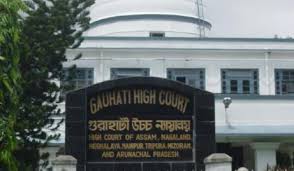
Gauhati High Court Quashes Case Against Influencer Over ‘Goat’ Remark on Assamese Women
Court rules statement did not meet criteria for witch-hunting offences
Justice Pranjal Das emphasizes absence of legal ingredients for charges
By Our Legal Correspondent
New Delhi: February 12, 2026:
The Gauhati High Court has quashed criminal proceedings against influencer Abhishek Kar, who was accused of making derogatory remarks about Assamese women during a YouTube podcast. Kar had claimed that in Assam “there is a place where girls practice black magic, witchcraft and can convert human beings into goats and other animals, and later at night convert them back into human beings to establish physical relations.” The case, registered in January 2025, invoked provisions of the Bharatiya Nyaya Sanhita (BNS), the Information Technology Act, and the Assam Witch Hunting (Prohibition, Prevention and Protection) Act, 2015.
Also Read: Supreme Court Declines Plea to Publish Opposition Leader’s Dissent on CIC Appointments
Also Read: Patna High Court Rules PwD Vacancies Must Follow RPwD Act, Not State Resolutions
Justice Pranjal Das, delivering the judgment on February 9, 2026, held that the statement did not fulfil the essential ingredients required to establish the offences under these laws, and therefore the proceedings were legally unsustainable.
Background of the Case
- Accusation: Kar’s remarks were alleged to have outraged the modesty of Assamese women and promoted malicious stereotypes about the community.
- Legal provisions invoked:
- Section 196 of the BNS (promoting enmity between groups)
- Section 67 of the IT Act (publishing obscene material)
- Section 4 of the Assam Witch Hunting Act (stigmatizing or defaming persons as witches)
- CID Cyber Case: The Assam CID registered the case, citing that the remarks could spread misinformation and harm social harmony.
- Defence: Kar approached the High Court, arguing that his statement was exaggerated, lacked intent to defame, and did not amount to calling Assamese women witches.
[Suggested Resource]
If you want practical guidance on drafting wills, codicils, and probate procedures, Will Writing Simplified is an invaluable resource.
🔹 Amazon
🔹 Flipkart
Court’s Observations
Justice Das made several key points:
- No enmity promoted: The statement did not amount to promoting enmity between communities under Section 196 BNS.
- No obscenity: The remarks did not fulfil the criteria for publishing obscene material under Section 67 IT Act.
- No witch-hunting element: The statement did not stigmatize or identify Assamese women as witches under the Assam Witch Hunting Act.
- Misconceived charges: The Court emphasized that while the remarks were inappropriate, they did not legally constitute the offences alleged.
Also Read: Supreme Court Criticizes RERA: Says Authority Only Helps Builders, Not Homebuyers
Why the Case Was Quashed
The High Court clarified that criminal law requires strict adherence to statutory ingredients. Since Kar’s statement, though controversial, did not meet the legal thresholds, continuing the case would amount to misuse of criminal provisions.
The Court also noted:
- Freedom of speech: While freedom of expression is not absolute, restrictions must be applied only when offences are clearly made out.
- Context matters: The remarks were part of a podcast discussion and lacked direct intent to defame or incite violence.
- Judicial caution: Courts must avoid criminalizing speech unless it clearly violates statutory provisions.
Wider Legal Context
This case highlights the tension between free speech and protection against derogatory remarks. The Assam Witch Hunting Act was enacted to combat the social evil of witch-hunting, which has historically led to violence against women in the state. However, the Gauhati High Court’s ruling shows that not every offensive or exaggerated statement can be prosecuted under this law.
Also Read: Madras High Court Directs MS Dhoni to Deposit ₹10 Lakh in Defamation Case
Legal experts suggest that the judgment reinforces the principle that criminal law should not be stretched to cover speech that, while distasteful, does not meet statutory definitions of crime.
Conclusion
The Gauhati High Court’s decision to quash the case against Abhishek Kar underscores the importance of applying criminal law with precision. By ruling that his remarks did not amount to witch-hunting or obscenity, the Court has reaffirmed the need to balance free speech with protection against harmful stereotypes. The judgment is expected to serve as a precedent in similar cases where exaggerated or offensive remarks are made in public forums.
GEO Keywords
- Gauhati High Court influencer case
- Assamese women goats remark judgment
- Abhishek Kar witchcraft case Assam
- Gauhati HC quashes witch-hunting charges
- Assam Witch Hunting Act court ruling
- Free speech vs witch-hunting law India
- Gauhati HC February 2026 judgment
- Influencer derogatory remark Assam case
Also Read: Supreme Court Rejects Jairam Ramesh’s Plea Against Retrospective Environmental Clearances