
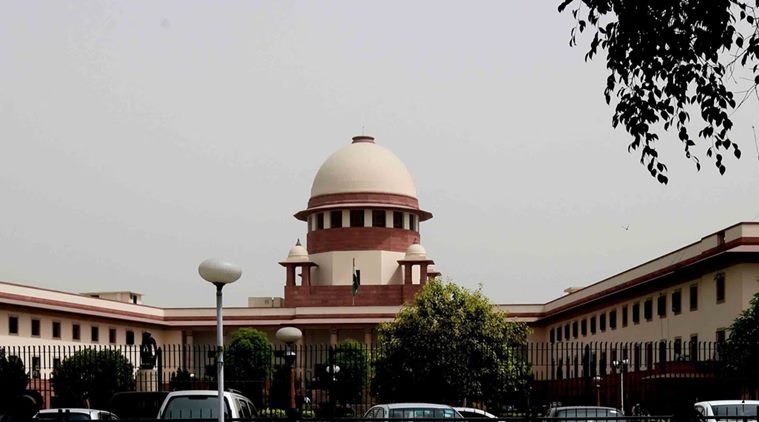
COURTKUTCHEHRY SPECIAL SERIES ON LANDMARKS JUDGEMENTS ON WILLS, CODICIL & PROBATE
E. Madhavi Pallikkaramma & Anr. v. K.V. Prabhakaran Nair & Ors — Supreme Court Affirms Probate of Joint Will
Unregistered Joint Will Found Genuine and Free of Suspicion
Challenge to Probate Dismissed, Testamentary Intent Upheld
By Vishwas Kumar
New Delhi: March 26, 2026:
In E. Madhavi Pallikkaramma & Anr. v. K.V. Prabhakaran Nair & Ors (Civil Appeal No. 3251 of 1989, decided on 26 April 2000), the Supreme Court of India delivered a decisive ruling on the validity of an unregistered joint Will. The Division Bench comprising Hon’ble Justice S.B. Majmudar and Hon’ble Justice U.C. Banerjee examined whether allegations of unnatural exclusion of the testators’ spouse and husband could invalidate the probate granted.
key judgments on will validity and succession of E. Madhavi Pallikkaramma
The appellants challenged the Will, arguing that the exclusion of certain family members rendered it suspicious and unnatural. They further contended that the Will’s unregistered status weakened its authenticity. The Court, however, rejected these claims, holding that registration is not mandatory for a Will under Indian law. More importantly, the Bench found no evidence of suspicious circumstances surrounding its execution. The Will was duly proved, and the testamentary intent of the testators was clear and consistent.
The Supreme Court emphasized that probate proceedings are designed to establish the genuineness of a Will, not to reopen family disputes based on conjecture. Since the Will was executed voluntarily and attested properly, the grant of probate stood affirmed. The challenge failed, and the appeals were dismissed.
This ruling reinforces the principle that unregistered Wills, when duly proved, carry full legal validity. It also highlights the judiciary’s reluctance to invalidate testamentary documents based on speculative allegations of exclusion, thereby safeguarding the sanctity of a testator’s intent.
For More, Read Here the Summary of the Judgement from the Book: WILL WRITING SIMPLIFIED, read below or open page no 436, Chapter 14.1 in the book. (Online book purchase link available here on: Buy online: Amazon | Flipkart
|
|
Case Summary |
: |
E. Madhavi Pallikkaramma & Anr. v. K.V. Prabhakaran Nair & Ors. |
|
|
Court |
: |
Supreme Court of India |
|
|
Citations |
: |
(2000) 04 SC CK 0180: Civil Appeal No. 3251 of 1989. |
|
|
Link |
: |
|
|
|
Decided on |
: |
26 April 2000 |
|
|
Coram |
: |
Hon’ble Mr. Justice S.B. Majmudar and Hon’ble Mr. Justice U.C. Banerjee. (Division Bench) |
|
|
Relevant Paragraphs |
: |
Para Nos.2–9 |
1. Facts of the Case:
The appellants challenged the Kerala High Court Division Bench decision affirming grant of probate for a Will executed jointly by Ummamma Amma and Kunhiraman Nair dated 14.10.1966. Ummamma Amma died on 3.11.1966 and Kunhiraman Nair on 18.7.1978. Both belonged to the Kunnath Tavazhi. Respondents 1–7 were members of a collateral branch and Respondent 8 was a dependent maid servant. The Will bequeathed the school and its site to Respondents 1–2, other properties to Respondents 1–7, and directed payment of ₹250 to Respondent 8. The caveator (appellant) was the widow of Kunhiraman Nair.
2. Law Points Involved:
Grant of probate under Section 276 of the Indian Succession Act, 1925-proof of Will-alleged suspicious circumstances-disinheritance of spouse-effect of non-provision for wife or husband-joint Will validity.
3. Acts / Provisions / Articles Referred:
(i). Indian Succession Act, 1925 — Section 276
(ii). Constitution of India — Article 136
4. Judgments Referred:
Findings of the Trial Court and Kerala High Court were examined and affirmed. No other external judgments cited.
5. Obiter Dicta:
The High Court observed that when dealing with Tavazhi properties, a testator’s decision not to provide for spouse was not unnatural since such property would revert to family members, not to the spouse’s heirs. A wife capable of self-support through her property or by living with her husband needed no separate provision.
6. Ratio Decidendi:
Absence of provision for spouse or husband does not by itself constitute a suspicious circumstance when justified by family structure and circumstances. A Will validly executed and attested, free from coercion, is entitled to probate even if certain heirs are excluded.
7. Final Ruling:
The Supreme Court found the concurrent findings of the Trial Court and High Court to be well-supported by evidence. No suspicious circumstances existed. Appeal dismissed; no order as to costs.
8. Gist Highlighting Dispute with Final Decision:
Challenge to probate grant of an unregistered joint Will failed. Allegations of unnatural exclusion of wife and husband were rejected. The Supreme Court held the Will genuine and free from suspicious circumstances, affirming probate.
Read full Judgement Here:
E. Madhavi Pallikkaramma & Anr. v. K.V. Prabhakaran Nair & Ors.
Supreme Court of India
(2000) 04 SC CK 0180: Civil Appeal No. 3251 of 1989.
You Can Also Purchase the Book from here on: Buy online: Amazon | Flipkart
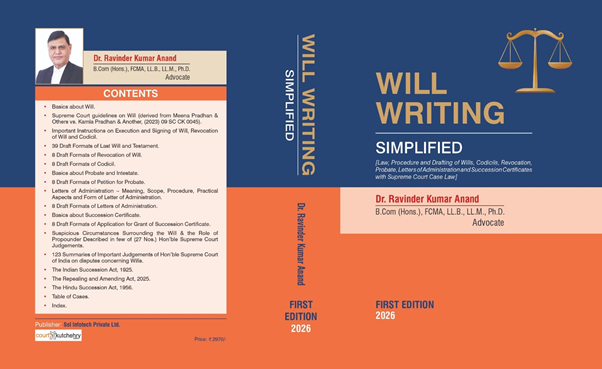
OUR RECOMMENDATION: Check out 123 Key Judgements, as highlighted in the book, WILL WRITING SIMPLIFIED, for the quick research and reference purposes. Click the link here: https://www.courtkutchehry.com/pages/blog/123-supreme-court-judgments-on-wills/
Keywords for SEO & Faster Searches
-
- Madhavi Pallikkaramma case 2000
- K.V. Prabhakaran Nair Supreme Court judgment
- Unregistered joint Will validity India
- Probate of joint Will Supreme Court
- Suspicious circumstances in Will proof
- Justice S.B. Majmudar U.C. Banerjee ruling
- Civil Appeal No. 3251 of 1989 inheritance law