
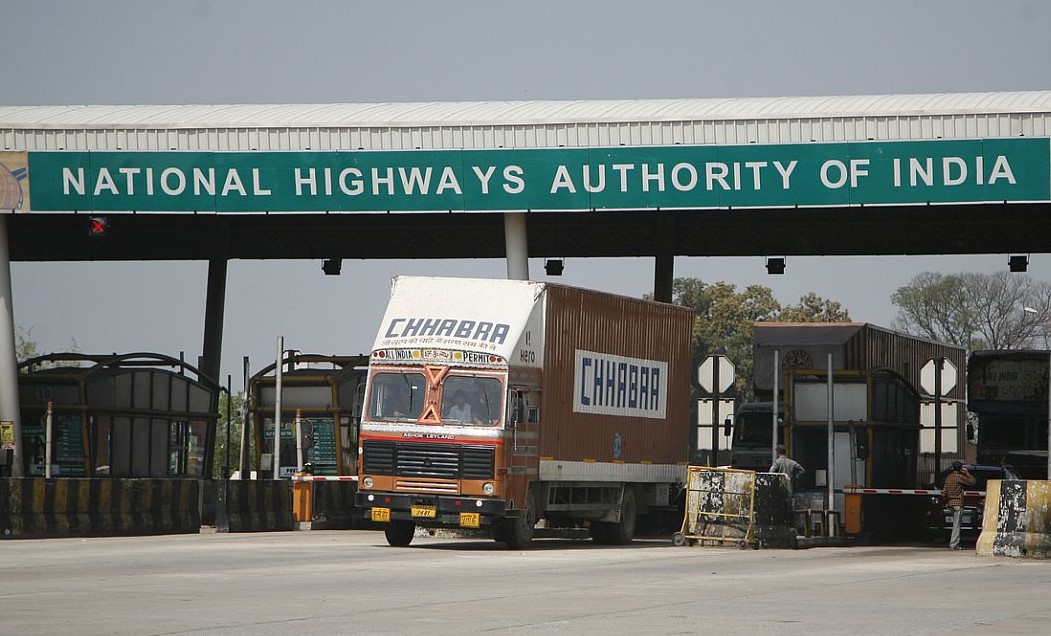
HIGHWAY TO RETAIN PUBLIC COFFER: DELHI HIGH COURT REJECTS TOLL COLLECTOR’S CLAIMS OF VESTED RIGHTS
Strategic Judicial Balancing: Commercial Autonomy vs. Public Exchequer Protection
Administrative Prudence over Contractual Absolutism in National Infrastructure Projects
By Legal Editor
New Delhi: July 07, 2026:
The intersection of public administrative law and private economic bargains often creates complex constitutional friction. In a benchmark ruling that underscores the supremacy of public revenue considerations over private profit expectations, the Delhi High Court in Md. Karimunnisa vs. National Highways Authority of India & Anr clarified that private contractors do not possess an absolute, vested right to run infrastructure concessions until their calendar expiry when valid contractual exit pathways exist. Decided by a division bench comprising Justice Anil Kshetrapal and Justice Amit Mahajan, the judgment strongly reinforces the "Open Eyes" doctrine in government procurement, declaring that experienced commercial operators must absorb both the potential Windfalls and early termination risks explicitly written into public tenders.
Article 21 is regarded as one of the most dynamic and widely interpreted provisions of the Indian Constitution, protecting every person's right to life and personal liberty. Through numerous landmark Supreme Court judgments, its scope has expanded to include rights such as privacy, dignity, education, health, clean environment, legal aid, and speedy trial. To understand its constitutional significance and evolving judicial interpretation, explore our comprehensive guide on Article 21 of the Constitution of India, covering key legal principles and the most influential decisions that have shaped fundamental rights in India.
The Factual Trajectory and the "Windfall Gain" Dispute
The dispute originated from a public bidding process through which the petitioner, a seasoned toll collection agency, was awarded the mandate to collect user fees at the Pawangaon Fee Plaza situated in Maharashtra. The formal agreement, executed on May 26, 2025, was structurally slated to run for a fixed tenure of one year, expiring on June 17, 2026.
However, during the operational period, traffic density and spatial realignments resulted in an exponential surge in toll collections. The real-time revenue yielded at the plaza far outstripped the baseline parameters and traffic projections calculated during the initial bidding stage. This divergence created a situation where the collector's daily intake vastly exceeded the fixed remittance due to the National Highways Authority of India (NHAI), resulting in an estimated loss of approximately ₹7.5 lakh per day to the public exchequer.
Recognizing this critical imbalance, NHAI invoked Clause 35(6) of the Contract—a specialized "windfall gain" provision designed to protect the state when a toll plaza experiences unexpected, massive revenue escalations—alongside its general exit powers under Clause 35(2). On April 2, 2026, NHAI simultaneously issued a Show Cause Notice and floated a short-term fresh tender for a new operator to avoid operational gaps. On April 8, 2026, the formal premature termination order was passed. The petitioner challenged this action under Article 226 of the Constitution of India, asserting that the early termination was arbitrary, pre-meditated, and violative of their legitimate expectations.
Legal Architecture and Key Rules Analyzed
The High Court's review hinged on key constitutional and contract law principles:
1. Limits of Writ Jurisdiction in Commercial Contracts (Articles 14 & 226)
The primary constitutional question was whether a public authority's early termination of a commercial contract warrants intervention under Article 226. The petitioner alleged a violation of Article 14, claiming the simultaneous issuance of a fresh tender and a show cause notice indicated a closed mind.
The Court re-emphasized that the scope of judicial review in contractual matters is narrow. A writ court does not act as an appellate body over the commercial wisdom of a state enterprise. It examines only the decision-making process for bad faith or gross irrationality. The Court held that initiating a parallel tender was a pragmatic step to maintain continuous public revenue collection and did not prove bad faith.
2. The "Open Eyes" Doctrine and Commercial Risk Allocation
A central pillar of the judgment is the "Open Eyes" doctrine. The Court noted that the petitioner was an experienced operator who entered the agreement with full awareness of the clauses.
Under Indian contract jurisprudence, when a party signs an agreement containing specific risk-allocation mechanisms, they cannot later ask a court to rewrite those terms under the guise of equity or financial hardship. The terms expressly provided for early termination under specific revenue conditions, and the contractor was bound by that bargain.
3. Vested Rights and Legitimate Expectation vs. Public Interest
The petitioner argued that a fixed-term contract creates a vested right to operate for the full duration. The Court rejected this, ruling that no indefeasible right exists when an agreement contains valid termination clauses. While public law recognizes "legitimate expectation," this principle cannot override express contractual terms or the financial interests of the public exchequer.
[Contract Executed: May 26, 2025]
│
▼
[Abnormal Traffic & Revenue Surge]
│
▼
[Loss to Exchequer: ~₹7.5 Lakh/Day]
│
▼
[NHAI Invokes Clause 35(6) Windfall Provision]
│
▼
[Delhi HC: Public Exchequer > Vested Contract Tenure]
Judicial Observations on Administrative Delays
Although the Court ruled in favor of NHAI, it noted a delay by the authority in invoking the windfall clause after the revenue surge became apparent. This delay caused avoidable losses to the public exchequer. The Court acknowledged that NHAI has initiated disciplinary action against the responsible officials and is implementing automated toll monitoring systems for real-time tracking, affirming that such delays do not invalidate the lawful exercise of contractual rights.
Searchable Legal Index & Detailed FAQ
Section Index
Q1: Writ Jurisdiction Limits
Q2: Vested Right to Term
Q3: The Open Eyes Doctrine
Q4: Windfall Gain Clauses
Q5: Simultaneous Tendering Legality
Q1: What are the limits of a High Court's writ jurisdiction under Article 226 regarding public contracts?
The High Court clarified that judicial review under Article 226 in contractual matters is limited to assessing the decision-making process for arbitrariness, discrimination, or bad faith. Courts will not review the commercial wisdom of a public authority or rewrite an agreement. Contractual disputes should not be converted into constitutional causes of action.
Q2: Does a contractor have an absolute right to complete a fixed-term government contract?
No. The Court ruled that a contractor cannot claim an absolute or vested right to run a contract until its scheduled end date if the agreement contains valid early termination options. Express termination provisions override any claim of an automatic right to complete the full term.
Q3: How does the "Open Eyes" doctrine apply to government procurement and tenders?
The "Open Eyes" doctrine establishes that commercial entities entering into contracts with the State with full knowledge of the terms must accept both the benefits and burdens of the agreement. Experienced operators cannot claim unfairness regarding risks or exit clauses they voluntarily accepted during the bidding process.
Q4: What is a "Windfall Gain" clause, and when can a public authority invoke it?
A "Windfall Gain" clause allows a public authority to terminate or restructure a contract if an unexpected external shift causes revenues to far exceed original estimates. In this case, a sharp rise in toll revenue created a daily imbalance that harmed the public exchequer, justifying NHAI's early termination to protect public funds.
Q5: Is it legally permissible for a government body to float a fresh tender on the same day it issues a termination show-cause notice?
Yes. The Court held that for continuous public services like toll collection, inviting fresh bids while issuing a show-cause notice is a pragmatic administrative step to avoid revenue disruption. It does not automatically indicate pre-determination or bad faith.