
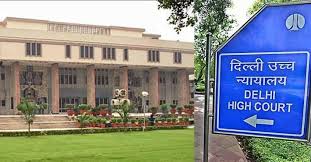
Delhi High Court: Mother’s Right to Education Abroad Cannot Be Curtailed by Custody Disputes
Bench says Article 21 protects personal development; mother allowed to pursue post-graduate studies in USA with child
Court balances welfare of minor with mother’s autonomy, imposes safeguards for father’s visitation rights
By Legal Reporter
New Delhi: February 14, 2026:
In a progressive ruling, the Delhi High Court has held that a mother’s role as the primary caregiver does not diminish her constitutional right to education and personal growth. The Court permitted a woman to travel abroad with her minor child to pursue higher education, stressing that forcing her to choose between her child and her career would violate her rights under Article 21 of the Constitution of India.
Also Read: Supreme Court: High Courts Must Address All Issues in Writ Petitions, Not Just One Point
Justice Saurabh Banerjee delivered the judgment in the case of Twinkle Vinayak v. Vishal Verma, allowing the mother to continue her post-graduate programme in Public Health Education and Promotion (M.S.) at Marymount University, Virginia, USA
[Recommended Legal Resource]
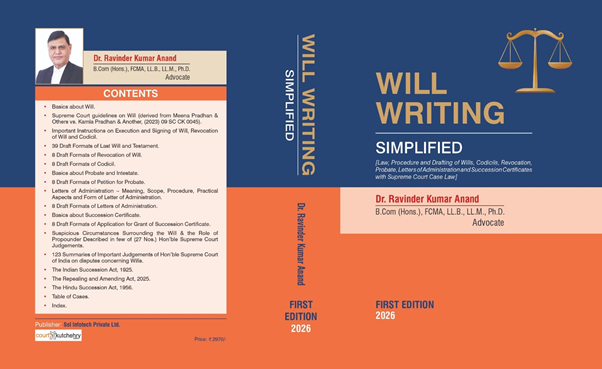
If you want practical guidance on drafting wills, codicils, and probate procedures, Will Writing Simplified [Law, Procedure and Drafting of Wills, Codicils, Revocation, Probate, Letters of Administration and Succession Certificates with Supreme Court Case Law] is an invaluable resource. It provides practical insights and case references, making it useful for lawyers, law students, and researchers.
You can access it here: Amazon | Flipkart
Case Background
- The parties married in 2014 and had a son in 2017.
- Following matrimonial discord, the mother left the matrimonial home in 2019 with the child.
- Multiple custody and visitation disputes ensued, with the Family Court granting visitation rights to the father.
- In 2024, the mother travelled to the USA with the child without prior court permission, prompting the father to file a habeas corpus petition.
- The Supreme Court later allowed limited visitation and gave liberty to the mother to seek permission for travel abroad.
- The present application sought permission to continue her studies overseas with the child.
Court’s Key Observations
- Right to education under Article 21: The Court reiterated that the right to life and liberty includes the right to education, dignity, and autonomy.
- Mother’s status irrelevant: Being a mother does not dilute constitutional protection; enabling her education strengthens her independence and benefits the child.
- Child’s welfare paramount: The child had been living with the mother since 2019 and separating him could harm his welfare.
- Safeguards imposed: The Court required affidavits, disclosure of residence and schooling, structured video calls with the father, and mandatory visitation during vacations in India.
Implications of the Judgment
- For Mothers: Affirms that caregiving responsibilities cannot be used to restrict educational aspirations.
- For Custody Law: Clarifies that courts must balance child welfare with parental autonomy.
- For Fathers: Ensures visitation rights are protected through structured safeguards.
- For Society: Reinforces progressive interpretation of Article 21, supporting women’s empowerment.
Also Read: Is Lending Cash to Relatives Illegal? Understanding Section 269SS of the Income Tax Act
Broader Legal Significance
This ruling reflects the judiciary’s evolving approach to family law and constitutional rights. By prioritizing both the welfare of the child and the mother’s autonomy, the Court has set a precedent for custody disputes involving education and career advancement.
It also underscores the principle that personal development is integral to the right to life, ensuring that women are not forced to sacrifice education or career opportunities due to parental status.
Conclusion
The Delhi High Court’s ruling in Twinkle Vinayak v. Vishal Verma is a landmark affirmation of women’s rights in India. By allowing a mother to pursue higher education abroad with her child, the Court recognized that personal development and education are fundamental rights under Article 21.
This judgment balances parental responsibilities with individual autonomy, ensuring that mothers are not forced to choose between their children and their careers.
Also Read: Supreme Court Allows Patent Mapping in Cancer Drug Dispute Between Bristol Myers Squibb and Zydus
Suggested Keywords for Faster Searches
- Delhi High Court mother’s right to education ruling
- Article 21 personal liberty education India
- Custody disputes mother career rights Delhi HC
- Twinkle Vinayak v Vishal Verma case Delhi HC
- Mother allowed US travel higher education child custody
- Delhi HC child welfare and mother’s autonomy ruling
- Mother’s right to personal development Article 21 India
- Delhi High Court custody and education judgment
Also Read: McDonald’s India Outlet Warned Over Rotten Tomatoes and Reused Oil: Food Safety Laws in Focus