
Delhi High Court Orders Contemnor to Appear in Person After Threats During Virtual Hearings
Bench Warns of Coercive Steps if Absent on March 23
Court Reaffirms Limits of Virtual Proceedings in Contempt Cases
By Legal Reporter
New Delhi: February 25, 2026:
In a rare and serious development, the Delhi High Court has ordered a man facing criminal contempt proceedings to appear in person after he repeatedly joined hearings via video conference and allegedly threatened the judges. The Division Bench of Justice Navin Chawla and Justice Ravinder Dudeja directed the contemnor, Adeeshwar Singhal, to be physically present on March 23, 2026, warning that failure to comply would invite “appropriate coercive steps” to secure his presence.
Also Read: Centre Bans MoodXVIP, Jugnu and 3 Other OTT Platforms for Streaming Obscene Content
Case Background
- Contempt Proceedings: The case, titled Court on its own motion v. Adeeshwar Singhal, arose from repeated threats against judges.
- District Court Reference: The matter was initially referred by a district judge at Karkardooma Courts, who reported misconduct.
- Virtual Appearances: Despite directions to appear physically, Singhal continued to join hearings via video conference.
- Threats to Bench: During these virtual sessions, he allegedly issued threats, prompting the High Court to take a stern view.
[Recommended Legal Resource]
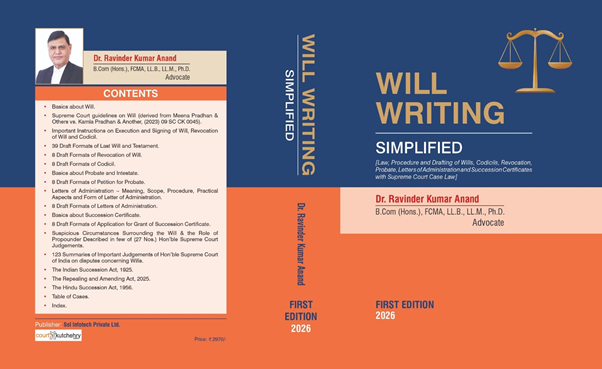
For readers seeking practical guidance on succession, inheritance, and drafting of important documents, Will Writing Simplified is an invaluable resource. It covers wills, codicils, probate, and succession certificates with Supreme Court case law. Available on Amazon and Flipkart, this book is a professional tool for families and practitioners.
Also Read: Supreme Court: Restructuring Arrangements Cannot Stall Insolvency Proceedings
Court’s Observations
- Physical Presence Mandatory: The Bench stressed that contempt proceedings require the contemnor’s physical presence, especially when serious allegations like threats are involved.
- Grave Misconduct: The Court described the conduct as “grave and unacceptable.”
- Warning Issued: If Singhal fails to appear on March 23, coercive measures—including possible arrest—may be taken.
- Amicus Curiae Appointed: Senior advocate Amit George was appointed to assist the Court in the contempt proceedings.
Why This Ruling Matters
- Judicial Authority: Reinforces that courts cannot be undermined by threats or misuse of virtual hearings.
- Limits of Technology: While video conferencing has expanded access to justice, the ruling highlights its limits in sensitive cases.
- Message to Litigants: Sends a strong signal that contempt of court will be dealt with firmly, regardless of the mode of appearance.
Broader Implications
Also Read: Supreme Court to Examine Housing Society’s Refusal of EV Charger Installation
- Virtual Hearings: Post-pandemic, courts have embraced video conferencing. However, this case shows that physical presence may be necessary in matters involving contempt or misconduct.
- Judicial Discipline: Protects the dignity of the judiciary and ensures proceedings are not disrupted.
- Public Confidence: Upholding strict standards in contempt cases reassures citizens about the integrity of the justice system.
Expert Reactions
Legal experts noted that the ruling underscores the seriousness of contempt proceedings. While technology has made hearings more accessible, it cannot be allowed to become a shield for misconduct.
Conclusion
The Delhi High Court’s directive to Adeeshwar Singhal marks a critical moment in balancing technology with judicial authority. By insisting on physical presence, the Court has reaffirmed that virtual hearings cannot dilute accountability in contempt cases. The ruling sends a clear message: threats against judges will not be tolerated, and the dignity of the judiciary must be preserved.
Suggested Keywords for SEO & Faster Searches
Also Read: Supreme Court Rules Voluntary Confession Can Be Substantive Evidence Under Customs Act
- Delhi High Court contempt case 2026
- Adeeshwar Singhal contempt proceedings
- Threats to judges virtual hearing Delhi HC
- Court orders physical presence contempt case
- Limits of video conferencing in judiciary India
- Criminal contempt Delhi High Court ruling
- Judicial authority and misconduct India
- Will Writing Simplified book
Also Read: ITAT Quashes Income Tax Revision Against Mukul Rohatgi: PCIT Cannot Rely on AI Rental Yield Reports