
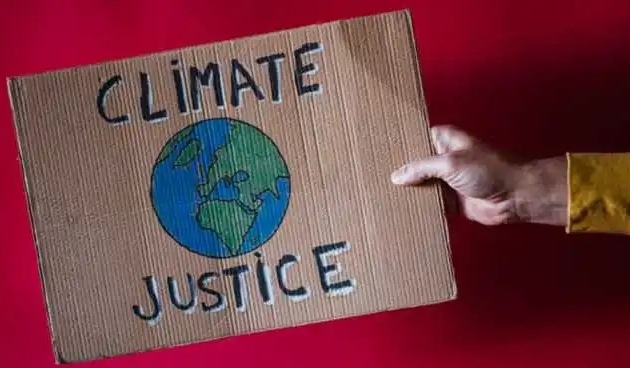
Climate Justice and the Indian Constitution: Courts, Citizens, and the Future of Sustainability
From clean air to rivers’ rights, India’s judiciary is redefining environmental justice.
How constitutional values intersect with climate change, and why India’s legal innovations matter globally.
By Vishwas Kumar
New Delhi: June 04, 2026:
India stands at the frontline of climate change. Rising temperatures, erratic rainfall, and worsening air quality threaten not only ecosystems but also human health and livelihoods. In this context, the Indian judiciary has emerged as a powerful actor in advancing climate justice. Through Public Interest Litigations and constitutional interpretation, courts have expanded the meaning of the right to life under Article 21 to include the right to a clean and healthy environment.
The scope of fundamental rights in India has expanded significantly through judicial interpretation of Article 21 of the Constitution of India. This comprehensive guide explores landmark Supreme Court decisions that have transformed the right to life and personal liberty into a source of numerous constitutional protections, including privacy, dignity, health, education, and access to justice.
From landmark rulings on river pollution to directives on vehicular emissions, Indian courts have consistently linked environmental protection with fundamental rights. This judicial activism has made India a global reference point for climate jurisprudence. Yet, debates continue: how far can courts go in shaping climate policy, and how should responsibilities be divided between the judiciary, legislature, and executive?
This article explores the constitutional foundations of climate justice in India, landmark cases, global comparisons, citizen activism, and the future of sustainability in law.
Section 1: Constitutional Foundations
The Indian Constitution does not explicitly mention climate change, but it embeds environmental responsibility. Article 21, guaranteeing the right to life and liberty, has been interpreted to include the right to a healthy environment. Directive Principles like Article 48A (protection of forests and wildlife) and Fundamental Duties like Article 51A(g) (duty to protect the environment) provide a moral and legal framework.
Judicial interpretation has been key. Courts have expanded constitutional morality to encompass sustainability, ensuring that environmental rights are treated as fundamental to human dignity.
Section 2: Landmark Climate & Environment Cases
Water & Pollution
1. MC Mehta v. Union of India (Ganga Pollution, 1985)
- Outcome/Impact: Ordered closure of polluting industries along the Ganga, recognizing clean rivers as part of the right to life.
2. Subhash Kumar v. State of Bihar (1991)
- Outcome/Impact: Declared the right to clean water and air as fundamental rights under Article 21.
Forests & Mining
3. Rural Litigation and Entitlement Kendra v. State of UP (1985)
- Outcome/Impact: Closed limestone quarries in Dehradun, India’s first environmental PIL, protecting forests and ecology.
4. T.N. Godavarman Thirumulpad v. Union of India (1995 onwards)
- Outcome/Impact: Expanded Forest conservation, leading to nationwide bans on deforestation and illegal logging.
Industrial & Hazardous Waste
5. Vellore Citizens Welfare Forum v. Union of India (1996)
- Outcome/Impact: Introduced the precautionary principle and polluter‑pays doctrine into Indian law.
6. MC Mehta v. Union of India (Oleum Gas Leak, 1986)
- Outcome/Impact: Established the principle of absolute liability for industries causing hazardous pollution.
Air Quality & Urban Policy
7. MC Mehta v. Union of India (Delhi Vehicular Pollution, 1998)
- Outcome/Impact: Directed conversion of Delhi’s public transport to CNG, drastically reducing air pollution.
8. In Re: Noise Pollution (2005)
- Outcome/Impact: Restricted use of loudspeakers and firecrackers, recognizing noise pollution as a health hazard.
Governance & Accountability
9. Indian Council for Enviro-Legal Action v. Union of India (1996)
- Outcome/Impact: Held industries accountable for toxic waste, reinforcing the polluter‑pays principle.
10. M.C. Mehta v. Kamal Nath (1997)
- Outcome/Impact: Applied the public trust doctrine, ruling that natural resources belong to the people, not private entities.
Climate & Biodiversity
11. Animal Welfare Board v. A. Nagaraja (2014)
- Outcome/Impact: Banned Jallikattu, recognizing animal rights as part of constitutional morality and environmental ethics.
12. Lafarge Umiam Mining v. Union of India (2011)
- Outcome/Impact: Balanced industrial development with environmental clearance, emphasizing sustainable mining practices.
Health & Civil Rights
13. In Re: Air Pollution in Delhi (2016)
- Outcome/Impact: Imposed restrictions on diesel vehicles and construction dust, linking clean air to public health rights.
14. Sterlite Industries Case (2018, Tamil Nadu)
- Outcome/Impact: Ordered closure of the Sterlite copper plant due to pollution, protecting community health and environment.
Section 3: Climate Justice & Judicial Activism
Indian courts have acted as guardians of environmental rights, often filling gaps left by the legislature and executive. Judicial activism has ensured accountability, but critics warn of overreach. The challenge lies in balancing proactive judicial intervention with respect for democratic separation of powers.
Section 4: Global Comparisons
India’s climate jurisprudence is compared with:
- EU: Strong climate laws and enforcement mechanisms.
- US: Youth‑led litigation like Juliana v. US demanding government action.
- Latin America: Colombia’s Amazon ruling recognizing the rainforest’s rights.
India’s approach—rights‑based and citizen‑driven—positions it uniquely in global climate law debates.
Section 5: Citizens, NGOs & Climate PILs
NGOs and activists have been central to climate PILs in India. From MC Mehta’s environmental petitions to youth‑led campaigns on air pollution, citizen activism has driven judicial action. Digital platforms now amplify voices, linking constitutional rights to climate demands.
Section 6: Future Outlook: Climate Justice as a Constitutional Challenge
Climate change is no longer just an environmental issue—it is a constitutional challenge. In India, where the Constitution guarantees the right to life and liberty under Article 21, courts have interpreted this provision to include the right to a clean and healthy environment. As climate impacts intensify, the judiciary will increasingly be called upon to safeguard these rights, making climate justice inseparable from constitutional governance.
Courts and Emerging Climate Petitions
Indian courts have already played a transformative role in environmental jurisprudence, but the future will see petitions that go beyond traditional pollution cases. Citizens and NGOs are likely to file PILs on climate governance, demanding accountability for greenhouse gas emissions, deforestation, and unsustainable development projects. The judiciary will need to balance economic growth with ecological sustainability, ensuring that constitutional values are not compromised in the pursuit of industrial expansion.
Data, AI, and Climate Governance
Technology will be central to future climate litigation. Artificial Intelligence (AI) and big data can track emissions, monitor deforestation, and predict climate risks. Courts may face petitions demanding that governments use these tools responsibly. For example, AI‑driven climate models could be used to prove negligence in policy decisions, while data transparency could become a constitutional demand under the Right to Information. The challenge will be integrating technological innovation with constitutional safeguards, ensuring that data is not misused and AI systems remain accountable.
India’s Scale and Democratic Framework
India’s position as the world’s largest democracy and one of the most climate‑vulnerable nations gives it unique global significance. With over 1.4 billion people, its climate policies affect not just national but global sustainability. The judiciary’s proactive stance in interpreting constitutional rights places India at the forefront of climate justice debates. Internationally, India’s rulings on clean air, water, and forests are studied as models for participatory justice. In the future, India could lead global conversations on embedding climate rights into constitutional frameworks.
Balancing Liberty and Security
Climate change also raises questions of liberty and security. Extreme weather events, rising sea levels, and resource scarcity can threaten livelihoods and force migration. Courts may need to interpret constitutional rights in these contexts, ensuring that displaced communities retain dignity and protection. At the same time, governments may invoke emergency powers to address climate crises, raising concerns about surveillance and restrictions. Judicial oversight will be critical to balance security measures with individual freedoms.
Expanding Fundamental Rights
The future of climate justice lies in expanding the scope of fundamental rights. Just as privacy was recognized as a constitutional right in 2017, climate rights could be explicitly articulated. Courts may declare the right to a stable climate or the right to sustainability as fundamental, ensuring stronger protections against ecological harm. Such recognition would align India with global trends, where countries like Colombia and the Philippines have recognized environmental rights as constitutional guarantees.
Directive Principles and Duties
Directive Principles of State Policy, though non‑justiciable, will gain renewed importance. Articles 48A and 51A(g) emphasize environmental protection, and courts may increasingly use them to justify rulings. Citizens’ duties to protect the environment could also be enforced more rigorously, creating a constitutional culture of sustainability. The future may see greater emphasis on collective responsibility, where both state and citizens are accountable for ecological stewardship.
Global Leadership in Climate Jurisprudence
India’s constitutional approach to climate justice positions it as a global leader. While the EU relies on legislation and the US on litigation, India’s judiciary has innovated through PILs and constitutional interpretation. This rights‑based model resonates with developing democracies, offering a blueprint for balancing growth with sustainability. In the coming decades, India could spearhead international frameworks that embed climate rights into constitutional law, influencing global governance.
Challenges Ahead
Despite its strengths, India faces challenges. Enforcement gaps remain a major issue—judicial rulings often face delays in implementation. Frivolous PILs can clog courts, diverting attention from genuine climate petitions. Critics also warn of judicial overreach, where courts encroach on policy domains. The future will require careful balancing: ensuring accessibility while maintaining judicial discipline, and promoting activism without undermining democratic processes.
Integrating Technology and Constitutional Values
The integration of technology with constitutional values will define the future of climate justice. AI, blockchain, and satellite monitoring can revolutionize environmental governance, but they must be aligned with rights to privacy, transparency, and accountability. Courts will need to develop frameworks that regulate technology while safeguarding constitutional principles. This intersection of law, technology, and environment will be the new frontier of jurisprudence.
Towards a Sustainable Constitutional Future
Ultimately, the future of climate justice in India lies in embedding sustainability into constitutional morality. Justice, liberty, equality, and fraternity must be interpreted in ecological terms, ensuring that democracy protects not just people but the planet. The judiciary, legislature, and executive must work together to create a constitutional culture where environmental rights are inseparable from human rights.
India’s journey demonstrates that constitutional law is not static—it evolves with society’s needs. As climate change reshapes the world, India’s Constitution will continue to adapt, offering hope that law can be a powerful tool for sustainability. By integrating constitutional values with technological innovation, India can safeguard both people and planet, leading global debates on climate justice in the 21st century.
Conclusion
Climate justice in India reflects the adaptability of constitutional law. By interpreting Article 21 to include environmental rights, courts have ensured that sustainability is not just policy but a constitutional promise. Landmark cases have reshaped governance, holding industries and governments accountable.
Globally, India’s jurisprudence is studied as a model for participatory climate justice. Yet, challenges remain: balancing judicial activism with democratic processes, ensuring enforcement, and addressing emerging issues like AI and climate data.
In conclusion, India’s constitutional journey in climate justice demonstrates that law can be a powerful tool for sustainability. By embedding environmental rights into the heart of democracy, India offers a blueprint for nations grappling with climate change. The future of constitutional law will be inseparable from the future of the planet.
40 FAQs with Answers
Basics of Climate Justice
1. What is climate justice?
It links environmental protection with human rights, ensuring vulnerable communities are not disproportionately affected by climate change.
2. How does the Indian Constitution address the environment?
Through Article 21 (right to life), Directive Principles like Article 48A, and Fundamental Duties like Article 51A(g).
3. Is the right to a clean environment a fundamental right?
Yes, courts have interpreted Article 21 to include the right to a healthy environment.
4. Why is India vulnerable to climate change?
Its geography, dependence on monsoons, and large population make it highly climate‑sensitive.
5. What role do courts play in climate justice?
They expand constitutional rights and enforce accountability through Public Interest Litigations.
Landmark Cases
6. What was MC Mehta’s Ganga pollution case?
It ordered closure of polluting industries, linking clean rivers to fundamental rights.
7. What did the Dehradun Quarrying case achieve?
It shut down limestone quarries, protecting forests and setting a precedent for ecological jurisprudence.
8. What was Subhash Kumar v. State of Bihar?
It recognized the right to clean water as part of Article 21.
9. What did Vellore Citizens Welfare Forum case establish?
It introduced the precautionary principle and polluter‑pays doctrine in Indian law.
10. How did courts address vehicular pollution in Delhi?
They ordered conversion of public transport to CNG, reducing air pollution.
Constitutional Dimensions
11. How does Article 21 relate to climate justice?
It guarantees the right to life, interpreted to include environmental protection.
12. What is Article 48A?
A Directive Principle directing the state to protect forests and wildlife.
13. What is Article 51A(g)?
A Fundamental Duty requiring citizens to protect the environment.
14. Can Directive Principles be enforced through PIL?
Yes, courts often use PIL to enforce environmental responsibilities.
15. How has judicial activism shaped climate law?
By expanding constitutional rights and directing governments to act on sustainability.
Global Comparisons
16. How does India compare to the EU?
EU has strong climate laws, while India relies heavily on judicial interpretation.
17. What is Juliana v. US?
A youth‑led case demanding US government action on climate change.
18. How has Latin America advanced climate justice?
Colombia recognized the Amazon rainforest’s rights, similar to India’s rights‑based approach.
19. Is India’s climate jurisprudence globally recognized?
Yes, it is studied as a model for participatory climate justice.
20. Can India influence global climate law?
Yes, given its scale, democracy, and innovative judicial rulings.
Citizen & NGO Role
21. Who can file climate PILs?
Any citizen or NGO concerned about environmental issues.
22. How have NGOs shaped climate justice?
By filing PILs on pollution, deforestation, and sustainability.
23. What role do youth play in climate activism?
They lead campaigns and petitions linking constitutional rights to climate action.
24. Can digital platforms support climate justice?
Yes, online petitions and campaigns amplify citizen voices.
25. How do communities benefit from climate PILs?
They gain legal protection for health, livelihood, and environment.
Criticisms & Challenges
26. Is judicial overreach a concern in climate cases?
Yes, critics argue courts sometimes encroach on policy domains.
27. Are enforcement gaps a problem?
Yes, rulings often face delays in implementation.
28. Do frivolous PILs affect climate justice?
They can clog courts, but genuine petitions drive progress.
29. Is balancing development and environment difficult?
Yes, courts must weigh economic growth against sustainability.
30. Can climate justice slow industrial projects?
It can, but ensures long‑term ecological balance.
Future Outlook
31. Will climate change become a constitutional issue?
Yes, as courts increasingly interpret rights in climate contexts.
32. Can AI help climate governance?
Yes, by analyzing data and supporting sustainable policies.
33. Will India lead global climate debates?
Likely, given its democratic framework and judicial activism.
34. Can citizens demand climate accountability?
Yes, through PILs and constitutional remedies.
35. Will climate justice expand to digital rights?
Possibly, as data and AI intersect with sustainability.
Miscellaneous
36. What is the precautionary principle?
It requires preventive action when environmental harm is likely.
37. What is the polluter‑pays doctrine?
It makes polluters financially responsible for environmental damage.
38. Can rivers have legal rights?
Yes, Indian courts have recognized rivers as legal entities.
39. How does climate justice affect health?
It ensures clean air, water, and sustainable living conditions.
40. Why is climate justice vital for India?
Because environmental protection is inseparable from human rights and democracy.