
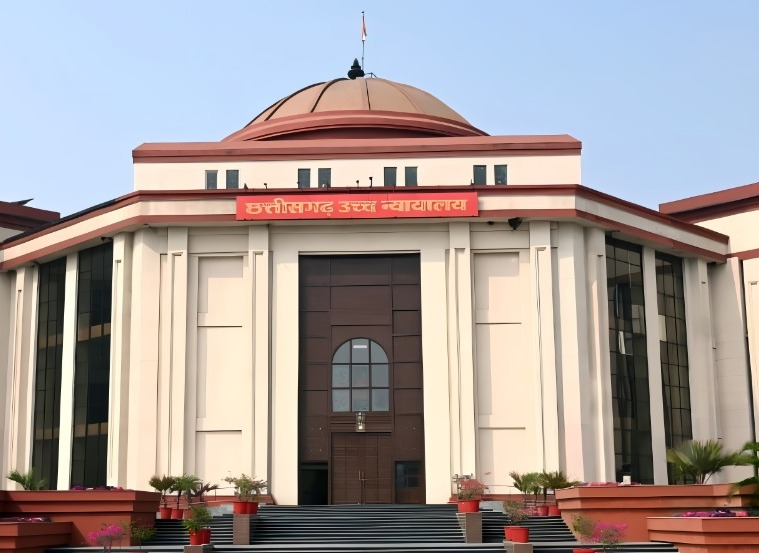
Chhattisgarh HC: Police Cannot Freeze Bank Accounts Without Magistrate’s Nod Under BNSS
Court quashes freeze order against NBFC, citing violation of Section 107 BNSS.
Judgment distinguishes seizure under Section 106 from attachment of proceeds of crime.
By Our Legal Reporter
New Delhi: May 21, 2026:
The Chhattisgarh High Court has ruled that police officers cannot independently freeze or debit-hold bank accounts under Section 106 of the Bharatiya Nagarik Suraksha Sanhita (BNSS), 2023. Instead, they must move the jurisdictional Magistrate under Section 107 BNSS for any attachment of funds suspected to be “proceeds of crime.” This judgment strengthens judicial oversight and protects businesses from arbitrary financial disruption.
Readers looking for a comprehensive understanding of probate law, succession disputes, and validity of testamentary documents should also visit Supreme Court Judgments on Wills . This detailed legal guide compiles landmark Supreme Court rulings on proof of Will, suspicious circumstances, attesting witnesses, probate proceedings, inheritance rights, and family property disputes, making it an essential resource for advocates, litigants, law students, and researchers studying Indian succession law.
Case Background
- Case Title: Oxyzo Financial Services Ltd. v. State of Chhattisgarh & Ors.
- Court: Chhattisgarh High Court
- Bench: Chief Justice Ramesh Sinha and Justice Ravindra Kumar Agrawal
- Date: May 15, 2026
- Facts:
- Oxyzo, a registered NBFC, had its Kotak Mahindra Bank account frozen by police during investigation of alleged cheating in supply of iron bars.
- The freeze order paralyzed daily operations, blocking funds worth ₹53.47 crore.
- The High Court quashed the police directives, holding that only a Magistrate can authorize such attachment under Section 107 BNSS.
Key Legal Provisions Discussed
1. Section 106 BNSS (Seizure of Property)
- Corresponds to Section 102 CrPC (1973).
- Allows police to seize property during investigation and submit an ex post facto report to the Magistrate.
- Purpose: Securing evidence, not freezing financial assets.
2. Section 107 BNSS (Attachment of Proceeds of Crime)
- Newly introduced in BNSS to address gaps in CrPC.
- Requires police to approach the Magistrate for attachment of property suspected to be derived from crime.
- Magistrate may order attachment after hearing parties or issue interim orders if urgent.
- Purpose: Prevent disposal of proceeds of crime, ensuring availability for forfeiture and victim compensation.
3. Constitutional Safeguards
- Article 300-A: Protects against deprivation of property without authority of law.
- Article 19(1)(g): Guarantees right to carry on business.
- Court held that arbitrary freezing violated these rights.
4. Judicial Precedents
- Bombay High Court (2025, Kartik Yogeshwar Chatur v. Union of India): Debit freezing impermissible under Section 106 BNSS.
- Kerala High Court (2025, Headstar Global Pvt. Ltd. v. State of Kerala): Clarified distinction between seizure (Section 106) and attachment (Section 107).
Analytical Insights
Why This Judgment Matters
- Protects businesses: Prevents sudden disruption of financial operations by police orders.
- Clarifies BNSS framework: Distinguishes seizure (evidence) from attachment (proceeds of crime).
- Strengthens judicial oversight: Ensures Magistrates control attachment orders, balancing investigation needs with property rights.
Implications
- For Police: Must seek Magistrate’s permission before freezing accounts.
- For Businesses: Provides legal recourse against arbitrary freezes.
- For Courts: Reinforces role of Magistrates in safeguarding property rights during investigations.
FAQs on Key Legal Points
Q1: Can police freeze bank accounts during investigation under BNSS?
No. Police can only seize property under Section 106 BNSS. Freezing or attachment of funds requires Magistrate’s order under Section 107 BNSS.
Q2: What is the difference between Section 106 and Section 107 BNSS?
- Section 106: Seizure of property by police for evidence.
- Section 107: Attachment of proceeds of crime, requiring Magistrate’s approval.
Q3: Why did the Court quash the freeze order?
Because the police froze Oxyzo’s account without prior Magistrate approval, violating Section 107 BNSS and constitutional rights.
Q4: What constitutional rights are involved?
Article 300-A (property rights) and Article 19(1)(g) (business rights). Arbitrary freezes infringe these protections.
Q5: How does this ruling affect businesses?
It ensures financial stability by preventing sudden police freezes and mandates judicial oversight for attachment of funds.
In conclusion, the Chhattisgarh High Court’s ruling is a landmark clarification of BNSS provisions. It ensures that police cannot bypass judicial authority when freezing accounts, thereby protecting property rights and business continuity while maintaining the integrity of criminal investigations.