
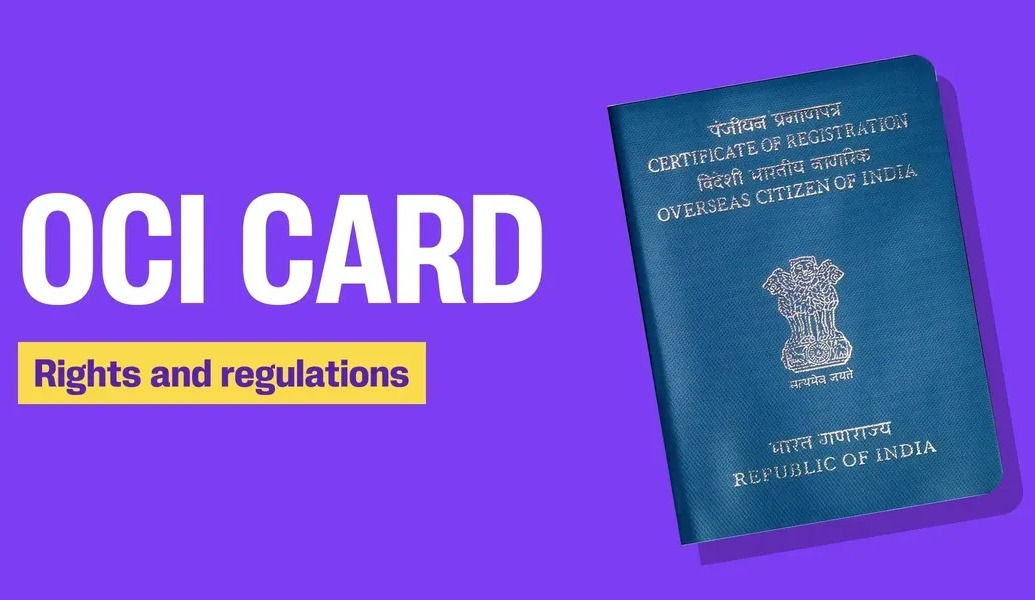
OCI Cardholder Parents Entitled to Senior Citizens Act Protection: Bombay High Court Clarifies Statutory Scope
Citizenship Holds No Bar for Parental Welfare Rights Under Indian Law
Landmark Ruling Rejects Karnataka High Court View, Prioritizing Beneficial Legislation Over Technical Statutory Hurdles
By Legal Editor
New Delhi: August 08, 2026:
The intersection of citizenship status, immigration frameworks, and domestic social welfare legislation has long generated intricate legal controversies in Indian jurisprudence. In a seminal judgment delivered by Justice N.J. Jamadar in Mughda Sahal v. Senior Citizen Appellate Tribunal (Writ Petition No. 1532 of 2026), the established that an Overseas Citizen of India (OCI) cardholder is fully entitled to invoke the protective and remedial mechanisms set out in the (hereinafter referred to as the Senior Citizens Act, 2007).
By ruling that Indian citizenship is not an essential prerequisite for a "parent" to seek statutory relief, the High Court adopted a teleological and purposive interpretation of welfare legislation. The decision directly addresses the reality of globalized Indian families, where aging parents frequently acquire foreign citizenship or OCI status while retaining deep residential, financial, and emotional ties to real estate situated within Indian territory.
The Legal Framework: Deconstructing the Statutory Provisions
To appreciate the far-reaching consequences of this verdict, one must examine the statutory definitions embedded within the alongside the statutory umbrella of the Citizenship Act, 1955.
1. The Maintenance and Welfare of Parents and Senior Citizens Act, 2007
The core statutory conflict centered around the definitions set forth under Section 2 of the 2007 Act:
Section 2(d) - Definition of "Parent": Section 2(d) defines a parent as a biological, adoptive, or step-father or step-mother, regardless of whether the parent is a senior citizen or not. Notably, the text of Section 2(d) does not prescribe Indian citizenship as a mandatory eligibility criterion.
Section 2(h) - Definition of "Senior Citizen": Section 2(h) defines a senior citizen as any person who is a citizen of India and has attained the age of sixty years or above.
Section 23 - Protection of Life and Property: Section 23 governs the transfer of property to be void in certain circumstances and serves as the primary enforcement mechanism for tribunals to grant relief, including orders of eviction against illegal occupants or uncooperative relatives, to ensure a dignified life for the applicant.
The Court drew a pivotal distinction between these two terms. It emphasized that while Section 2(h) strictly confines "senior citizens" to Indian nationals, Section 2(d) deliberate leaves the category of "parent" free from any citizenship requirement or strict minimum age barrier. Therefore, a person claiming relief in the capacity of a "parent" under the Act need not independently satisfy the citizenship restriction imposed upon a "senior citizen."
| STATUTORY COMPARISON UNDER SECTION 2 |
+-------------------+----------------------------------+----------------------------+
| Category | Age Requirement | Citizenship Requirement |
+-------------------+----------------------------------+----------------------------+
| Parent [Sec 2(d)] | De hors age (No lower limit) | Not Required |
| Senior Citizen | 60 years or above | Mandatory Indian Citizen |
| [Sec 2(h)] | | |
+-------------------+----------------------------------+----------------------------+
2. The Citizenship Act, 1955 and OCI Rights Notifications
The status of OCI cardholders is governed by Section 7A through Section 7D of the Citizenship Act, 1955. Overseas Citizens of India are foreign passport holders who are granted a special statutory status giving them lifelong visa-free entry and specific socio-economic rights within India.
Under statutory notifications issued pursuant to Section 7B of the Citizenship Act, 1955 (such as the Ministry of Home Affairs Notification of March 2021), OCI cardholders are granted parity with Non-Resident Indians (NRIs) in matters concerning the purchase, holding, transfer, and enjoyment of immovable property in India (excluding agricultural or plantation properties). The Court recognized that denying an OCI parent access to summary statutory remedies to protect their validly owned property in India would render their statutory rights under the Citizenship Act largely illusory.
Judicial Divergence: Departing from the Karnataka High Court Precedent
A fundamental aspect of the judgment is the deliberate disagreement with the ruling of the Karnataka High Court in Dephny Gladys Lobo v. Assistant Commissioner of President, Senior Citizen Maintenance Tribunal (WP No. 6720 of 2016).
In Dephny Gladys Lobo, the Karnataka High Court had taken a literal view, holding that non-citizens could not invoke the Senior Citizens Act, 2007 due to the restrictive definition of "senior citizen" under Section 2(h).
However, Justice N.J. Jamadar observed that the Dephny Gladys Lobo decision failed to properly analyze:
The distinct statutory wording of Section 2(d) versus Section 2(h).
The legislative intent behind ameliorative welfare enactments.
The interplay between OCI property entitlements under the Citizenship Act, 1955 and statutory dispute resolution mechanisms under Indian domestic law.
Consequently, the Bombay High Court concluded that the Karnataka decision lacked persuasive precedent value and affirmed that social welfare statutes must be interpreted liberally to advance protection rather than stultify the objective of the law.
Key Takeaways on Property Eviction and Shared Household Rights
The judgment also clarified crucial aspects regarding the maintainability of eviction orders under Section 23 of the Senior Citizens Act:
Eviction Simpliciter is Maintainable: The Court held that an application seeking eviction alone—without a corresponding prayer for monthly financial maintenance—is fully maintainable before the Maintenance Tribunal. When a parent is deprived of their property unlawfully or requires the property to lead a normal, dignified, and peaceful life, summary eviction remedies can be granted.
Balancing Rights with Matrimonial Claims: The dispute in Mughda Sahal involved a conflict between a daughter-in-law claiming a right to a shared household under domestic violence legislation and a senior OCI parent seeking repossession of her property. The Court underscored that while protecting a woman's right to shelter, the statutory right of an aging property owner to reside peacefully in her own home remains paramount.
Frequently Asked Questions (FAQ) Index
Welcome to the searchable legal reference guide addressing key points under the Senior Citizens Act, 2007 and OCI property rights.
Table of Contents
#faq-oci-entitlement
#faq-parent-vs-citizen
#faq-eviction-only
[#faq-jurisdiction-conflict](#4-what-happens if-there-is-a-conflict-between-a-karnataka-hc-and-a-bombay-hc-ruling)
[#faq-shared-household](#5-can-a-daughter-in-law-block an-oci-parents-eviction-claim-by-citing-shared-household-rights)
1. Can an Overseas Citizen of India (OCI) file a case under the Senior Citizens Act, 2007?
Yes. Following the ruling of the Bombay High Court in Mughda Sahal v. Senior Citizen Appellate Tribunal (2026), an OCI cardholder who is a parent can invoke the remedies under the Senior Citizens Act, 2007. The Court affirmed that Indian citizenship is not mandatory for a "parent" seeking statutory protection or eviction remedies to recover their property.
2. What is the legal difference between a "parent" and a "senior citizen" under the Act?
Under Section 2(d) of the Act, a "parent" includes biological, adoptive, or step-parents without any citizenship condition or requirement of reaching 60 years of age. Conversely, Section 2(h) defines a "senior citizen" strictly as an Indian citizen who has reached 60 years of age. Because the two terms are distinct, a parent can claim relief independent of the citizenship requirement applied to senior citizens.
3. Is a parent required to ask for monthly maintenance money to seek an eviction order?
No. The High Court explicitly confirmed that an application for eviction simpliciter (seeking only eviction without asking for monetary maintenance) is maintainable. If a parent is deprived of their property or needs it to live a dignified and peaceful life, the Maintenance Tribunal has full jurisdiction to issue eviction directions.
4. What happens if there is a conflict between a Karnataka HC and a Bombay HC ruling?
High Court decisions are binding precedent within their respective state territorial jurisdictions. The Karnataka High Court's contrary ruling in Dephny Gladys Lobo applies in Karnataka, while the Bombay High Court's ruling governs Maharashtra. For cases outside these states, tribunals evaluate both precedents based on persuasive reasoning; the Bombay High Court's expansive interpretation reflects the evolving trend toward liberal construction of beneficial welfare statutes.
5. Can a daughter-in-law block an OCI parent's eviction claim by citing "shared household" rights?
Not automatically. While domestic violence laws protect a daughter-in-law's right to residence, courts balance this against the absolute rights of elderly parents to peacefully occupy and control their own self-acquired property. The Bombay High Court emphasized that protecting a parent’s right to live peacefully in their home can override claims to occupy the property as a shared household when disputes severely disrupt the parent's life.
Summary of Key Statutory References
Maintenance and Welfare of Parents and Senior Citizens Act, 2007: Sections 2(d), 2(h), and Section 23.
Citizenship Act, 1955: Sections 7A, 7B, 7C, and 7D (OCI Registration and Rights).
Constitution of India: Article 227 (Power of superintendence over tribunals by the High Court).