
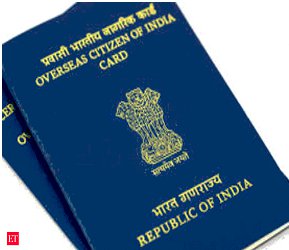
THE PASSPORT BOUNDARY: BOMBAY HIGH COURT NAVIGATES THE LEGAL CROSSROADS OF OCI CRICKETERS AND BCCI POLICY
Balancing National Sporting Pools with Global Indian Diaspora Aspirations
How Legal Distinctions Between Citizenship and Statutory Rights Reshape Domestic Sports
By Legal Editor
New Delhi: July 18, 2026:
The intersection of national identity, statutory rights, and sports administration has reached a critical juncture in India. A legal battle before the Bombay High Court has highlighted the complexities faced by Overseas Citizen of India (OCI) cardholders. In the case of Kavin Kartik & Others v. The Board of Control for Cricket in India (2025), twelve budding cricketers holding OCI status challenged a pivotal policy shift enacted by the Board of Control for Cricket in India (BCCI). The board’s December 2023 resolution mandated that an individual must hold an Indian passport to participate in any domestic tournaments organized under its aegis. This marked a complete departure from earlier regulations that permitted Person of Indian Origin (PIO) and OCI cardholders to train, compete, and advance through domestic age-group and senior divisions.
The legal impasse brings forth essential questions regarding constitutional protections, administrative autonomy, and the definition of a "sporting nationality." Representing the petitioners, legal counsels argued that the abrupt enforcement of an Indian passport requirement is arbitrary and discriminatory, effectively violating fundamental protections under Article 14 and Article 21 of the Constitution of India. On the other side, the BCCI, defended its sovereign administrative policy by highlighting that domestic cricket serves as a direct feeder system for the national team. Because international cricket representation strictly requires full sovereign citizenship, the board contends that the domestic pool must be exclusively preserved for those legally eligible to represent the Republic of India on the global stage.
THE CONSTITUTIONAL AND STATUTORY MATRIX
To understand the core legal mechanics of this dispute, one must analyze the complex statutory landscape that separates full Indian nationality from the special status granted to the global diaspora.
+-----------------------------------------------------------------------------------------+
| THE LEGAL SPECTRUM IN INDIA |
+-----------------------------------------------------------------------------------------+
| FULL CITIZENSHIP (Citizenship Act, 1955) | OVERSEAS CITIZENSHIP (Section 7A & 7B) |
| - Holds a valid Indian Passport. | - Holds a foreign passport + OCI Card. |
| - Full bundle of Civil & Political Rights. | - Statutory right; no political rights. |
| - Ultimate pool for National Representation. | - Parity with NRIs in economic fields. |
+-----------------------------------------------------------------------------------------+
1. The Citizenship Act, 1955 and the OCI Framework
The foundational principle governing this legal battle is that the Constitution of India does not permit dual nationality. Under the , full legal nationality requires an Indian passport. The OCI status, introduced via amendments to the Act under Section 7A, is a statutory category rather than a constitutional form of citizenship.
As established in various judicial precedents, an OCI card functions essentially as a lifelong, multiple-entry visa. It confers extensive residency, economic, and educational rights, granting general parity with Non-Resident Indians (NRIs). However, Section 7B of the Act explicitly curtails political and constitutional rights. OCI cardholders are barred from voting, holding public office, or claiming parity under Article 16 concerning public employment. Furthermore, the pivotal OCI Notification of 2021 explicitly clarified that in any domain not expressly designated for parity, OCI holders are to be legally classified as foreign nationals.
2. Article 14 and the Test of Manifest Arbitrariness
The young cricketers based their challenge primarily on Article 14 of the Constitution, which ensures equality before the law and prohibits discrimination. The petitioners contended that the BCCI’s 2023 resolution created an unjust, retroactive classification between young athletes who have resided and trained in India for years. They argued that because their parents pay direct and indirect taxes on par with regular citizens, denying their children equal access to extracurricular and sporting growth amounts to discrimination without a rational nexus.
However, in constitutional law, a policy is struck down under Article 14 only if it exhibits "manifest arbitrariness"—meaning it lacks any sound reason or logical justification. The division bench of the Bombay High Court noted that the BCCI’s rule possessed a legitimate objective. Because domestic tournaments are designed to isolate and nurture talent for international fixtures, restricting entry to Indian passport holders is a logical method to manage the selection pool.
3. Article 21 and the Right to Personality Development
The petitioners also invoked Article 21, asserting that the right to life and personal liberty encompasses the right to play sports as an integral component of human growth, mental well-being, and professional aspiration. They maintained that cricket is a time-sensitive discipline where opportunities lost during youth cannot be recovered.
In evaluating these claims during interim hearings, the court weighed the private professional aspirations of OCI children against the wider collective interests of Indian citizens. The bench observed that allowing non-citizens to occupy spots in domestic structures could deny native Indian citizens an opportunity to compete, develop, and eventually be scouted for the national squad.
THE EVOLUTION OF SPORTS REPRESENTATION POLICY
The legal standard governing foreign passport holders in Indian sports has undergone a steady tightening over the past two decades. This trajectory illuminates why the BCCI and other national sports bodies have moved toward exclusionary passport policies.
The Historic Shift (2008–2010)
Prior to 2008, significant ambiguity surrounded the eligibility rules for representing India. Several overseas sportspeople without Indian passports participated in individual and team disciplines. However, on December 26, 2008, the Ministry of Youth Affairs and Sports (MYAS) issued a landmark circular clarifying that only valid Indian passport holders could represent the country internationally. This policy was explicitly upheld by the Delhi High Court in the landmark case of Karm Kumar v. Union of India (2010), where the court ruled that an OCI cardholder has no inherent right to represent India in international sporting events.
The Feeder System Justification
While the Karm Kumar case dealt directly with international representation, the current dispute before the Bombay High Court extends this logic downstream to domestic club and state tournaments. The BCCI argues that domestic cricket is not merely a recreational platform but an official administrative feeder system. If an athlete cannot legally represent India at the international level due to passport restrictions, allowing them to occupy a critical slot in a state-level domestic tournament reduces the competitive development opportunities available to eligible Indian nationals.
JUDICIAL REFLECTIONS AND THE ROAD AHEAD
During the proceedings, the division bench consisting of Acting Chief Justice Ravindra Ghuge and Justice Gautam Ankhad offered oral observations that reflect the complex realities of global migration and sports economics. The bench remarked that the players' long-term professional prospects might be more viable abroad, noting that competition within India is exceptionally dense. The judges observed: "Why don't you play there, as there can be better chances for you to get selected, because in India everyone plays cricket."
The court acknowledged that India remains the cultural motherland of the petitioners' parents but clarified that choosing to retain a foreign passport remains a voluntary legal decision. For those young athletes who have already applied for Indian naturalization, the legal system faces a bureaucratic bottleneck, as their citizenship applications remain pending with central authorities while their athletic peak years slip away.
+-------------------------------------------------------------+
| THE ATHLETE'S TRILEMMA IN 2026 |
+-------------------------------------------------------------+
|
+----------------------------+----------------------------+
| | |
v v v
[ Renounce Foreign ] [ Await Indian ] [ Return to Home ]
[ Citizenship to ] [ Naturalization ] [ Country to Play ]
[ Obtain Passport ] [ (Bureaucratic) ] [ Under Passport ]
SEARCHABLE LEGAL INDEX & FREQUENTLY ASKED QUESTIONS
This detailed legal index and guide provides a clear breakdown of the statutory rules, constitutional provisions, and administrative guidelines governing OCI athletes in Indian sports.
SECTION I: THE STATUTORY LANDSCAPE AND OCI RIGHTS
Q1: What is the primary statutory difference between an Indian Citizen and an Overseas Citizen of India (OCI)?
Full Indian citizenship is governed by the , which grants an Indian passport and a complete set of political, civil, and constitutional rights. Conversely, OCI status under Section 7A of the same Act is a statutory designation that functions as a lifelong visa. India does not recognize dual nationality; therefore, an OCI cardholder remains a legal citizen and passport holder of a foreign country, possessing no voting rights, public employment rights, or claims to constitutional offices.
Q2: How does the Ministry of Youth Affairs and Sports (MYAS) policy of 2008 impact OCI athletes?
The MYAS policy directives issued on December 26, 2008, and reinforced on March 12, 2009, stipulate that only valid Indian passport holders are eligible to represent India in international sports tournaments. This policy effectively ended the era when OCI or PIO players could wear the national colours, establishing a clear line between sporting nationality and legal citizenship.
Q3: Does the OCI Notification of 2021 allow OCI cardholders to claim an absolute right to play domestic sports?
No. The 2021 Notification states that in economic, financial, and educational fields, OCI cardholders maintain general parity with Non-Resident Indians (NRIs). However, it clarifies that in any field or activity not explicitly enumerated within the notification, OCI cardholders are legally treated as foreign nationals. Because domestic professional sports representation is not designated for parity, sports federations retain the authority to restrict entry to Indian nationals.
SECTION II: CONSTITUTIONAL CHALLENGES AND JUDICIAL INTERPRETATION
Q4: On what constitutional grounds did the OCI cricketers challenge the BCCI passport policy?
The petitioners challenged the policy under Article 14 (Right to Equality) and Article 21 (Right to Life and Personal Liberty). They argued that the BCCI’s 2023 resolution was "manifestly arbitrary" because it retroactively altered eligibility criteria, disrupting their career paths and discriminating against them solely based on their passport status despite their long-term residence in India.
Q5: Why did the Bombay High Court decline to grant immediate interim relief to the OCI cricketers?
In Kevin Kartik v. BCCI (2025), the court declined interim relief because the petitioners did not establish a prima facie case of manifest arbitrariness. The court found that the BCCI had a logical administrative purpose: domestic tournaments serve as a selection pool for the national team. Since only Indian nationals can play for India, restricting the domestic feeder pool to passport holders is not an arbitrary choice. The court also noted that granting an injunction could displace native Indian citizens, whose spots cannot easily be restored if the final judgment favours the board.
Q6: What was the significance of the Delhi High Court's ruling in Karm Kumar v. Union of India (2010)?
The Karm Kumar ruling affirmed the central government’s authority to restrict national representation to holders of an Indian passport. The court clarified that sports representation is intimately tied to national identity and sovereign citizenship, meaning non-citizens cannot demand a legal right to represent the nation under the Indian flag.
Q7: Can minor OCI athletes claim exemption from these sports policies until they reach the age of majority?
No. The Supreme Court of India addressed a similar issue in Amaya Agarwal v. All India Chess Federation (2023). While minors cannot independently renounce their citizenship until they turn 18, courts have declined to grant them special exemptions from national sports policies. The legal framework treats passport status as an absolute metric, meaning an individual's minor status does not override the standard passport criteria established by national sports federations.
SECTION III: ADJUDICATION AND ADMINISTRATIVE FUTURE
Q8: What options did the Bombay High Court suggest to the young OCI cricketers?
The court suggested that the athletes consider two paths: either formally opt for Indian citizenship by naturalization or seek athletic opportunities within their home passport countries, where the highly competitive sports environment of India might not restrict their developmental trajectory.
Q9: What is the "Sports Passport" framework currently being discussed by ministries?
The Ministry of Youth Affairs and Sports has explored a "Sports Passport" proposal, inspired by international naturalization models used in countries like Spain, Turkey, and Qatar. If adopted by the central government, this framework would create a special sporting eligibility pathway for highly skilled OCI athletes to represent India without requiring the immediate renunciation of their foreign citizenship. However, until this proposal becomes formal policy, the strict Indian passport requirement remains the binding law across recognized sports federations.