

COURTKUTCHEHRY SPECIAL ON ADVANCE TAXES RULES
Advance Tax Deadline Nears: Who Needs to Pay, Rules Explained, and What Happens If You Miss
Taxpayers must pay 100% liability by March 15, 2026
Failure to comply attracts interest under Section 234B and 234C
By Legal Reporter
New Delhi: March 04, 2026:
The advance tax payment deadline for the financial year 2025‑26 is approaching fast. Taxpayers whose annual tax liability exceeds ₹10,000 are required to pay advance tax in instalments during the year, rather than waiting until filing their income tax returns. The final instalment, covering 100% of the liability, must be paid by March 15, 2026.
Advance tax, often called the “pay‑as‑you‑earn” system, ensures a steady inflow of revenue for the government and helps taxpayers avoid a large lump‑sum burden at the end of the financial year.
[Suggested Legal Resource]
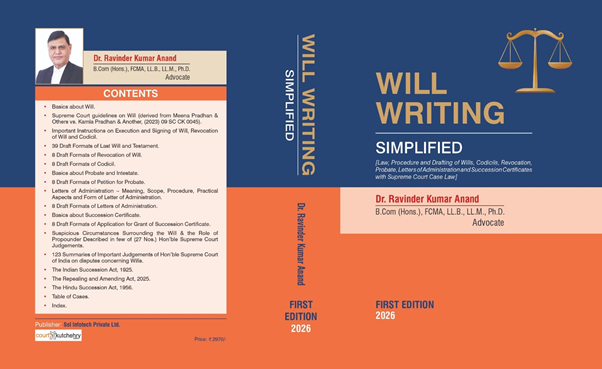
If you want practical guidance on drafting wills, codicils, and probate procedures, Will Writing Simplified is an invaluable resource. AVAILABLE ON: Amazon 🔹 Flipkart
What is Advance Tax?
- Advance tax is income tax paid in instalments during the financial year.
- It applies to salaried individuals, freelancers, professionals, and businesses if their estimated tax liability exceeds ₹10,000.
- Payments are made in four instalments:
- June 15: 15% of liability
- September 15: 45% of liability (cumulative)
- December 15: 75% of liability (cumulative)
- March 15: 100% of liability (cumulative)
Also Read: Allahabad High Court: FIR Lodged with Advocate’s Help Retains Credibility
Who Needs to Pay Advance Tax?
- Salaried Individuals: If salary income is not fully covered by TDS (Tax Deducted at Source).
- Freelancers & Professionals: Those earning income from consultancy, services, or independent work.
- Businesses: Companies and partnerships with taxable profits.
- Senior Citizens: Individuals above 60 years without business income are exempt.
Laws and Rules Governing Advance Tax
- Income Tax Act, 1961 (Sections 207–211): Provides the framework for advance tax payments.
- Section 234B: Imposes interest if advance tax is not paid or paid less than 90% of liability.
- Section 234C: Imposes interest for delays in instalment payments.
- CBDT Circulars: Clarify procedures for online payment via Challan 280 and net banking.
What Happens If You Miss the Deadline?
- Interest Penalty: Taxpayers must pay interest at 1% per month under Sections 234B and 234C.
- Cash Flow Burden: Missing instalments leads to a lump‑sum payment at return filing, increasing financial stress.
- Scrutiny Risk: Consistent non‑payment may attract notices from the Income Tax Department.
Why This Matters
- Government Revenue: Advance tax ensures steady inflows, reducing fiscal deficits.
- Taxpayer Discipline: It encourages individuals and businesses to plan finances better.
- Compliance: Non‑payment can lead to penalties, interest, and legal consequences.
Reactions and Implications
- Tax Experts: Advisers recommend taxpayers calculate liability early and pay instalments on time to avoid penalties.
- Businesses: Companies are restructuring cash flows to meet the March 15 deadline.
- Public Perception: Many individuals see advance tax as complex, but experts stress it is manageable with proper planning.
Wider Context
Also Read: NMC Warns Medical Colleges: Fake Patients Could Lead to Rejection of Extra Seats and Courses
- Advance tax collections are a key indicator of economic activity.
- In FY 2024‑25, advance tax collections rose by 17% year‑on‑year, reflecting higher corporate profits and individual incomes.
- The government uses these collections to assess revenue trends and plan fiscal policies.
Conclusion
The advance tax deadline of March 15, 2026, is crucial for taxpayers with liabilities exceeding ₹10,000. By paying on time, individuals and businesses can avoid penalties, reduce financial stress, and contribute to India’s fiscal stability. The system, though sometimes seen as complex, is designed to spread tax payments across the year, making compliance easier and fairer.
Keywords for SEO & Faster Searches
Advance tax deadline March 15 2026, advance tax rules India, Section 234B 234C penalties, advance tax payment installments, who needs to pay advance tax India, salaried freelancers businesses advance tax, CBDT challan 280 online payment, advance tax compliance India 2026, income tax advance payment rules, pay‑as‑you‑earn tax India
Also Read: Supreme Court: Consideration of Scheme of Arrangement Not Alien to Insolvency Proceedings Under IBC