
COURTKUTCHEHRY SPECIAL SERIES ON LANDMARKS JUDGEMENTS ON WILLS, CODICIL & PROBATE
N. Kamalam (Dead) and Another v. Ayyasamy and Another — Supreme Court Declares Will Invalid for Lack of Proper Attestation
Scribe’s Signature Cannot Substitute Attesting Witnesses
Appeal Dismissed, Testamentary Proof Standards Reaffirmed
By Vishwas Kumar
New Delhi: March 26, 2026:
In N. Kamalam (Dead) and Another v. Ayyasamy and Another (Civil Appeal Nos. 3164 and 3166 of 1997, decided on 3 August 2001), the Supreme Court of India delivered a decisive ruling on the evidentiary requirements for proving Wills. The Division Bench comprising Hon’ble Justice A.P. Misra and Hon’ble Justice U.C. Banerjee examined the validity of a Will executed by Masaney Gowder and whether the scribe’s signature could serve as attestation in the absence of testimony from attesting witnesses.
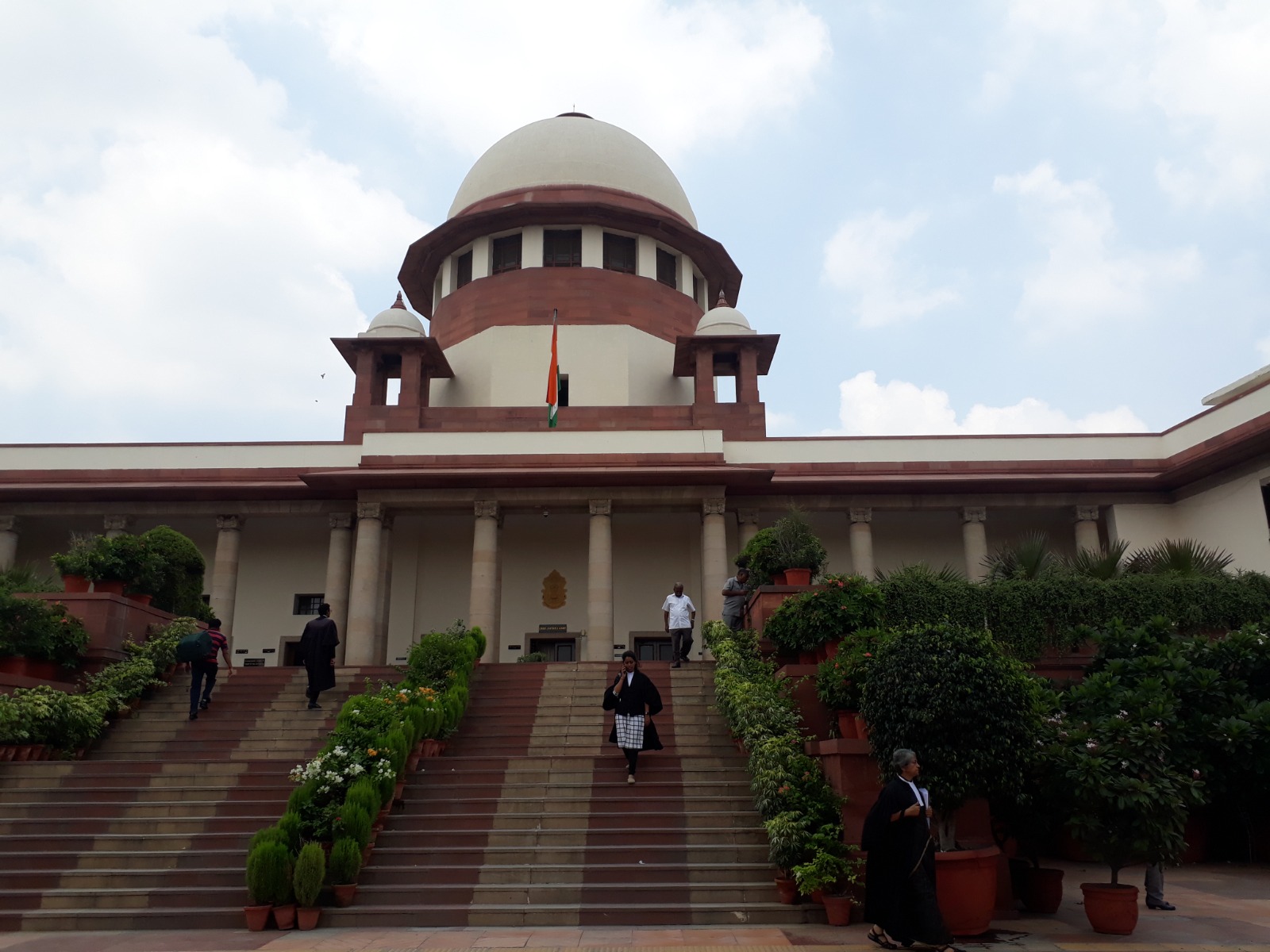
top court decisions on inheritance and wills of N. Kamalam (Dead) and Another Case
The dispute arose when the Will was sought to be enforced without examining the attesting witnesses. Instead, reliance was placed on the scribe’s signature. The appellants argued that this should suffice to prove attestation. The Court, however, rejected this contention, holding that a scribe cannot be treated as an attesting witness unless he signs the document with the specific intent of attesting. Since no attesting witness was examined, the statutory requirement under Section 63 of the Indian Succession Act and Section 68 of the Indian Evidence Act was not fulfilled.
The Supreme Court emphasized that proof of attestation is mandatory and cannot be bypassed. The absence of proper attestation rendered the Will invalid. Consequently, the appeals were dismissed, and the lower court’s findings were upheld. This ruling reinforces the principle that testamentary documents must strictly comply with legal requirements to be enforceable.
By clarifying that a scribe’s signature does not equate to attestation, the judgment safeguards against misuse of Wills and ensures that rightful heirs are protected through rigorous evidentiary standards. It stands as a reminder that procedural compliance is indispensable in succession disputes.
For More, Read Here the Summary of the Judgement from the Book: WILL WRITING SIMPLIFIED, read below or open page no 436, Chapter 14.1 in the book. (Online book purchase link available here on: Buy online: Amazon | Flipkart
|
|
Case Summary |
: |
N. Kamalam (Dead) and Another v. Ayyasamy and Another. |
|
|
Court |
: |
Supreme Court of India |
|
|
Citations |
: |
(2001) 08 SC CK 0033: Civil Appeal No.3164 and 3166 of 1997. |
|
|
Link |
: |
https://www.courtkutchehry.com/judgements/652564/n-kamalam-dead-and-another-vs-ayyasamy-and-another/
|
|
|
Decided on |
: |
03 August 2001 |
|
|
Coram |
: |
Hon’ble Mr. Justice A.P. Misra and Hon’ble Mr. Justice U.C. Banerjee. (Division Bench) |
|
|
Relevant Paragraphs |
: |
Para Nos. 1–5, 6–12, 17–21, 26–29, 30–35. |
1. Facts of the Case:
The litigation arose from a will dated 29 January 1969 executed by Masaney Gowder bequeathing property to his daughters Amsaveni and Attiammal. Plaintiffs (Ganesan and Kamalam) purchased a half share from them and sought partition of the suit property in O.S. No. 364/1981 before the Subordinate Judge, Coimbatore. Defendants (Iyyasamy and Shanmugam) claimed the property was joint family property and the will invalid. Trial Court held that although the property was self-acquired by Masaney Gowder, the will was not proved as per law since no attesting witness was examined. High Court confirmed dismissal and refused additional evidence filed after ten years to examine attesting witness Govindaraju. Hence appeal before the Supreme Court.
2. Law Points Involved:
(i). Proof of will under Sections 63 of the Indian Succession Act, 1925 and 68 of the Evidence Act, 1872.
(ii). Meaning and requirement of “attestation” and “animo attestandi.”
(iii). Whether scribe of a will can be treated as an attesting witness.
(iv). Permissibility of additional evidence at the appellate stage under Order 41 Rule 27 CPC.
3. Acts / Provisions / Articles Referred:
(i). Transfer of Property Act, 1882- Section 3 (definition of “attested”); Section 59.
(ii). Evidence Act, 1872 — Sections 45, 47, 67, 68.
(iii). Indian Succession Act, 1925 — Sections 59, 63.
(iv). Wills Act, 1837 (UK) — Section 9 (as amended by Administration of Justice Act, 1982).
(v). Code of Civil Procedure, 1908 — Order 41 Rule 27.
4. Judgments Referred:
(i). Girja Datt Singh v. Gangotri Datt Singh, (1955) 01 SC CK 0002.
(ii). M.L. Abdul Jabbar Sahib v. M.V. Venkata Sastri, (1969) 02 SC CK 0018. https://www.courtkutchehry.com/judgements/645349/m-l-abdul-jabbar-sahib-appellant-hash-m-v-venkata-sastri-and-sons-ors-respondent]
(iii). Seth Beni Chand v. Kamla Kunwar, (1976) 09 SC CK 0025.
(iv). H. Venkatachala Iyengar v. B.N. Thimmajamma (1958) 11 SC CK 0008;
(v). Municipal Corporation of Greater Bombay v. Lala Pancham, (1964) 10 BOM CK 0003.
https://www.courtkutchehry.com/judgements/792890/the-municipal-corporation-vs-lala-pancham/]
(vi). Smt. Pramod Kumari Bhatia v. Om Parkash Bhatia, (1979) 11 SC CK 0027.
(vii). H. Venkata Sastri & Sons v. Rahilna Bi, (1961) 02 MAD CK 0020.
https://www.courtkutchehry.com/judgements/61651/h-venkata-sastri-and-others-vs-rahilna-bi-and-others]
(viii). Privy Council in Shamu Pattar v. Abdul Kadir Ravuthan, (1908) 01 MAD CK 0011.
https://www.courtkutchehry.com/judgements/33150/shamu-patter-vs-abdul-kadir-ravuthan-and-others]
(ix). Jagannath Khan v. Bajrang Das Agarwala, (1920) 05 CAL CK 0041.
https://www.courtkutchehry.com/judgements/866161/jagannath-khan-and-others-vs-bajrang-das-agarwala]
5. Obiter Dicta:
The Court emphasized that “onus probandi” lies upon the propounder of a will, who must satisfy the judicial conscience that the will is that of a free and capable testator. Further, “animo attestandi” is essential; the mere presence of a scribe or his signature does not amount to attestation unless he signed with intent to attest. Technical compliance of Section 63 of the Succession Act and Section 68 of the Evidence Act cannot be dispensed with under a “justice-oriented” approach.
6. Ratio Decidendi:
(i). Proof of execution of a will is a mandatory requirement of law; at least one attesting witness must be examined to prove attestation as per Section 68 of the Evidence Act.
(ii). A scribe who signs merely as writer cannot be treated as an attesting witness unless it is proved that he signed with the intention to attest.
(iii). Additional evidence under Order 41 Rule 27 CPC cannot be admitted to fill lacunae or remove defects in evidence after lapse of ten years; it is permissible only if required for the appellate court to pronounce judgment or for substantial cause.
(iv). Failure to examine attesting witnesses is fatal to proof of a will; mere evidence of the scribe cannot satisfy statutory requirements.
7. Final Ruling:
The Supreme Court dismissed the appeal and affirmed the High Court’s judgment. The will dated 29 January 1969 was held not proved in accordance with law; the scribe’s signature could not substitute attestation. Application for additional evidence filed after ten years was rightly rejected. All connected appeals and interlocutory applications were disposed of.
8. Gist / Dispute & Final Decision:
Dispute concerned validity of a will executed by Masaney Gowder and whether the scribe’s signature could serve as attestation when attesting witnesses were not examined. Held that the scribe is not an attesting witness; absence of proof of attestation renders will invalid. Appeal dismissed.
Read full Judgement Here:
N. Kamalam (Dead) and Another v. Ayyasamy and Another.
Supreme Court of India
(2001) 08 SC CK 0033: Civil Appeal No.3164 and 3166 of 1997.
https://www.courtkutchehry.com/judgements/652564/n-kamalam-dead-and-another-vs-ayyasamy-and-another/
You Can Also Purchase the Book from here on: Buy online: Amazon | Flipkart
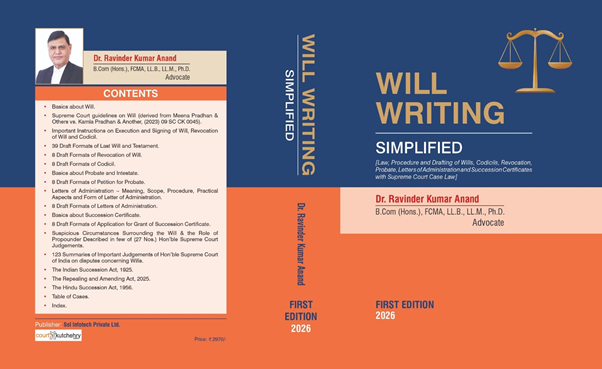
OUR RECOMMENDATION: Check out 123 Key Judgements, as highlighted in the book, WILL WRITING SIMPLIFIED, for the quick research and reference purposes. Click the link here: https://www.courtkutchehry.com/pages/blog/123-supreme-court-judgments-on-wills/
Keywords for SEO & Faster Searches
-
- Kamalam case 2001
- Ayyasamy Supreme Court judgment
- Masaney Gowder Will validity India
- Scribe not attesting witness ruling
- Section 63 Succession Act proof of Will
- Section 68 Evidence Act attestation requirement
- Civil Appeal Nos. 3164 & 3166 of 1997 inheritance law