
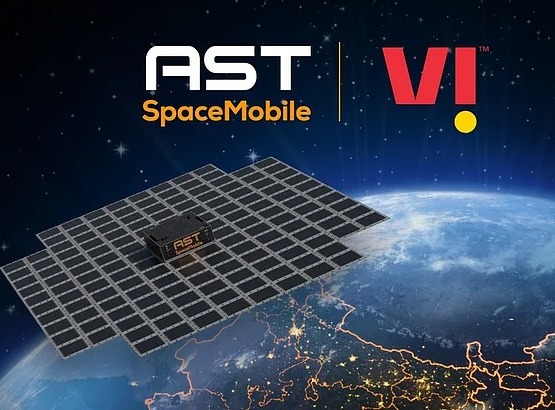
Vi’s Satellite Gamble: AST SpaceMobile Could Rewrite India’s Connectivity Rules
Direct-to-Device Satellite Tech Faces Regulatory Bottlenecks
Rural Coverage and IoT Markets Hold Untapped Potential
By Vishwas Kumar
New Delhi: May 23, 2026:
Vodafone Idea’s partnership with AST SpaceMobile could reshape India’s telecom landscape by enabling direct-to-device satellite connectivity without requiring special hardware. The key challenge lies in regulatory approvals under India’s GMPCS framework, spectrum coordination, and security clearances. If cleared, Vi’s AST bet could provide a competitive edge in rural coverage and enterprise IoT.
Readers researching succession disputes, partition claims, ancestral property rights, and evidentiary issues in civil litigation should also refer to Sunkara Lakshminarasamma (D) by LRs vs Sagi Subba Raju & Others. The judgment explains how courts analyze competing ownership claims, family succession issues, documentary proof, and long-standing possession while resolving complex property and inheritance disputes under Indian civil law.
The Context: Vi’s Struggles and Hidden Option
Vodafone Idea (Vi) has long been seen as a distressed recovery play, lagging behind Jio and Airtel in subscriber growth, ARPU, and CapEx. Yet buried in its portfolio is a partnership with AST SpaceMobile, a Texas-based company building satellites capable of connecting directly to ordinary smartphones. Unlike Jio’s GEO-based SES venture or Airtel’s LEO-based OneWeb tie-up, AST’s technology promises direct-to-device (D2D) connectivity without new hardware.
How AST Differs from Rivals
- Jio-SES (GEO satellites): Focused on broadband backhaul, unsuitable for real-time consumer use due to high latency (~600ms).
- Airtel-OneWeb (LEO satellites): Lower latency (~50ms) but requires dedicated terminals, targeting enterprise and aviation.
- AST SpaceMobile (BlueBird satellites): Massive phased-array antennas designed to communicate with standard 4G/5G handsets. No new SIM, app, or device required.
This distinction makes AST’s model uniquely consumer-friendly, especially for India’s rural and semi-urban markets.
Regulatory Challenges
AST’s entry into India hinges on approvals from the Department of Telecommunications (DoT) and TRAI. The hurdles include:
- Spectrum Coordination: AST uses terrestrial operator spectrum (Vi’s) rather than dedicated satellite bands, creating a novel licensing pathway.
- GMPCS Licensing: India’s Global Mobile Personal Communications by Satellite framework was designed for older satellite telephony models. AST’s hybrid approach doesn’t fit neatly.
- Security Clearances: Mandatory approvals from the Ministry of Home Affairs, with opaque timelines.
India’s regulatory environment has been evolving since debates around Starlink and OneWeb (2022–2024). While the government’s stated goal of universal connectivity by 2030 supports satellite D2D, political economy pressures could slow approvals.
Commercial Potential
AST’s global model involves wholesale roaming: subscribers seamlessly switch to satellite when terrestrial coverage fails, with billing handled by the operator. For Vi, this opens three scenarios:
- Premium Rural Plans: Offering guaranteed connectivity at a modest ARPU premium.
- Enterprise IoT: Coverage for agriculture, logistics, and fintech devices in remote areas.
- Government Contracts: Disaster response, emergency services, and universal connectivity programs.
The Feature Phone Base Advantage
Analysts often criticize Vi’s large feature-phone-heavy subscriber base. But AST’s model flips this liability into an asset. These users, concentrated in rural areas, would benefit most from satellite overlay. Vi could leverage AST to retain and gradually upgrade this base, offering connectivity where rivals cannot.
What Could Change the Narrative
Three catalysts could force analysts to reprice Vi’s AST option:
- DoT Approval Signals: Any regulatory movement would legitimize the model.
- Global Commercial Launches: Proof of concept in markets like the U.S. (AT&T) or Japan (Rakuten).
- Vi’s Investor Communication: Explicitly highlighting AST as part of its growth story.
Detailed FAQ
Q1. What makes AST SpaceMobile unique?
It enables direct-to-device satellite connectivity using ordinary smartphones, unlike Jio and Airtel’s enterprise-focused models.
Q2. What regulatory approvals are needed?
Clearance from DoT, TRAI, and the Ministry of Home Affairs, covering spectrum coordination, GMPCS licensing, and security.
Q3. Why is spectrum coordination complex?
AST uses terrestrial operator spectrum instead of dedicated satellite bands, a novel approach in India.
Q4. How does this benefit rural India?
It provides seamless coverage in areas lacking reliable 4G, directly addressing India’s connectivity gap.
Q5. What risks exist?
Regulatory delays, political economy pressures, and competition from incumbents with stronger lobbying power.
Q6. Could Vi’s feature phone users benefit?
Yes. They are concentrated in rural areas where satellite overlay delivers maximum value.
Q7. What global precedents exist?
AST has signed agreements with AT&T, Rakuten, and Bell Canada, offering proof of concept abroad.
Bottom Line: Vi’s AST partnership is a high-risk, high-reward bet. If regulatory approvals come through, it could transform Vi’s rural coverage, enterprise IoT offerings, and government contract potential. For now, the Street assigns zero value to this option—but clarity from DoT could change everything.