
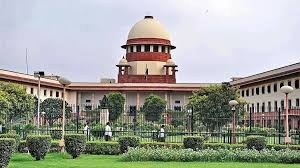
COURTKUTCHEHRY SPECIAL SERIES ON LANDMARKS JUDGEMENTS ON WILLS, CODICIL & PROBATE
Janki Narayan Bhoir v. Narayan Namdeo Kadam — Supreme Court Rejects Unproved Will, Upholds Daughter’s Ownership
Strict Compliance for Proving Wills Reaffirmed by Apex Court
Failure to Establish Attestation Leads to Dismissal of Suit
By Vishwas Kumar
New Delhi: March 26, 2026:
In Janki Narayan Bhoir v. Narayan Namdeo Kadam (Civil Appeal No. 11194 of 1995, decided on 17 December 2002), the Supreme Court of India delivered a crucial judgment on the evidentiary requirements for proving Wills under Indian law. The Division Bench comprising Hon’ble Justice Doraiswamy Raju and Hon’ble Justice Shivaraj V. Patil examined whether a disputed Will could confer ownership of property when its attestation was inadequately proved.
curated list of landmark will case laws of Janki Narayan Bhoir
The dispute centered on a property claimed through a Will. The party relying on the Will produced only one attesting witness. However, this witness failed to establish that both attesting witnesses had signed in the presence of the testator, as mandated under Section 63 of the Indian Succession Act and Section 68 of the Indian Evidence Act. Importantly, the scribe of the Will was not an attesting witness, and therefore his testimony could not substitute for the statutory requirement.
The Court emphasized that strict compliance with the law is essential in proving Wills, given their susceptibility to disputes and potential misuse. Since the mandatory conditions of attestation were not satisfied, the Will was deemed unproved. Consequently, the Supreme Court restored the appellate court’s decree dismissing the suit, thereby affirming the daughter’s ownership of the property.
This ruling reinforces the principle that testamentary documents must meet rigorous evidentiary standards. It serves as a reminder that mere production of a Will is insufficient; proper proof of attestation by at least two witnesses is indispensable. The judgment safeguards rightful heirs while ensuring that Wills are not upheld without strict legal validation.
For More, Read Here the Summary of the Judgement from the Book: WILL WRITING SIMPLIFIED, read below or open page no 436, Chapter 14.1 in the book. (Online book purchase link available here on: Buy online: Amazon | Flipkart
|
|
Case Summary |
: |
Janki Narayan Bhoir v. Narayan Namdeo Kadam. |
|
|
Court |
: |
Supreme Court of India |
|
|
Citations |
: |
(2002) 12 SC CK 0087: Civil Appeal No. 11194 of 1995. |
|
|
Link |
: |
https://www.courtkutchehry.com/judgements/654452/janki-narayan-bhoir-vs-narayan-namdeo-kadam/
|
|
|
Decided on |
: |
17 December 2002 |
|
|
Coram |
: |
Hon’ble Mr. Justice Doraiswamy Raju and Hon’ble Mr. Justice Shivaraj V. Patil. (Division Bench) |
|
|
Relevant Paragraphs |
: |
Para Nos.2–15 |
1. Facts of the Case:
The respondent (plaintiff) claimed ownership and possession of agricultural land and a house on the strength of a Will dated 23.10.1975, allegedly executed by one Honaji Dama Kadam. The trial court accepted the Will as proved and decreed the suit. The District Judge, on appeal, reversed the decree holding that the Will was not duly proved. The High Court, in second appeal, restored the trial court’s decree. The defendant (appellant), only daughter of the testator, challenged the High Court’s judgment before the Supreme Court.
2. Law Points Involved:
(i). Proof of Will under Section 63(c) of the Indian Succession Act, 1925 read with Section 68 of the Evidence Act, 1872.
(ii). Scope and applicability of Section 71 of the Evidence Act when one attesting witness fails to prove execution.
(iii). Requirement of calling both attesting witnesses where one fails to satisfy statutory proof.
(iv). Whether a scribe can be treated as an attesting witness
without intention (animo attestendi).
(v). Power of High Court in Second Appeal under Section 100 CPC—necessity of a “substantial question of law.”
3. Acts / Provisions / Articles Referred:
(i). Indian Succession Act, 1925-Section 63(a), (b), (c);
(ii). Indian Evidence Act, 1872-Sections 68, 71 and 114 illustration (g);
(iii). Civil Procedure Code, 1908 — Section 100.
4. Judgments Referred:
(i). Vishnu Ramkrishna v. Nathu Vithal, (1948) 08 BOM CK 0001:
https://www.courtkutchehry.com/judgements/790893/vishnu-ramkrishna-wani-vs-nathu-vithal-wani/]
(ii). Mt. Manki Kaur Vs Hansraj Singh and Others, (1938) 01 PAT CK 0026.
https://www.courtkutchehry.com/judgements/753942/mt-manki-kaur-vs-hansraj-singh-and-others/]
5. Obiter Dicta:
Section 71 of the Evidence Act is a safeguard, not a substitute, for Section 68. It can be invoked only when attesting witnesses deny or fail to recollect execution, not when other attesting witnesses are available but not examined. Proof under Section 68 cannot be relaxed merely because a Will was attested by two witnesses but only one is examined who fails to establish attestation by both.
6. Ratio Decidendi:
For valid proof of a Will, it is mandatory to establish due execution in compliance with Section 63(c) of the Succession Act and Section 68 of the Evidence Act. Examination of at least one attesting witness is essential, but such witness must be able to prove attestation by both witnesses. If he fails, and the other attesting witness is alive and available, that witness must be examined. Section 71 cannot be used to circumvent this requirement. The scribe cannot be treated as an attesting witness in absence of intention to attest.
7. Final Ruling:
The Supreme Court held that the Will was not duly proved. The evidence of one attesting witness did not satisfy Section 68, and the other attesting witness, though available, was not examined. Section 71 was inapplicable. The High Court erred in reversing the well-reasoned judgment of the District Judge and in treating the scribe as an attesting witness. The appeal was allowed, and the judgment and decree of the first appellate court were restored; consequently, the plaintiff’s suit was dismissed. No order as to costs.
8. Gist / Dispute & Final Decision:
Dispute concerned ownership of property based on an unproved Will. The Court emphasized the strict compliance required for proving Wills under Sections 63 and 68. Since only one attesting witness was examined and he failed to prove attestation by both witnesses, and the scribe was not an attesting witness, the Will was not proved. The Supreme Court restored the appellate court’s decree dismissing the suit, thereby upholding the daughter’s ownership.
Read full Judgement Here:
Janki Narayan Bhoir v. Narayan Namdeo Kadam.
Supreme Court of India
(2002) 12 SC CK 0087: Civil Appeal No. 11194 of 1995.
https://www.courtkutchehry.com/judgements/654452/janki-narayan-bhoir-vs-narayan-namdeo-kadam/
You Can Also Purchase the Book from here on: Buy online: Amazon | Flipkart
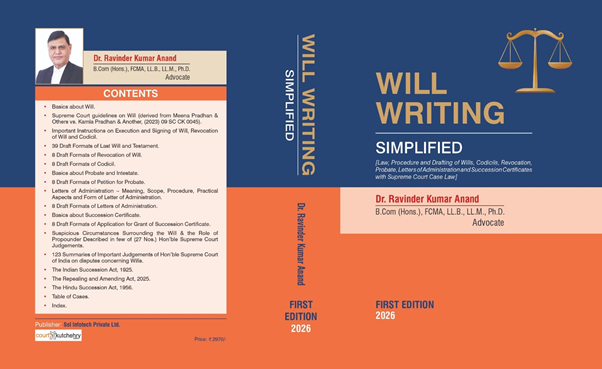
OUR RECOMMENDATION: Check out 123 Key Judgements, as highlighted in the book, WILL WRITING SIMPLIFIED, for the quick research and reference purposes. Click the link here: https://www.courtkutchehry.com/pages/blog/123-supreme-court-judgments-on-wills/
Keywords for SEO & Faster Searches
- Janki Narayan Bhoir case 2002
- Supreme Court Will attestation India
- Narayan Namdeo Kadam property dispute
- Section 63 Succession Act Will proof
- Section 68 Evidence Act attestation
- Will validity Supreme Court judgment
- Civil Appeal No. 11194 of 1995 inheritance law