
Who Can Make a Will? The Law on Testamentary Capacity
Soundness of Mind and Legal Competence
Courts, Suspicion, and Probate Principles
By Vishwas Kumar
New Delhi: April 17, 2026:
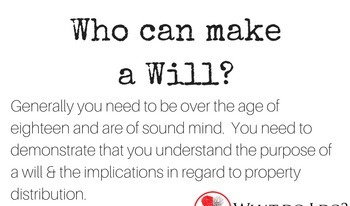
The making of a will is one of the most significant acts in a person’s life, as it determines how their property will be distributed after death. Section 59 of the Indian Succession Act, 1925, lays down the fundamental rule: every person of sound mind, not being a minor, may dispose of his property by will. This provision, along with its explanations and judicial interpretations, forms the backbone of testamentary capacity in Indian law.
Who Can Make a Will?
The law emphasizes two essential conditions:
- Soundness of Mind – The testator must understand the nature of the act, the extent of their property, and the claims of those who might expect to benefit.
- Majority – Minors are excluded, as they are deemed incapable of understanding the legal consequences of such an act.
The section clarifies several special situations:
- Married Women (Explanation 1): A married woman may dispose of property by will if she could have alienated it during her lifetime. This ensures her autonomy over property she legally controls.
- Persons with Disabilities (Explanation 2): Deaf, dumb, or blind individuals are not incapacitated if they understand the nature of their actions. Testamentary capacity is about comprehension, not physical ability.
- Ordinarily Insane Persons (Explanation 3): Even those suffering from mental illness may make a will during lucid intervals.
- Temporary Incapacity (Explanation 4): No will is valid if made under intoxication, illness, or any condition where the person does not know what they are doing.
Illustrations and Judicial Guidance
The Act provides practical illustrations:
- A person who can answer simple questions but does not understand the nature of property or kinship cannot make a valid will.
- A person who executes a document without understanding its provisions lacks testamentary capacity.
- A feeble but mentally alert person can make a valid will.
Courts have reinforced these principles:
- In N. Ramaiah v. Nagaraj S. (2001), it was clarified that a married woman can dispose of property she could alienate during her lifetime.
- In Man Kaur v. Gurnam (1984), the presumption was that a testator was sane if execution was proved by reliable evidence.
- In Papoo v. Kuruvilla (1994), the probate court’s role was defined: it only examines whether the will was duly executed and whether the testator had a sound mind, not questions of title or possession.
Explore legal cases on wills here. Click the link here: https://www.courtkutchehry.com/pages/blog/123-supreme-court-judgments-on-wills/
Suspicious Circumstances and Probate
Courts have consistently held that suspicious circumstances surrounding a will must be dispelled by the propounder. For example:
- If the propounder takes a prominent role in execution and benefits substantially, the burden is on them to prove authenticity (Gopal v. Smt. Adarmoni, 1988).
- If the testator is old, ill, or suffering from paralysis, the court requires strong evidence of soundness of mind (Vasudeo Mahadeo Paranjape v. Smt. Suman Anant Paranjape, 1994).
Minors and Testamentary Capacity
Minors are explicitly excluded from making wills. Courts have clarified:
- A minor remains incompetent until attaining majority under the Indian Majority Act, 1875 (In re Miranda, 1924).
- A will by a minor is inoperative, though it may serve as authority to adopt (Vijayratnam v. Sudarsan, 1925).
Illness and Testamentary Capacity
Physical illness does not necessarily impair testamentary capacity. For instance, a tuberculosis patient may still be mentally fit to execute a will (Famuava Dasi v. Hari Dasi, 1957). The focus is always on mental clarity, not physical strength.
Attestation and Witnesses
The law requires attestation, but courts have clarified that mere signatures of witnesses are sufficient to show acknowledgment of execution (Dulhin Ful Kueri v. Moti Jharo Kuer, 1972).
Analytical Observations
- Mental Capacity is Central: Testamentary capacity hinges on mental clarity, not physical health.
- Judicial Safeguards: Courts act as guardians against fraud, requiring suspicious circumstances to be explained.
- Gender Equality: Married women enjoy testamentary rights over property they control.
- Protection of Minors: Exclusion of minors ensures that only those with mature understanding can dispose of property.
In sum, Section 59 balances individual autonomy with safeguards against exploitation, ensuring that wills reflect genuine intent.
[RESEARCH RESOURCES]
EXTRACTS FROM BOOK, WILL WRITING SIMPLIFIED, By Dr Ravinder Kumar Anand. [📘 Buy Will Writing Simplified online: Amazon | Flipkart ]
OF WILLS AND CODICILS
59. Person capable of making wills. — Every person of sound mind not being a minor may dispose of his property by will.
Explanation 1. — A married woman may dispose by will of any property which she could alienate by her own act during her life.
Explanation 2. — Persons who are deaf or dumb or blind are not thereby incapacitated for making a will if they are able to know what they do by it.
Explanation 3. — A person who is ordinarily insane may make a will during an interval in which he is of sound mind.
Explanation 4. — No person can make a will while he is in such a state of mind, whether arising from intoxication or from illness or from any other cause, that he does not know what he is doing.
Illustrations
(i) A can perceive what is going on in his immediate neighbourhood and can answer familiar questions, but has not a competent understanding as to the nature of his property, or the persons who are of kindred to him, or in whose favour it would be proper that he should make his will. A cannot make a valid will.
(ii) A executes an instrument purporting to be his Will but he does not understand the nature of the instrument, nor the effect of its provisions. This instrument is not a valid will.
(iii) A, being very feeble and debilitated, but capable of exercising a judgement as to the proper mode of disposing of his property, makes a will. This is a valid will.
COMMENTS
(i) Explanation (1) to this section clarifies what can be disposed by Will by a married woman and states that any property which she could alienate by her own act during her life can be disposed by Will; N. Ramaiah v. Nagaraj S., AIR 2001 Karn 395.
(ii) Where execution of a Will has been proved by reliable and cogent evidence, the presumption would be that the testator was sane and had sound testamentary capacity: Man Kaur v. Gurnam, AIR 1984 NOC 51 (Punj).
(iii) A probate court is only concerned with the question as to whether the document put forward as the last will of the deceased person was duly executed and attested. The court is also to see whether at the time of the execution of that document whether the testator had sound disposing mind. The probate court is not to embark on the question relating to disputed questions of title and possession; Papoo v. Kuruvilla, 1994 (2) KLT 278.
(iv) If the propounder himself takes a prominent part in the execution of the Will which confers a substantial benefit on him, that is also a circumstance to be taken into account, and the propounder is required to remove the doubts by clear and satisfactory evidence. If the propounder succeeds in removing the suspicious circumstances the court would grant probate, even if the Will be unnatural and might cut off wholly or in a part near relations; Gopal v. Smt. Adarmoni, (1988) I OLR 352.
(v) A minor being of immature understanding cannot be said to be of sound mind and as such incapable of making a Will. An exception to this principle is to be found in section 60 of the Indian Succession Act. A Will executed by a minor, though inoperative as a Will may be operative as a valid authority to adopt; Vijayratnam v. Sudarsan, AIR 1925 PC 196.
(vi) A minor of whose person and property a guardian has been appointed by the court shall remain a minor until he attains majority under section 3 of the Indian Majority Act, 1875 and till such time incompetent to make a Will; In re Miranda, AIR 1924 Cal 644.
(vii) In order to make a valid Will testator need not be in perfect state of health. Even a tuberculosis patient may be in fit state of mind to execute a Will. Illness and physical weakness of the testator/testatrix would least affect his/her mental health or disposing state of mind in the absence of evidence to the contrary; famuava Dasi v. Hari Dasi, 1957 ALJ 667.
(viii) The testator being old and also suffering from paralysis. There was no material to show that he understood and accepted deposition made in Will. The soundness of mind was also not proved. Also the execution and attestation was surrounded by suspicious circumstances, prodigious in number. Profounder failed to establish authenticity of the Will. It has been held that no probate could be granted; Vasudeo Mahadeo Paranjape v. Smt. Suman Anant Paranjape, AIR 1994 NOC 137 (MP).
(ix) Mere signatures of witnesses towards the end of an instrument or somewhere on an instrument are quite sufficient to show without explanation that the witnesses put their signatures by way of saying that they had seen the document being executed and had received an acknowledgement. It is not necessary for them to state that they put their signatures in the presence of the testator; Dulhin Ful Kueri v. Moti Jharo Kuer, AIR 1972 Pat 214: 1972 BLJR 256 (DB).
FAQ: Testamentary Capacity under Section 59
Q1. Can a married woman make a will?
Yes, she can dispose of property she could have alienated during her lifetime.
Q2. Are deaf, dumb, or blind persons allowed to make wills?
Yes, provided they understand the nature and effect of the will.
Q3. Can an insane person make a will?
Yes, but only during lucid intervals when they are of sound mind.
Q4. Does illness or physical weakness prevent making a will?
No. As long as the person has mental clarity, illness does not bar testamentary capacity.
Q5. Can a minor make a will?
No. Minors are legally incompetent to make wills until they attain majority.
Q6. What if the testator was intoxicated while making the will?
Such a will is invalid, as the person did not know what they were doing.
Q7. What is the role of a probate court?
It examines whether the will was duly executed and whether the testator had a sound mind, not disputes over property title.
Q8. How do courts handle suspicious circumstances?
The propounder must dispel doubts with clear evidence. If successful, probate may be granted even if the will seems unnatural.
Q9. Is witness signature enough for attestation?
Yes. Witnesses need not state they signed in the presence of the testator; signatures suffice to show acknowledgment.
This framework ensures that wills are respected as genuine expressions of intent, while courts safeguard against fraud, incapacity, and undue influence.