
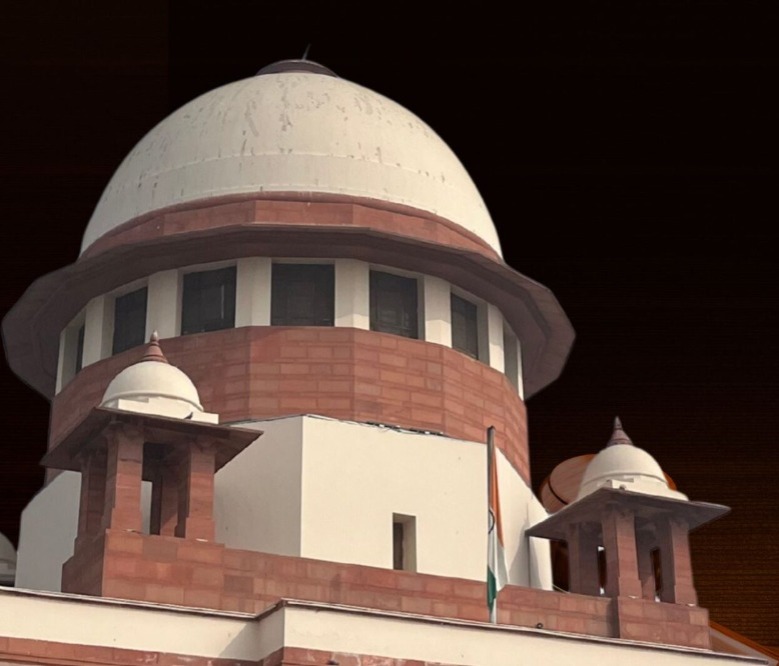
Tracing the Judicial Path: Supreme Court on Wills
From Iyengar to Lasum Bai, clarifications across decades
How evolving rulings shaped probate and succession law
By Vishwas Kumar
New Delhi: April 30, 2026:
The Supreme Court of India has, over the decades, clarified the evidentiary standards for proving Wills. While the Indian Succession Act, 1925 and Evidence Act, 1872 provide the statutory framework, the apex court’s rulings have progressively refined the burden on propounders, the role of attesting witnesses, and the presumption of validity for registered Wills. A timeline of significant cases reveals how judicial interpretation has evolved from strict scrutiny to nuanced balancing of testamentary freedom and protection against fraud.
To understand the legal position on property transactions through GPA, sale agreements, and unregistered documents, refer to the landmark Supreme Court judgment in Suraj Lamp & Industries Pvt. Ltd. v. State of Haryana & Another . This case clarifies the validity of property transfers and lays down crucial principles governing ownership and registration under Indian law.
Timeline of Key Supreme Court Rulings
1959 – H. Venkatachala Iyengar v. B.N. Thimmajamma (AIR 1959 SC 443)
- Clarification: Proof of a Will is not a mechanical exercise; judicial conscience must be satisfied.
- Significance: Introduced the doctrine of “suspicious circumstances” requiring explanation by the propounder.
1962 – Rani Purnima Debi v. Kumar Khagendra Narayan Deb (AIR 1962 SC 567)
- Clarification: Mere proof of signature is insufficient; voluntariness and soundness of mind must be established.
- Significance: Expanded evidentiary requirements beyond formal execution.
1977 – Jaswant Kaur v. Amrit Kaur (AIR 1977 SC 74)
- Clarification: Exclusion of natural heirs without explanation is a suspicious circumstance.
- Significance: Reinforced fairness in testamentary dispositions, ensuring heirs are not arbitrarily disinherited.
1995 – Smt. Indu Bala Bose v. Manindra Chandra Bose (1995 Supp (4) SCC 29)
- Clarification: Courts must examine the surrounding circumstances, including testator’s health and dependency.
- Significance: Strengthened scrutiny of Wills executed under vulnerable conditions.
2009 – Bharpur Singh v. Shamsher Singh (2009 (3) SCC 687)
- Clarification: Suspicious circumstances must be dispelled by cogent evidence; burden lies on propounder.
- Significance: Reaffirmed Iyengar principles in modern probate disputes.
2025 – Metpalli Lasum Bai v. Metpalli Muthaih (2025 INSC 879)
- Clarification: Registered Wills carry a presumption of genuineness; burden shifts to challenger.
- Significance: Marked a shift towards recognizing registration as evidentiary strength, reducing frivolous challenges.
Analytical Insight
This timeline demonstrates a progressive tightening and then balancing of evidentiary standards. Early rulings emphasized strict proof and judicial conscience, while later judgments recognized the evidentiary value of registration. Yet, courts consistently maintained that suspicious circumstances must be explained, ensuring that testamentary freedom does not become a tool for manipulation.
The jurisprudence reflects three phases:
- Foundational Phase (1950s–1970s): Establishing doctrines of suspicious circumstances and judicial conscience.
- Expansion Phase (1980s–2000s): Broadening scrutiny to include testator’s health, dependency, and fairness.
- Balancing Phase (2010s–2020s): Recognizing registration as a safeguard while retaining judicial oversight.
Conclusion
The Supreme Court’s rulings over seven decades have shaped a robust framework for proving Wills. From Iyengar’s insistence on judicial conscience to Lasum Bai’s presumption of genuineness for registered Wills, the law has evolved to balance testamentary freedom with protection against fraud. This historical trajectory underscores the judiciary’s role in safeguarding inheritance rights while respecting the last wishes of the deceased.
[RESEARCH RESOURCES]
EXTRACTS FROM BOOK, WILL WRITING SIMPLIFIED, By Dr Ravinder Kumar Anand. [📘 Buy Will Writing Simplified online: Amazon | Flipkart ]
|
Case Title: V. Prabhakara v. Basavaraj K. (2021) |
|
Case Title: Murthy v. C. Saradambal (2021) |
|
Case Title: Swarnalatha v. Kalavathy (2022) |
|
Case Title: Raj Kumari v. Surinder Pal Sharma (2019) |
|
Case Title: Meena Pradhan v. Kamla Pradhan (2023) |
|
Case Title: Leela v. Muruganantham (2025) |
|
Case Title: Gopal Krishan v. Daulat Ram (2025) |
FAQ on Timeline of Supreme Court Rulings
Q1. What was the first major ruling on proof of Wills?
H. Venkatachala Iyengar v. B.N. Thimmajamma (1959), which introduced the doctrine of suspicious circumstances.
Q2. Why is exclusion of heirs considered suspicious?
Because it raises doubts about voluntariness; clarified in Jaswant Kaur v. Amrit Kaur (1977).
Q3. How did courts expand scrutiny in the 1990s?
By examining testator’s health, dependency, and fairness in Indu Bala Bose v. Manindra Chandra Bose (1995).
Q4. What did Bharpur Singh v. Shamsher Singh (2009) reaffirm?
That suspicious circumstances must be dispelled by cogent evidence, keeping burden on the propounder.
Q5. What is the significance of registration of Wills?
Metpalli Lasum Bai v. Metpalli Muthaih (2025) held that registered Wills carry a presumption of genuineness.
Q6. Does registration make a Will immune from challenge?
No. Courts can still invalidate it if fraud, coercion, or suspicious circumstances are proved.
Q7. What overall trend emerges from these rulings?
A shift from strict scrutiny to balanced recognition of registration, while retaining judicial oversight.
This timeline shows how the Supreme Court has steadily refined succession law, ensuring that Wills are respected but never blindly accepted.