
Supreme Court on Wills: Strict Proof, Suspicion, and Succession Safeguards
Burden on Propounder to Remove Doubts
Registration Alone Cannot Validate a Will
By Vishwas Kumar
New Delhi: April 24, 2026:
Several landmark Supreme Court rulings—B. Venkatamuni v. Ayodhya Ram Singh (2006), Balathandayutham v. Ezhilarasan (2010), Benga Behera v. Braja Kishore Nanda (2007), Bhag Singh v. Jaskirat Singh (2009), Bhagat Ram v. Suresh (2003), Bhagwan Kaur v. Kartar Kaur (1994), and Bharpur Singh v. Shamsher Singh (2008)—are among the most cited cases in Indian succession law. They collectively reinforce strict proof requirements for wills, highlight the burden on propounders to dispel suspicion, and clarify evidentiary standards under the Indian Succession Act and Evidence Act.
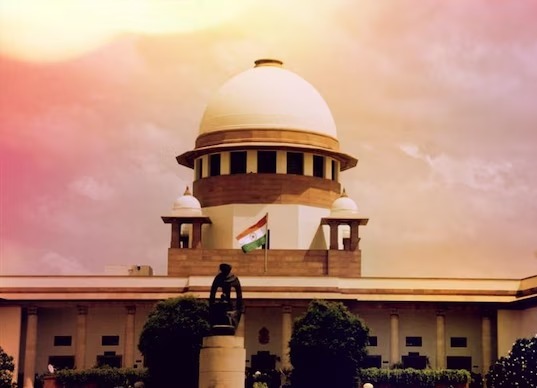
Complex disputes over succession and ownership often turn on strict legal proof and entitlement—this case provides key judicial clarity: Supreme Court judgment on succession disputes and property ownership rights in India
Analytical Report (Approx. 700 words)
1. B. Venkatamuni v. C.J. Ayodhya Ram Singh (2006)
- Facts: An unmarried woman, Akkayamma, executed an unregistered will in favor of her paramour’s son. Her heir contested probate.
- Ruling: The Supreme Court restored the trial court’s rejection, citing nine suspicious circumstances.
- Significance: Reinforces that mere compliance with Section 63 Succession Act is insufficient; suspicious circumstances must be dispelled. Indian Kanoon Court Kutchehry Casemine
2. Balathandayutham v. Ezhilarasan (2010)
- Facts: Rival wills—one registered in 1972, two unregistered in 1980 just before testator’s death.
- Ruling: The Supreme Court upheld the 1972 will, rejecting later wills due to lack of attesting witness testimony and testator’s illness.
- Significance: Clarifies that attesting witnesses must testify under Section 68 Evidence Act; illness heightens suspicion. Indian Kanoon Court Kutchehry Casemine
3. Benga Behera v. Braja Kishore Nanda (2007)
- Facts: A 70-year-old woman allegedly executed a will in favor of a stranger. Original will was missing; only Xerox copies produced.
- Ruling: The Supreme Court rejected the will, holding that secondary evidence was inadmissible and attestation unproved.
- Significance: Establishes that loss of original must be proved before secondary evidence is accepted. Indian Kanoon Casemine Court Kutchehry
4. Bhag Singh v. Jaskirat Singh (2009)
- Facts: Two competing wills (1979 and 1986) by Natha Singh. Lower courts upheld the later will without proper attestation proof.
- Ruling: The Supreme Court remitted the case, stressing mandatory compliance with Section 63(c).
- Significance: Highlights that scribes cannot substitute attesting witnesses; strict proof is essential. Court Kutchehry Casemine
5. Bhagat Ram v. Suresh (2003)
- Facts: Mast Ram executed a will in favor of his widow but made contradictory oral statements before the Registrar.
- Ruling: The Supreme Court held that codicils must meet the same proof standards as wills.
- Significance: Clarifies that Registrar’s endorsement does not equal attestation; codicils require full compliance. Indian Kanoon Casemine mylegacybox.in
6. Bhagwan Kaur v. Kartar Kaur (1994)
- Facts: Two widows contested succession; one relied on a registered will favouring her nephew.
- Ruling: The Supreme Court invalidated the will due to contradictory witness testimony and suspicious beneficiary involvement.
- Significance: Reinforces that registration does not dispense with proof; suspicious circumstances must be explained. Indian Kanoon Court Kutchehry Casemine
7. Bharpur Singh v. Shamsher Singh (2008)
- Facts: A widow’s will excluded her daughters, favouring a collateral relative.
- Ruling: The Supreme Court remanded the case, stressing that registration and age of will cannot substitute proof.
- Significance: Strengthens the principle that propounder bears heavy burden to prove authenticity. Indian Kanoon Casemine Court Kutchehry
[RESEARCH RESOURCES]
EXTRACTS FROM BOOK, WILL WRITING SIMPLIFIED, By Dr Ravinder Kumar Anand. [📘 Buy Will Writing Simplified online: Amazon | Flipkart ]
|
B. Venkatamuni v. C.J. Ayodhya Ram Singh and Others., (2006) 10 SC CK 0054: (2006) 13 SCC 449: AIR 2007 SC 311, Civil Appeal No. 4550 of 2006. |
|
|
Balathandayutham & Anr. v. Ezhilarasan., (2010) 04 SC CK 0019: (2010) 5 SCC 770; 2010 AIR SCW 3131, Civil Appeal No. 7357 of 2002. |
|
Benga Behera and Another v. Braja Kishore Nanda and Others., (2007) 05 SC CK 0175: (2007) AIRSCW 3741: (2007) 9 SCC 728: Civil Appeal No. 3467 of 2003. |
|
Bhag Singh v. Jaskirat Singh & Ors., (2009) 12 SC CK 0020: (2010) 2 SCC 250; 2010 AIR SCW 172, Civil Appeal Nos. 650-651 of 2003. |
|
Bhagat Ram & Anr. v. Suresh & Ors., (2003) 11 SC CK 0046: (2003) 12 SCC 35: AIR 2004 SC 436, Civil Appeal No. 13711 of 1996. |
|
Bhagwan Kaur v. Kartar Kaur and Others., (1994) 04 SC CK 0079: (1994) 5 SCC 135, Civil Appeal No. 2259 of 1993. |
|
Bharpur Singh & Ors. v. Shamsher Singh., (2008) 12 SC CK 0067: (2009) 3 SCC 687; AIR 2009 SC 1766, Civil Appeal No. 7250 of 2008. |
FAQs
Q1. What is the most important requirement to prove a will?
At least one attesting witness must testify under Section 68 of the Evidence Act.
Q2. Does registration guarantee validity?
No. Courts repeatedly held that registration alone cannot cure suspicious circumstances.
Q3. Can secondary evidence prove a will?
Only if loss of original is proved under Section 65 Evidence Act.
Q4. What if witnesses contradict themselves?
Contradictions create suspicion; the will is likely to be invalidated.
Q5. Can a scribe be treated as an attesting witness?
No. A scribe’s testimony is not equivalent to attestation.
Q6. What happens if multiple wills exist?
The later will prevails only if proved validly; otherwise, earlier wills or intestate succession apply.
Q7. Do codicils require the same proof as wills?
Yes. Codicils must be executed and attested like wills.
Key Takeaway: These rulings collectively emphasize strict proof, removal of suspicion, and compliance with statutory requirements. They safeguard against fraud and ensure that testamentary freedom is exercised within the bounds of law.