
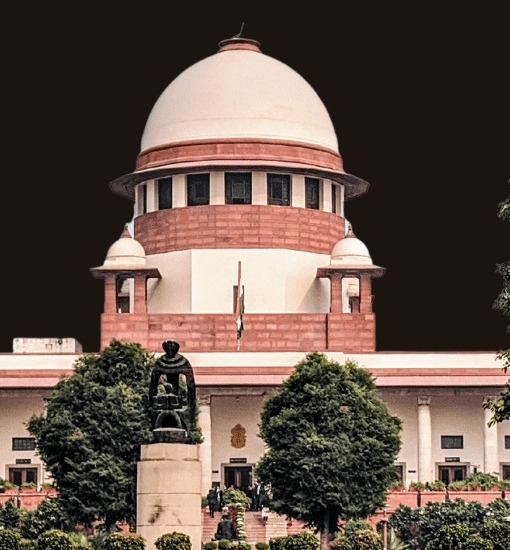
.Testamentary Battles in the Supreme Court: How Key Rulings Shaped Succession Law
From Nagammanni’s Will to Vinod Kumar’s Dispute – Courts Clarify Proof Standards
Shende Case Highlights Presumption Limits Under Evidence Act
By Vishwas Kumar
New Delhi: April 2026:
Several of the cited cases—particularly M.B. Ramesh v. K.M. Veeraje Urs (2013), Mahesh Kumar v. Vinod Kumar (2012), and Madhukar D. Shende v. Tarabai Aba Shedage (2002)—are among the most frequently referenced Supreme Court judgments in succession and probate disputes. They collectively reinforce principles of proving wills, the burden of proof, and the limits of appellate interference
To understand how courts assess inheritance claims and resolve disputes over legal heirship and property rights, read the detailed judgment of Metpalli Lasum Bai vs Metapalli Muthaihd, which highlights key principles governing succession, evidentiary burden, and rights of legal representatives in property litigation.
1. M.B. Ramesh v. K.M. Veeraje Urs (2013) 7 SCC 490; AIR 2013 SC 2088
- Context: Concerned the validity of a will executed by Smt. Nagammanni in 1943, bequeathing property to relatives.
- Key Issue: Whether the will was validly executed and proved, and whether the High Court could interfere with concurrent findings under Section 100 CPC.
- Significance:
- The Supreme Court held that wills must be proved strictly under Section 63 of the Indian Succession Act and Section 68 of the Evidence Act, requiring attesting witnesses.
- It clarified that Section 90 of the Evidence Act (presumption of genuineness for documents over 30 years old) does not apply to wills.
- Reinforced that High Courts cannot disturb concurrent findings of fact unless perversity is shown.
- Impact: Frequently cited in probate disputes to underline the evidentiary burden in proving wills and the restricted scope of second appeals.
2. Mahesh Kumar v. Vinod Kumar (2012) 4 SCC 387; AIR SCW 2347
- Context: Brothers disputed the genuineness of a will executed by their father.
- Key Issue: Whether suspicious circumstances surrounding the will invalidated it.
- Significance:
- The Court emphasized that the propounder of a will must dispel all suspicious circumstances.
- It reiterated that mere registration of a will does not guarantee its validity.
- Suspicion may arise from exclusion of natural heirs or unusual bequests, requiring stronger proof.
- Impact: This case is a cornerstone in succession law, often cited to highlight the heightened burden on the propounder when natural heirs are excluded.
3. Madhukar D. Shende v. Tarabai Aba Shedage (2002) 2 SCC 85; AIR 2002 SC 637
- Context: Dispute over a will executed by a testator favouring one heir over others.
- Key Issue: Whether presumption under Section 90 Evidence Act could validate the will.
- Significance:
- The Court ruled that Section 90 does not apply to wills, echoing later reaffirmations in Ramesh.
- It stressed that proof of execution must come from attesting witnesses or alternative statutory mechanisms.
- Impact: This judgment is repeatedly cited to reject reliance on age of document alone in probate cases.
Analytical Themes Across Cases
- Burden of Proof: The propounder of a will carries the primary responsibility to prove due execution and dispel suspicion.
- Limits of Presumption: Courts consistently hold that wills are excluded from Section 90 Evidence Act presumptions, requiring stricter proof.
- Judicial Restraint: High Courts cannot casually overturn concurrent findings in second appeals; perversity or misapplication of law must be shown.
- Suspicious Circumstances: Exclusion of heirs, unnatural bequests, or delay in seeking probate are red flags requiring closer scrutiny.
[RESEARCH RESOURCES]
EXTRACTS FROM BOOK, WILL WRITING SIMPLIFIED, By Dr Ravinder Kumar Anand. [📘 Buy Will Writing Simplified online: Amazon | Flipkart ]
| M.B. Ramesh (Dead) by LRs v. K.M. Veeraje Urs (Dead) by LRs and Others., (2013) 05 SC CK 0042: (2013) 7 SCC 490: AIR 2013 SC 2088: Civil Appeal No. 1071 of 2006. |
| Madhukar D. Shende v. Tarabai Aba Shedage., (2002) 01 SC CK 0024: (2002) 2 SCC 85: 2002 SCC OnLine SC 57: AIR 2002 SC 637: Civil Appeal No. 110 of 2002. |
| Mahesh Kumar (Dead) by LRs v. Vinod Kumar and Others., (2012) 03 SC CK 0027: (2012) 4 SCC 387; 2012 AIR SCW 2347, Civil Appeal Nos. 7587-88 of 2004. |
| Malayammal & Ors. v. A. Malayalam Pillai & Ors., (1990) 10 SC CK 0069: 1991 Supp (2) SCC 579: Civil Appeal No. 140 of 1977. |
| Malkani (Smt.) v. Jamadar & Ors., (1987) 02 SC CK 0043: (1987) 1 SCC 610: 1987 SCC OnLine SC 97: AIR 1987 SC 767: Civil Appeal No. 2741 of 1980. |
| Mathew Oommen v. Suseela Mathew., (2006) 01 SC CK 0057: (2006) 1 SCC 519: 2006 SCC OnLine SC 46: AIR 2006 SC 786: Civil Appeal No. 2034 of 2003. |
| Meena Pradhan and Others v. Kamla Pradhan and Another, (2023) 09 SC CK 0045: (2023) 9 SCC 734, AIR 2023 SC 4680, Civil Appeal No. 3351 of 2014. |
| Meenakshiammal (Dead) through LRs & Others v. Chandrasekaran & Another., (2004) 11 SC CK 0050: (2005) 1 SCC 280: AIR 2005 SC 52: Civil Appeal No. 1387 of 1999. |
| Meera Devi (D) Thr. Lr. v. Dinesh Chandra Joshi (D) Thr. Lrs., (2024) 09 SC CK 0064: 2024 SCC OnLine SC 2605, Civil Appeal No.: 5577 of 2014. |
| Metpalli Lasum Bai (D) Through Lrs. v. Metapalli Muthaiah (D) Through Lrs., (2025) 07 SC CK 0104: Civil Appeal Nos. 5921 of 2015 & 5922 of 2015. |
| Moonga Devi & Ors. v. Radha Ballabh., (1972) 04 SC CK 0040: (1973) 2 SCC 112: 1972 SCC OnLine SC 238: AIR 1972 SC 1471, Civil Appeal No. 1235 of 1969. |
| Moturu Nalini Kanth v. Gainedi Kaliprasad (Dead) through LRs., (2023) 11 SC CK 0020: 2023 SCC OnLine SC 1488, Civil Appeal No. 2435 of 2010. |
| Murthy and Others v. C. Saradambal and Others, (2021) 12 SC CK 0037: (2022) 3 SCC 209; AIR 2022 SC 167; Civil Appeal No. 4270 of 2010. |
FAQs
Q1: Why is M.B. Ramesh so often cited?
Because it clarified both evidentiary standards for wills and appellate limits under Section 100 CPC, making it a dual-precedent case.
Q2: Does registration of a will make it valid?
No. Registration is only one factor; execution and attestation must still be proved.
Q3: Can old wills be presumed genuine under Section 90 Evidence Act?
No. The Supreme Court has consistently held that wills require stricter proof and are excluded from Section 90 presumptions.
Q4: What happens if natural heirs are excluded?
The propounder must provide stronger evidence to dispel suspicion, as exclusion raises doubts about genuineness.
Conclusion
Together, Ramesh, Mahesh Kumar, and Shende form a triad of precedents shaping Indian succession law. They ensure that testamentary freedom is respected but only when proof standards are rigorously met, balancing individual autonomy with protection against fraud. These rulings remain the go-to citations in probate litigation, guiding courts and litigants alike.