

Supreme Court Slams West Bengal Judge for Filing Criminal Complaint Against Own Brother: Calls It “Grossest Abuse of Office”
Bench of Justices Vikram Nath and Sandeep Mehta refuses to interfere with Calcutta High Court’s decision.
Court warns against misuse of judicial authority for personal vendettas.
By Legal Reporter
New Delhi: February 28, 2026:
In a scathing rebuke, the Supreme Court of India has described the actions of a West Bengal judicial officer, Ritwik Choudhury, as the “grossest abuse of juridical office.” The officer had filed a criminal complaint of forgery against his own brother before a Magistrate, bypassing the usual police complaint route. The apex court observed that such conduct undermines the integrity of the judiciary and sets a dangerous precedent for misuse of judicial authority.
Also Read: Shine City Scam: Promoter Rashid Naseem Arrested in Dubai, ED Steps Up Asset Confiscation Drive
Background of the Case
- The judicial officer filed a criminal complaint of forgery against his brother directly before a Magistrate.
- Normally, such matters should be reported to the police, who then investigate and file charges.
- The Calcutta High Court had earlier quashed the criminal proceedings, finding the complaint improper.
- The officer appealed to the Supreme Court, seeking to overturn the High Court’s order.
[Resource Note]
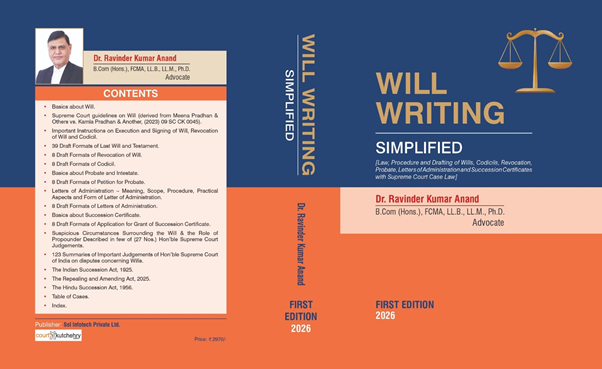
If you want practical guidance on drafting wills, codicils, and probate procedures, Will Writing Simplified is an invaluable resource. AVAILABLE ON: Amazon 🔹 Flipkart
Supreme Court’s Observations
- A Bench of Justices Vikram Nath and Sandeep Mehta took serious exception to the way the officer set the criminal law in motion.
- The Court remarked: “This is the grossest abuse of juridical office. The judge should be sent home.”
- It refused to interfere with the Calcutta High Court’s decision and dismissed the appeal.
- The ruling underscores that judicial officers must maintain the highest standards of impartiality and cannot use their position for personal disputes.
Legal Significance
- Judicial Accountability: The case highlights that judges are not above the law and must adhere to proper procedures.
- Abuse of Office: Filing a complaint against a family member through judicial channels rather than police investigation was deemed a misuse of authority.
- Precedent: Reinforces the principle that personal disputes must not be pursued through judicial office.
Impact of the Judgment
- For Judiciary: Sends a strong message that misuse of judicial powers will not be tolerated.
- For Citizens: Reinforces trust that higher courts will act against misconduct, even within the judiciary.
- For Legal System: Strengthens the boundary between personal grievances and judicial responsibilities.
Also Read: Including Property in Your Will: How to Prevent Family Disputes and Legal Battles in India
Expert Opinions
- Legal Scholars: Applaud the Supreme Court for taking a firm stand against judicial misconduct.
- Bar Associations: Stress that impartiality is the cornerstone of judicial credibility.
- Critics: Point out that systemic checks must be strengthened to prevent similar abuses in the future.
Conclusion
The Supreme Court’s ruling against a West Bengal judicial officer for filing a criminal complaint against his own brother is a landmark in judicial accountability. By calling it the “grossest abuse of office,” the Court has reinforced the principle that judicial authority must never be misused for personal vendettas. This decision not only protects the integrity of the judiciary but also strengthens public confidence in the rule of law.
Keywords for Faster Searches
- Supreme Court judge abuse of office case
- West Bengal judicial officer forgery complaint brother
- Calcutta High Court quashes complaint judge
- Supreme Court grossest abuse of office ruling
- Judicial misconduct Supreme Court India
- Ritwik Choudhury Supreme Court case 2026