
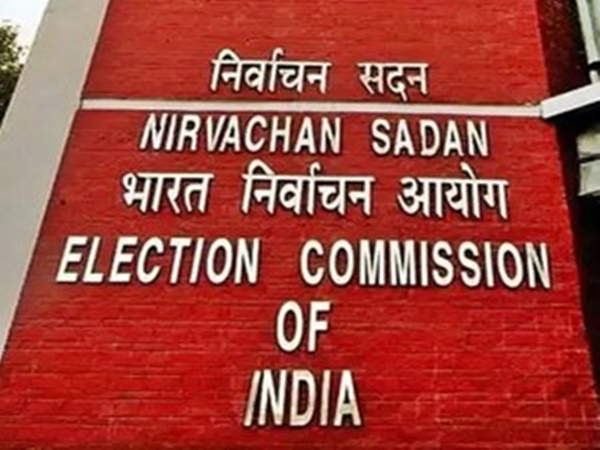
VOTER LIST EXCLUSION IS NOT CIVIL DEATH: SUPREME COURT REFORMS CITIZENSHIP VERIFICATION MECHANISM
Deletion From Electoral Rolls via Special Intensive Revision Does Not Equate to Loss of Citizenship status, Rules Apex Court
Election Commission Directed to Refer Doubtful Cases to Central Government While 34 Lakh Appeals Languish in West Bengal Tribunals
By Legal Editor
New Delhi: July 18, 2026:
The fundamental architecture of a democratic republic rests upon two deeply intertwined pillars: the right to franchise and the status of citizenship. When these two concepts are conflated or administered through opaque administrative mechanisms, the very foundation of constitutional democracy undergoes severe strain. This critical tension came to the forefront of India’s constitutional jurisprudence in the case of , adjudicated by a Supreme Court bench comprising Chief Justice of India Surya Kant, Justice Joymalya Bagchi, and Justice V. Mohana.
The proceedings highlight a profound systemic crisis emerging from the Special Intensive Revision (SIR) of electoral rolls in West Bengal, exposing a vast gulf between administrative procedures and the protection of basic human rights. At its core, the case brings into sharp focus the legal truth that administrative exclusion from a voter list cannot operate as a backdoor method for stripping an individual of their national identity.
The Supreme Court’s oral observations and structural directions serve as an essential reminder of the limits of administrative bodies. By clarifying that deletion from an electoral roll does not automatically terminate an individual’s citizenship, the apex court has intervened to halt an impending humanitarian and administrative crisis. The ground reality in West Bengal, where over 3.4 million appeals remain pending before a severely understaffed network of appellate tribunals, underscores the danger of letting bureaucratic zeal outpace constitutional protections.
When administrative actions result in the sudden withdrawal of essential socio-economic rights, the judiciary must step in as a protective shield. This analytical study explores the constitutional provisions, statutory frameworks, institutional mandates, and human rights considerations that define this landmark legal battle.
The Special Intensive Revision Framework and Its Discontents
The current legal controversy stems directly from the implementation of the Special Intensive Revision (SIR) process. The SIR is an administrative tool used by the Election Commission of India (ECI) to ensure the integrity, accuracy, and purity of electoral rolls. Designed to eliminate duplicate entries, remove deceased voters, and identify unauthorized names, the SIR involves rigorous ground-level enumeration, data matching, and verification. While the objective of maintaining an accurate voter database is undeniably legitimate, the execution of the SIR in politically sensitive and socio-demographically complex regions like West Bengal has generated severe procedural anomalies.
Under the standard framework outlined in the ECI Manual on Electoral Roll, 2024, the process of revision moves through three distinct operational phases: enumeration, claims and objections, and the adjudication of logical discrepancies. However, when an individual’s name is flagged during these stages due to "doubtful" status or unresolved documentation discrepancies, the administrative fallout has historically extended far beyond simple exclusion from the voter booth.
The petitioner, represented by Senior Advocate Gopal Sankaranarayanan, brought to light a disturbing systemic pattern where individuals excluded during the SIR process are plunged into legal limbo. The administrative mechanism lacks transparency fails to provide adequate notice, and leaves affected individuals with little recourse but to navigate an opaque and overburdened tribunal ecosystem.
The sheer scale of the crisis is reflected in the numbers presented before the apex court. Out of approximately 34 lakh (3.4 million) appeals filed by individuals excluded from the electoral rolls, a mere 38,000 have been resolved by the 19 functioning Appellate Tribunals. This massive backlog is worsened by infrastructural deficits, including the resignation of key tribunal members.
Crucially, the statistical track record reveals that of the tiny fraction of appeals actually adjudicated, nearly 70 percent resulted in favor of the citizens, leading to the restoration of their names. This exceptionally high success rate strongly implies that the initial administrative deletions were structurally flawed, overbroad, and executed without proper due process, thereby transforming an administrative cleanup exercise into a systemic threat to legitimate citizens.
Constitutional Architecture: Separation of Powers Between ECI and the Union
To understand the legal boundaries established by the Supreme Court, one must examine the constitutional architecture governing franchise and citizenship in India. The Constitution maintains a strict separation of powers regarding these two domains. The Election Commission of India derives its constitutional mandate directly from Article 324, which grants it the power of superintendence, direction, and control of the preparation of electoral rolls and the conduct of elections. However, this plenary power over the electoral apparatus does not grant the ECI the authority to determine, alter, or adjudicate the citizenship status of an individual.
The determination of citizenship is governed strictly by Part II of the Constitution, spanning Articles 5 through 11, alongside the statutory framework of the Citizenship Act, 1955. The Supreme Court bench made it explicitly clear that the ECI is not a constitutional authority equipped or empowered to rule on citizenship status under Articles 9, 10, 11, and 12.
Article 9 details the automatic termination of Indian citizenship upon the voluntary acquisition of citizenship of a foreign state.
Article 10 guarantees the continuance of the rights of citizenship, subject to the provisions of any law made by Parliament.
Article 11 explicitly grants exclusive legislative competence to Parliament to regulate the right of citizenship, including its acquisition and termination.
By invoking these provisions, the Supreme Court re-anchored the legal debate within the doctrine of defined institutional mandates. The ECI’s domain is strictly limited to the management of electoral rolls. While it has the administrative authority to exclude a name from the voter list based on objective, non-discriminatory guidelines, that exclusion remains a localized administrative event. It does not carry the constitutional weight required to alter an individual’s legal status as a citizen of the Republic of India.
The ultimate authority to adjudicate and declare an individual's citizenship rests solely with the Central Government, specifically the Ministry of Home Affairs, acting under the statutory rules of the Citizenship Act, 1955. Any attempt by state governments or local authorities to treat ECI voter deletion as a final determination of alienage is a direct violation of this constitutional separation of powers.
The Judicial Precedent: Deconstructing the Bihar SIR Judgment
The legal backbone of the Supreme Court's current intervention is its own prior ruling, colloquially referred to as the Bihar SIR judgment. In that landmark decision, the court had already anticipated the danger of administrative overreach during intensive voter roll revisions. Justice Joymalya Bagchi, speaking for the bench in the current West Bengal matter, repeatedly emphasized the binding principles established in the Bihar precedent. The core holding of the Bihar judgment is that the ECI has a "corresponding duty" that triggers immediately upon the deletion of a voter on suspicion of doubtful citizenship.
According to this judicial framework, the ECI cannot simply delete a name and walk away, leaving the individual stranded in a legal vacuum. The moment an individual’s inclusion is rejected on grounds implicating their national identity, the ECI is legally obligated to submit a formal application to the Central Government for a definitive adjudication under the Citizenship Act, 1955. Until the Ministry of Home Affairs conducts its statutory inquiry and issues a formal determination regarding that individual's citizenship status, their underlying legal status as a citizen must be presumed to continue undisturbed.
+--------------------------------------------------------------------------+
| THE BIHAR SIR JUDGMENT PROTOCOL |
+--------------------------------------------------------------------------+
| |
| [Step 1: ECI Special Intensive Revision] |
| └── Flags entry due to documentation discrepancy or doubtful status. |
| |
| [Step 2: Administrative Deletion from Electoral Roll] |
| └── Name is removed from the voter list. |
| *** LEGAL PRESERVATION *** |
| Citizenship status is NOT lost per se. |
| |
| [Step 3: Mandated ECI Action (The "Corresponding Duty")] |
| └── ECI must formally refer the case to the Central Government. |
| |
| [Step 4: Central Government Adjudication] |
| └── Ministry of Home Affairs reviews the case under the |
| Citizenship Act, 1955. |
| |
| [Step 5: Final Status Determination] |
| └── Statutory decision issued. Welfare benefits must remain |
| active throughout this interim adjudication period. |
| |
This judicial design is an application of the principle of continuity of status. It ensures that an unverified bureaucratic suspicion does not instantly strip a human being of their legal identity. The apex court noted that unless a formal reference is made to the Centre and resolved through proper legal channels, the citizen's rights must continue. This ruling prevents local administrative actors from using voter roll deletions as a tool for extra-judicial disenfranchisement.
The Ground Reality: Civil Death and the Suspension of Welfare Benefits
Despite the clear legal principles established in the Bihar SIR judgment, the ground reality presented by the petitioner reveals a severe disconnect between judicial mandates and administrative practices. In West Bengal, the state government issued executive notifications that effectively turned voter deletion into a form of "civil death." Local authorities began treating exclusion from the electoral roll as a green light to strip individuals of essential social security benefits, creating an acute humanitarian problem.
The petitioner detailed how individuals excluded from the SIR voter lists were systematically denied benefits under the Public Distribution System (PDS)—a vital lifeline providing subsidized food grains to millions of impoverished families. Furthermore, access to critical welfare initiatives like the Annapurna Yojana, which ensures food security for elderly and vulnerable citizens, was abruptly cut off.
Even more damaging to long-term social mobility was the state’s refusal to issue or recognize caste certificates for individuals caught in the SIR backlog. This move directly blocks access to affirmative action, educational opportunities, and public employment.
This immediate withdrawal of civil and welfare rights while appeals are pending represents a severe violation of the right to life and livelihood under Article 21 of the Constitution. Senior Advocate Gopal Sankaranarayanan rightly pointed out that neither the judiciary nor the public anticipated that a voter roll cleanup would be used to deny basic survival benefits.
The denial of these services is particularly egregious given that 70 percent of adjudicated appeals ultimately find the initial deletion to be wrong. This means tens of thousands of legitimate Indian citizens are being subjected to state-enforced deprivation and hunger due to administrative errors and systemic delays.
Procedural Deficiencies and Remedial Interventions Sought
The writ petition filed by Advocate-on-Record Neha Rathi seeks to completely overhaul the dysfunctional appellate system currently governing the SIR process. The petition details numerous procedural failures within the 19 Appellate Tribunals and proposes specific remedies to introduce transparency, efficiency, and fairness into the system. The current framework places an unfair burden on the excluded individual, who must navigate complex legal requirements without adequate notice or institutional support.
To remedy these deficiencies, the petitioner has requested several key interventions:
Virtual Accessibility: Granting permission for appellants and their authorized representatives to appear before the Appellate Tribunals via video conferencing, reducing the financial and logistical burdens on rural and impoverished citizens.
Mandatory Advance Notice: Ensuring that physical hearing notices are served by Booth Level Officers (BLOs) alongside electronic notices at least seven days in advance, putting an end to ex-parte dismissals caused by missed communications.
Time-Bound Adjudication: Prescribing a strict, time-bound schedule for the disposal of all pending appeals before the next election cycle, with priority given to highly congested municipal areas.
Multilingual Support: Creating and distributing a simplified, step-by-step guide to the appellate process in Bangla, Hindi, and English to improve public awareness and prevent exploitation by middlemen.
Comprehensive Data Disclosure: Forcing the ECI to publish transparent, constituency-wise data regarding Form 6 (inclusion) and Form 7 (objection/deletion) applications to allow public scrutiny and ensure institutional accountability.
Furthermore, the petition seeks the immediate publication of the Standard Operating Procedure (SOP) framed on April 7, 2026, by a specialized three-member judicial committee. This SOP, originally referenced in the Supreme Court’s order dated April 13, 2025 (W.P.(C) No. 1089/2025), is crucial for establishing uniform guidelines across all tribunals. By demanding regular administrative bulletins on the number of appeals heard and decided, the litigation aims to transform these opaque tribunals into transparent, accountable bodies.
Institutional Accountability and the Path Forward
The Supreme Court’s decision to list the matter alongside the broader challenges to the West Bengal SIR marks a critical step toward restoring constitutional balance. By reiterating that the Election Commission’s control over voter rolls does not give it the power to determine citizenship, the court has checked a dangerous form of administrative inflation. The case stands as an important precedent: administrative efficiency must never be achieved by sacrificing fundamental human rights and procedural due process.
The path forward requires a coordinated effort from the judiciary, the Election Commission, and the executive. First, the 19 Appellate Tribunals must be fully staffed, properly funded, and digitally upgraded to clear the massive backlog of 3.4 million appeals. Second, the West Bengal government and all other state administrations must immediately withdraw any executive orders that link voter list exclusion to the denial of basic welfare rights like PDS, healthcare, and education.
Finally, a clear passport must be legally recognized as prima facie proof of citizenship, preventing lower-level bureaucrats from overriding sovereign travel documents. Ultimately, the preservation of Indian democracy depends on ensuring that no citizen is stripped of their voice or identity by a flawed automated script or an unverified bureaucratic stroke of a pen.
DETAILED LAW AND COMPLIANCE INDEX (FAQ)
Searchable Index of Legal Questions
Does losing my name from the voter list mean I am no longer an Indian citizen?
What is the Special Intensive Revision (SIR) and how does it affect voters?
Does the Election Commission of India have the authority to decide citizenship?
What specific constitutional provisions govern citizenship and the ECI's powers?
What is the "corresponding duty" of the ECI under the Bihar SIR judgment?
Can the state government stop my PDS rations or welfare benefits if my name is deleted from the electoral roll?
What structural reforms has the Supreme Court been asked to implement for the Appellate Tribunals?
Is a valid Indian passport considered sufficient proof of citizenship during these reviews?
Comprehensive Legal Answers
1. Does losing my name from the voter list mean I am no longer an Indian citizen?
No. The Supreme Court of India has explicitly ruled that the deletion of an individual’s name from the electoral roll does not automatically result in the loss of their citizenship status. Removal from a voter list is a localized administrative action concerning franchise management. It does not carry the legal authority required to alter or strip a person of their national identity. Your citizenship continues to exist under the law unless it is formally terminated by the Central Government following a proper statutory inquiry.
2. What is the Special Intensive Revision (SIR) and how does it affect voters?
The Special Intensive Revision (SIR) is an intensive data-cleanup and verification exercise conducted by the Election Commission of India (ECI) to update and ensure the accuracy of electoral rolls. It involves field door-to-door enumeration, processing claims for new additions (Form 6), and addressing objections or deletions (Form 7). If an individual's documentation contains unresolved discrepancies or if their status is flagged as doubtful during the enumeration, claims, or logical discrepancy stages, their name may be deleted from the active voter list, requiring them to file an appeal before a designated Appellate Tribunal.
3. Does the Election Commission of India have the authority to decide citizenship?
No. The Supreme Court re-emphasized that the Election Commission of India (ECI) is not a constitutional authority empowered to adjudicate or determine an individual's citizenship status. The ECI’s constitutional mandate is strictly limited to the superintendence, direction, and control of elections and the preparation of electoral rolls. The exclusive authority to determine and adjudicate matters of citizenship rests with the Central Government (Ministry of Home Affairs) acting under the statutory framework of the Citizenship Act, 1955.
4. What specific constitutional provisions govern citizenship and the ECI's powers?
The division of institutional powers is governed by the following constitutional framework:
Article 324: Grants the ECI authority over the preparation of electoral rolls and election management.
Articles 9, 10, and 11: Govern the constitutional framework of citizenship. Article 9 deals with the termination of citizenship upon voluntary foreign naturalization; Article 10 guarantees the continuance of citizenship rights; and Article 11 explicitly grants Parliament exclusive legislative competence to regulate the acquisition and termination of citizenship.
The Citizenship Act, 1955: The governing parliamentary statute that lays down the sole legal process for acquiring, determining, and terminating Indian citizenship.
5. What is the "corresponding duty" of the ECI under the Bihar SIR judgment?
Under the precedent set by the Bihar SIR judgment, the Supreme Court established that when the ECI removes a person from the electoral roll due to suspected or doubtful citizenship, it cannot leave that person in a legal void. The ECI has an active "corresponding duty" to immediately submit a formal reference/application to the Ministry of Home Affairs for an official determination under the Citizenship Act, 1955. Until this central adjudication is complete, the individual’s underlying legal status as a citizen must be presumed to continue.
6. Can the state government stop my PDS rations or welfare benefits if my name is deleted from the electoral roll?
No, doing so is a violation of fundamental rights. The Supreme Court noted with concern that the West Bengal government had issued notifications denying Public Distribution System (PDS) rations, welfare benefits under schemes like the Annapurna Yojana, and the issuance of caste certificates to SIR-excluded individuals. The court's ongoing proceedings indicate that because voter deletion does not mean a loss of citizenship per se, the state cannot strip individuals of basic livelihood benefits while their appeals are pending. Doing so violates the right to life and dignity guaranteed under Article 21 of the Constitution.
7. What structural reforms has the Supreme Court been asked to implement for the Appellate Tribunals?
The writ petition filed by Advocate Prasenjit Bose seeks several critical reforms to fix the massive backlog of 34 lakh pending appeals:
Mandatory deployment of video conferencing options for remote hearings.
A strict requirement that physical hearing notices be served by Booth Level Officers (BLOs) at least 7 days in advance.
A time-bound resolution schedule to clear appeals before upcoming elections.
The publication of simplified appellate guides in Bangla, Hindi, and English.
Full transparency through the public disclosure of the April 7, 2026 Standard Operating Procedure (SOP) and constituency-wise data on voter deletions.
8. Is a valid Indian passport considered sufficient proof of citizenship during these reviews?
Yes, this is one of the key legal arguments brought before the Supreme Court bench. The petitioner's counsel has argued that if an individual holds a valid passport issued by the Ministry of External Affairs, it must be treated as a "clear pass"—meaning prima facie conclusive evidence of Indian citizenship. This protection ensures that local election officials or tribunal clerks cannot arbitrarily reject or question a high-level sovereign identification document during routine voter roll revisions.